

Boldness, Precision and International Recognition: Pauline M. Larivière and Hester Thom
What draws an artist to the world of medicine? The distinct paths of Montreal artists Pauline M. Larivière (1906-1988) and Hester Thom (1896-1984) tell us. Known for their boldness and precision, their stories show how medical illustration offered a meaningful role for creative minds in the early 20th century.
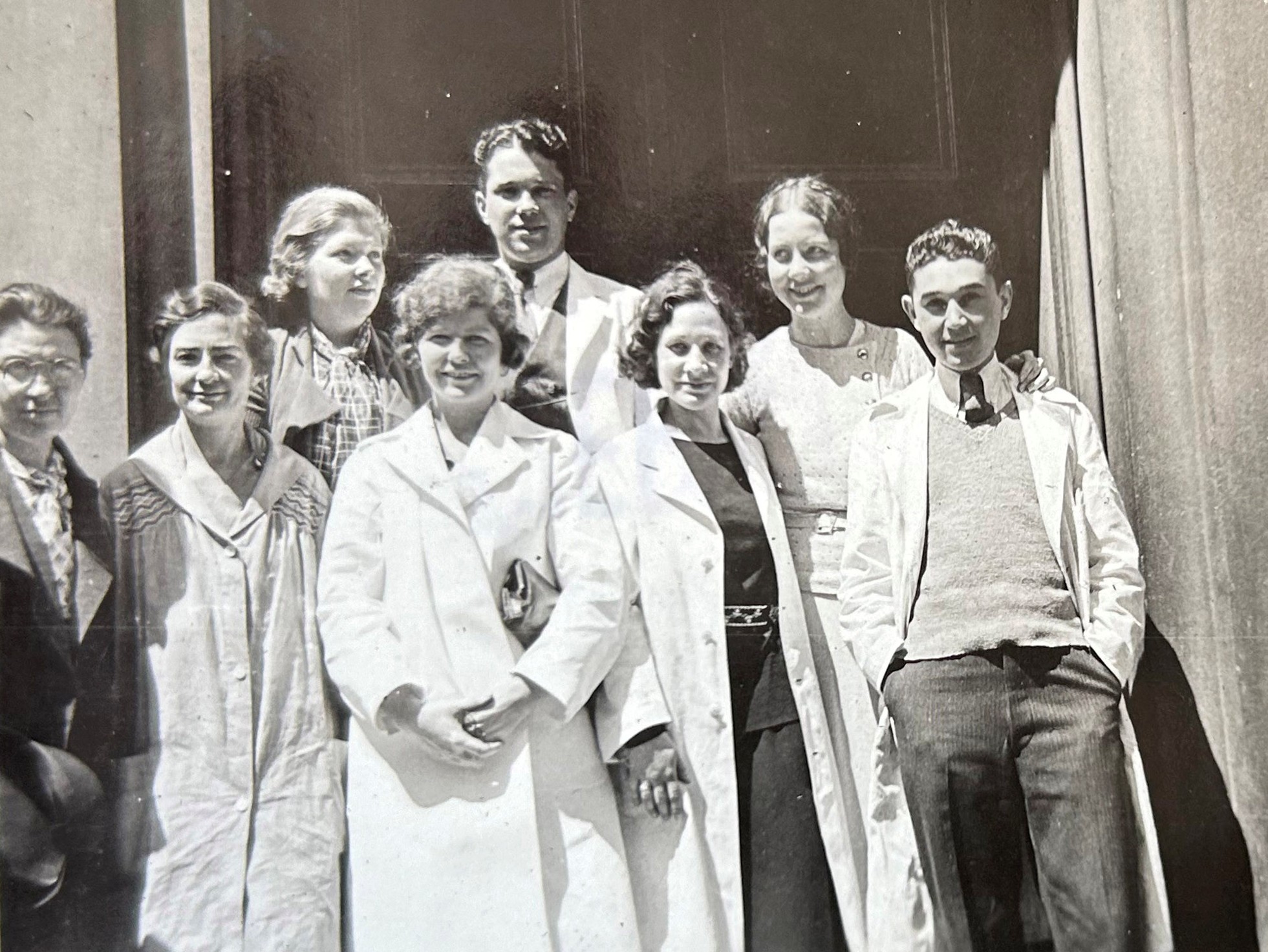
Hester Thom, third from left, class of 1931, Art as Applied to Medicine, Johns Hopkins University School of Medicine.
Both women first trained at the École des Beaux-Arts de Montréal in the 1920s. Larivière apprenticed with renowned artists, such as Adam Sherriff Scott and Louis Muhlstock. She later studied nursing, graduating from St. Mary’s Hospital School of Nursing in 1930, to deepen her anatomical knowledge for medical illustration. Thom had volunteered at a military hospital during WW1 and continued her studies at the Ontario College of Art. There, her life and nature morte drawings earned recognition. In both cases, their training taught them sharp observation, technical skills, and discipline—qualities essential to medical illustration.
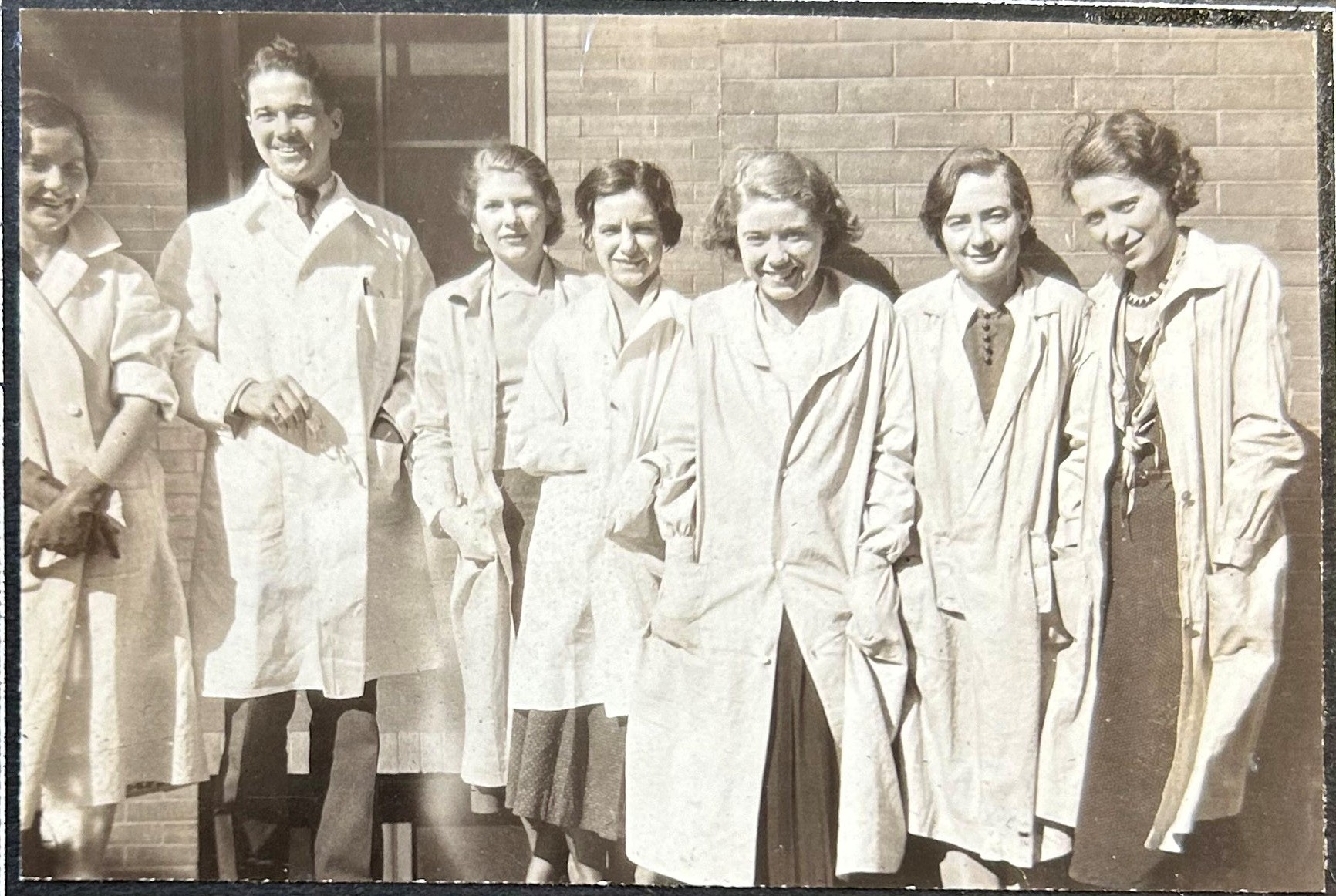
Pauline Larivière, fourth from left, Class of 1930, Art as Applied to Medicine, Johns Hopkins University School of Medicine.
By the early 1930s, medical illustration had emerged as a rare and meaningful career path for educated upper- and middle-class women with scientific and artistic interests. Rather than a return to pre-war social conventions, those able, such as Larivière and Thom, could pursue specialized training. Both women attended Johns Hopkins to study at the Department of Art as Applied to Medicine.
At Hopkins, Larivière and Thom mastered the carbon dust technique—a staple technique of early 20th-century medical illustration. Using a brush, they applied layers of carbon dust onto Ross Board, a specialized support. This created subtle gradations and stunningly precise illustrations of living tissue. Their images were not just accurate—they directed the viewer’s eye toward what mattered most.
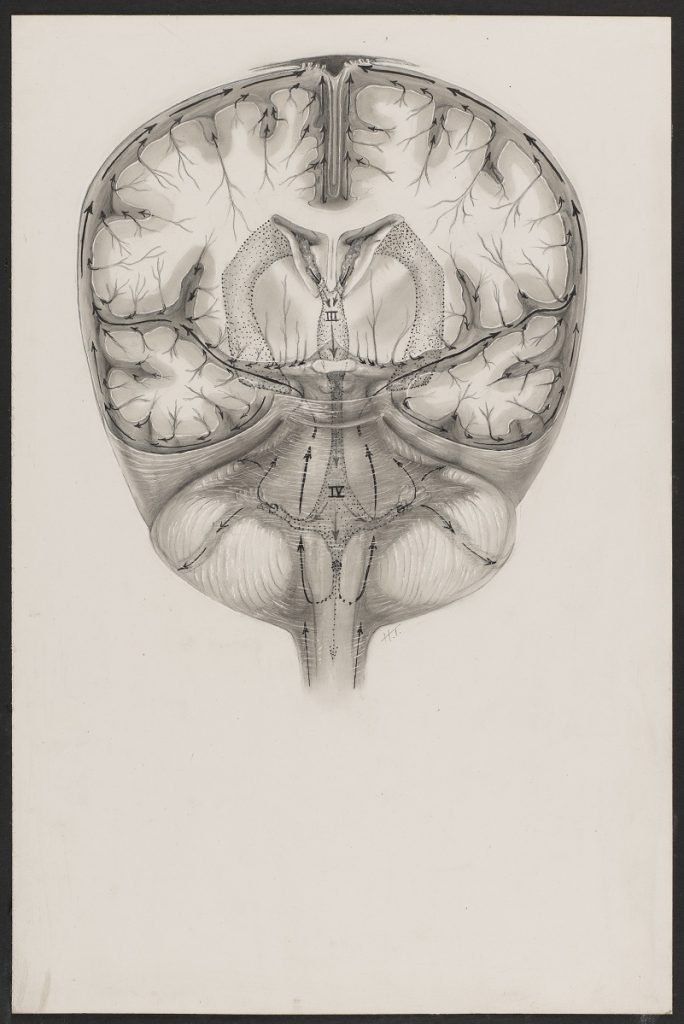
Carbon dust drawing by Hester Thom showing a diagrammatic representation of a type a carotid-cavernous arteriovenous fistula. The arrows indicate arterial blood issuing from the tear in the arterial wall into the cavernous sinus and ophthalmic veins.
This specialized training opened doors across borders, but freelance work was often unpredictable. Larivière returned to Montreal to lead the Department of Art as Applied to Medicine at McGill University from 1932 to 1935. When funding ended, she continued independently. Both artists later worked with renowned neurosurgeon Norman Dott in Edinburgh. Thom became Dott’s personal artist from 1936 to 1939, while Larivière collaborated with him after the war.
References and personal recommendations—not formal organizations—often secured jobs in this era. In a letter to Dott, Thom ambivalently recommended Larivière, underscoring her strong character. Ultimately, Larivière was chosen for the role.
Their work with Dott stand as evidence of the international recognition of their skillsets. Their early career trajectories reflect the early 20th-century demand for high-quality medical illustration.
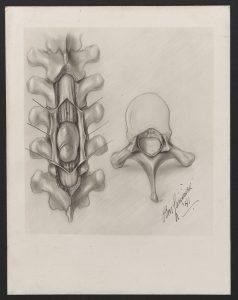
Carbon dust drawing by Pauline Larivière. Created during her time working as Dott’s personal illustrator.