

Eleanor Sweezey – Advocate and Innovator
Eleanor Sweezey (1915–2007) brought ambition and purpose to the emerging field of medical illustration. From an early age she was career-focused, determined to combine art with science. She took lessons at the Montreal Art Gallery and in 1935 won a $75 bursary to Queen’s University, where she earned a BA while studying pre-medical science and comparative anatomy—an unusual preparation for a woman entering the arts at the time.
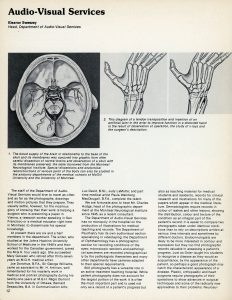
Article header written by Eleanor Sweezey for the Montreal General Hospital newsletter, MGH News, Autumn 1980.
Her introduction to medical illustration was sparked by chance. At a dinner party, her mother sat beside illustrator Harriet Blackstock Thompson, whose career inspired Eleanor to pursue the field. She soon entered the program at Johns Hopkins (1940–42), training under James Didusch, a protégé of Max Brödel. After freelancing in Toronto, she joined Queen Mary’s Veterans’ Hospital in 1945, where she discovered her passion for helping wounded soldiers rebuild their lives.
In 1949, Sweezey was named national advisor in medical illustration and photography for Canada’s veterans’ hospitals, a role she held until 1980. She quickly expanded her work beyond drawing: she scripted, storyboarded, directed, and edited films of surgical procedures, making operations accessible for training and research.
At the Royal Victoria Hospital, she collaborated with physicians to pioneer the use of Flexton, a new plastic for temporary facial prosthetics, which gave veterans facing severe disfigurements a way to return home and reintegrate while awaiting permanent surgeries.
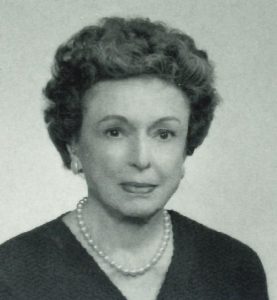
Eleanor Sweezey, 1998.
Sweezey was equally committed to professionalizing her field. Within the Association of Medical Illustrators, she served as Vice President (1958–59) and President (1961–62), where she pressed for illustrators to be recognized as collaborators rather than technicians and argued for wages reflecting their specialized skills.
Her collaborations with Dr. Wilder Penfield were especially notable: she illustrated two of his major works, Speech and Brain Mechanisms (1959) and Mystery of the Mind (1975), and extended Hortense Douglas’s pioneering homunculus drawings with her own research-based illustrations.
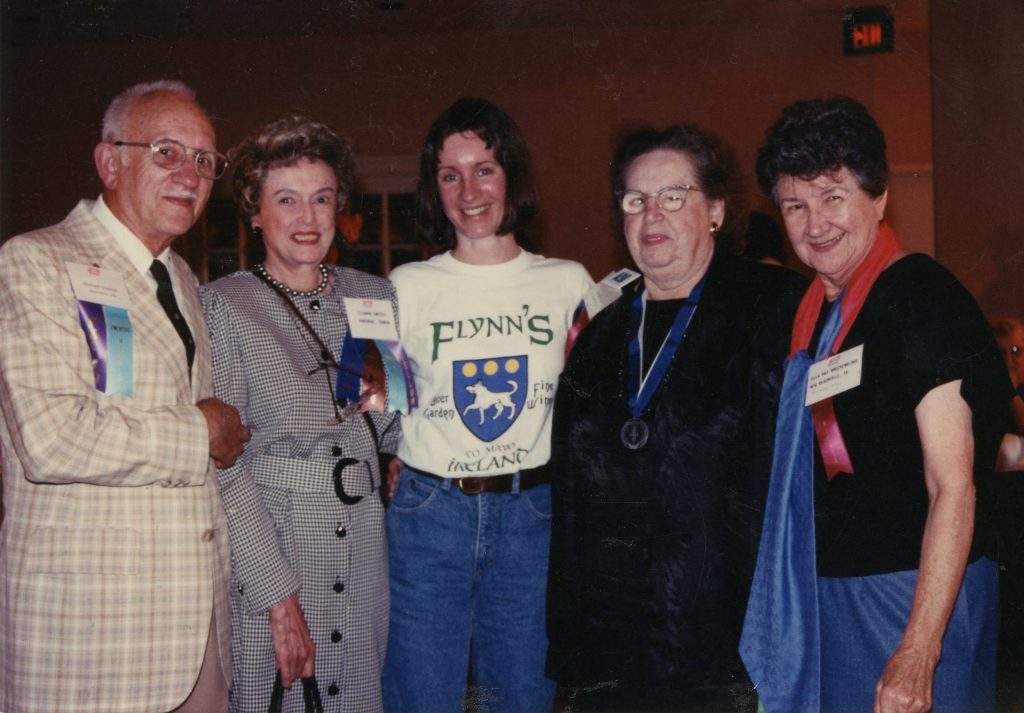
47th Annual Meeting of the Association of Medical Illustrators, 1992.
Her influence endured well beyond her active career. In 1994 she was named an Honorary Trustee of the Vesalius Trust, and in 1998 she received the AMI’s Lifetime Achievement Award. Eleanor Sweezey left a legacy of both artistry and advocacy: she advanced medical illustration not only through her images, but also by securing its place as a respected profession.
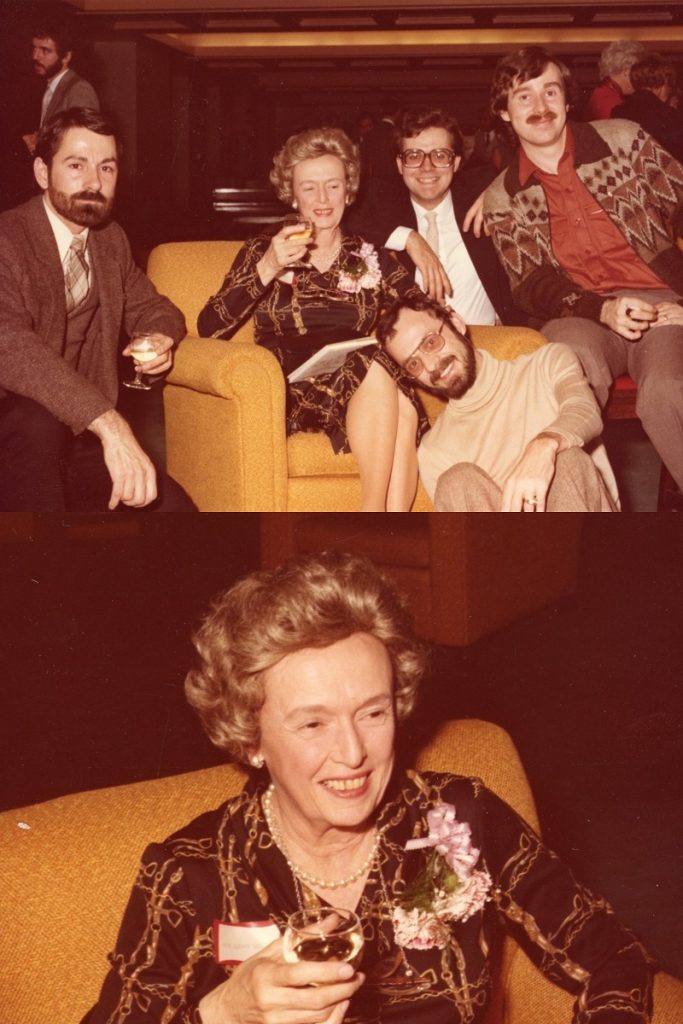
Eleanor Sweezey, pictured here at her retirement party in 1980 alongside colleagues.