

Wartime Innovation: How Conflict Reshaped Medical Illustration in Montreal
A focus on the lives of medical illustrators in Montreal during the interwar period paints a portrait of a productive and innovative time for this field. However, before the Second World War, most medical illustrators worked independently and with specific doctors, surgeons, or researchers on a freelance basis.
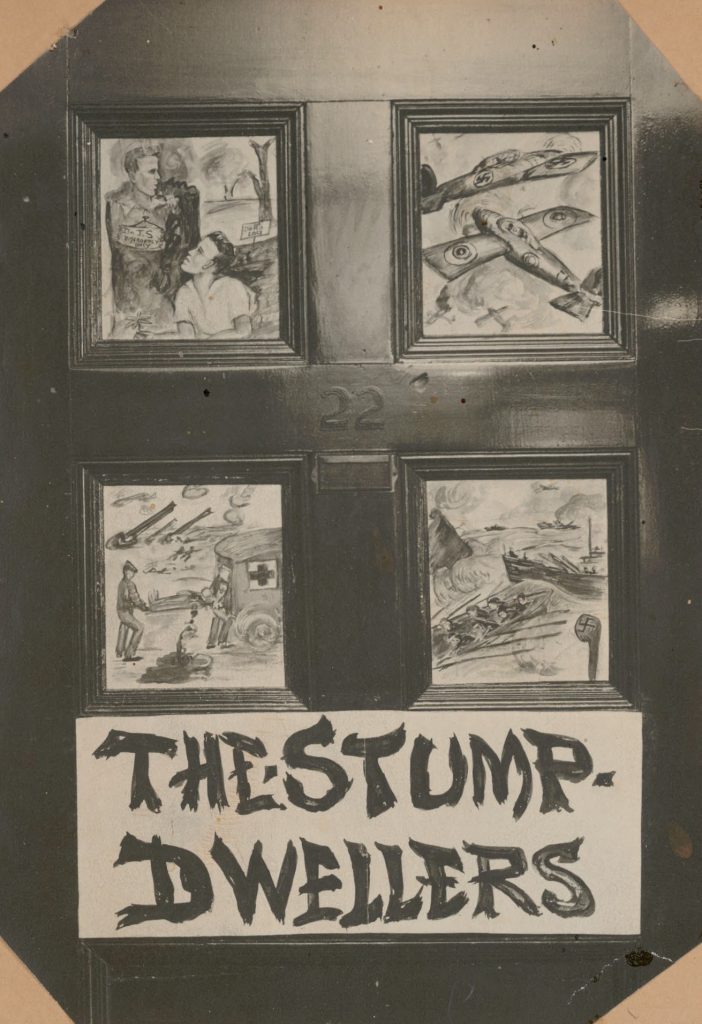
Painted door panels by Mary Gzowski as a welcome home to two interns fighting in the Second World War, 1939
Permanent posts for medical illustrators with compensation that reflected their specialized skillset were not yet integrated widely into Canadian hospitals. Conditions created during and after the Second World War were the catalysts for significant steps towards professional organizing, standardization, and innovation in the field.
In North America, most of the content in medical textbooks during this era was sourced from Europe. The circumstances of war made it impossible to rely on this source, creating a crisis for medical education given the acute need for training during wartime. In Toronto in 1941, Dr. J.C.B. Grant responded by collaborating with local illustrators to create Grant’s Atlas of Anatomy, which filled this gap.
Not only was it a successful Canadian production, but the Atlas also devoted substantial space to visuals in contrast to comparable volumes. Its reliance on black-and-white carbon dust illustrations and line drawings kept costs manageable, while Grant’s method of tracing from photographs increased the accuracy of anatomical representation.
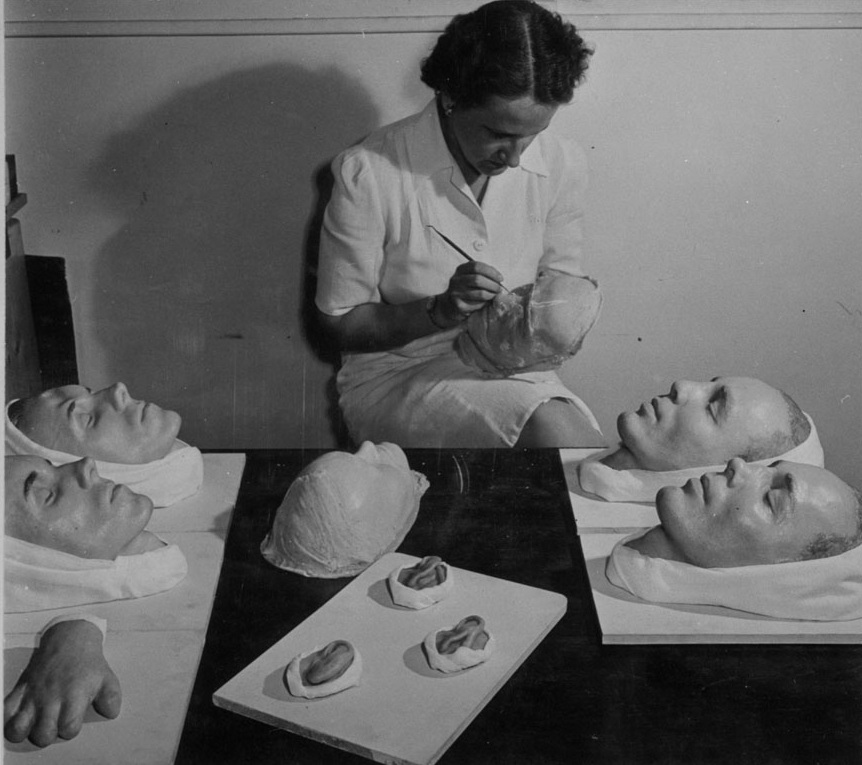
Agnes Roberge making plaster casts of plastic surgery patients, Christie Street Hospital, Toronto, 1944.
Though the Atlas was not produced in Montreal, similar needs arose in what was a pivotal centre for clinical trauma research, nursing mobilization, and integrated medical education during WW2. Illustrators in Montreal, such as Mary Gzowski, contributed illustrations to publications on the treatment of war wounds by researchers at the Montreal General Hospital.
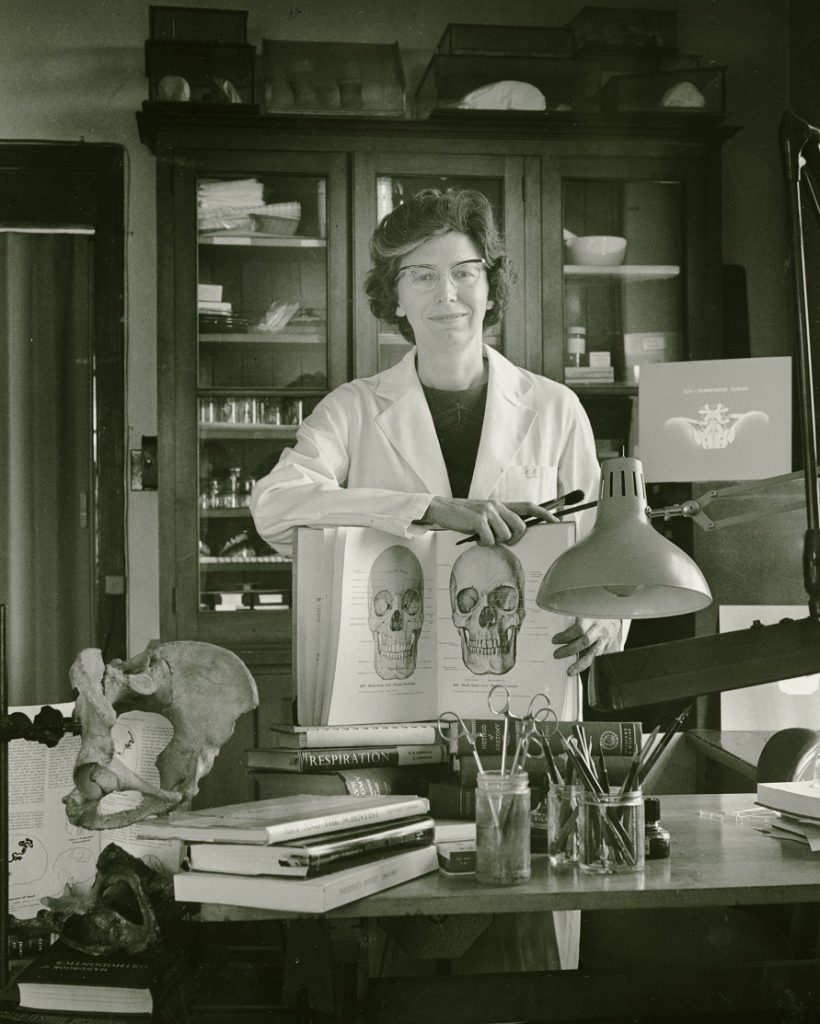
Nancy Joy (1920-2013), an influential Canadian medical illustrator and professor based mainly in Toronto, pictured here with J.C.B Grant’s Atlas of Anatomy. Joy was one of the primary contributors to the Atlas.
The war significantly increased demand for these reproducible visual materials to train new medical personnel quickly and to standardize techniques for treating battlefield injuries.
Postwar, the impacts of war on the field of medical illustration were far reaching and complex. On one hand, an influx of men returning from military service showed interest in the profession. Many secured posts, sometimes at the expense of skilled women illustrators who had more experience and specialized training.
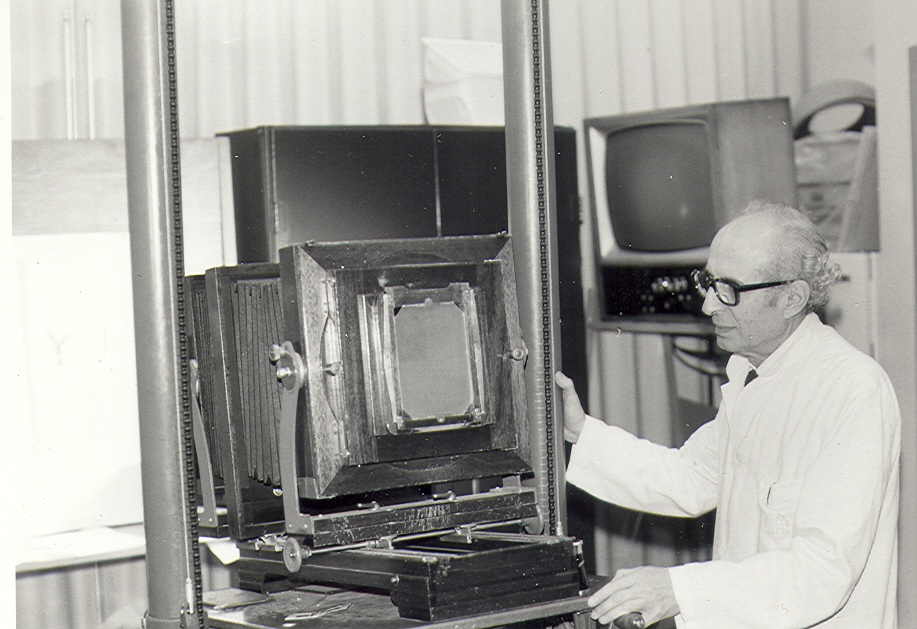
Haigazoun Artinian in the Montreal General Hospital Audio-Visual Department, c.1960
Developments in photographic and reproduction technologies broadened the scope of medical illustration, shifting the methods of visual communication used by illustrators. Professional organizations and new training programs emerged in North America, broadening networks working to establish professional standards for the field.