

Pioneering Precision: Harriet Blackstock at McGill
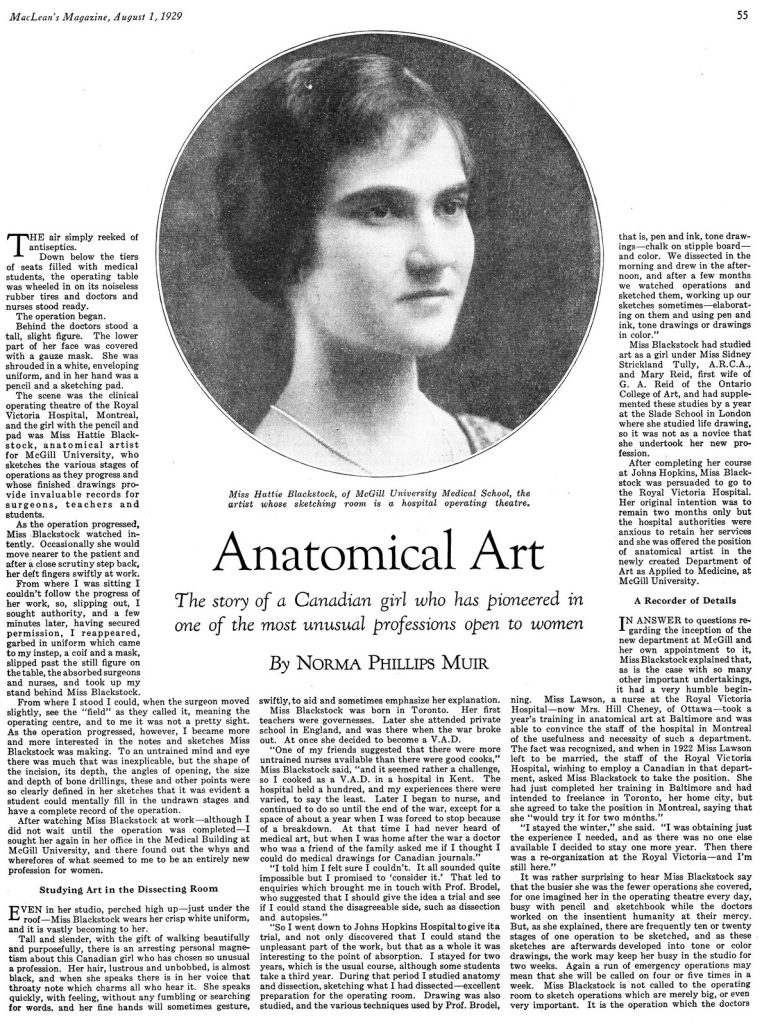
Harriet Blackstock (1894-1990).
That brings us to important thing in medical illustrating. The picture must show, at a glance, the point which the doctor wishes emphasized, the rest must be subordinate to that, though much more than the camera would bring out to be there to supplement the story.
– Harriet Blackstock
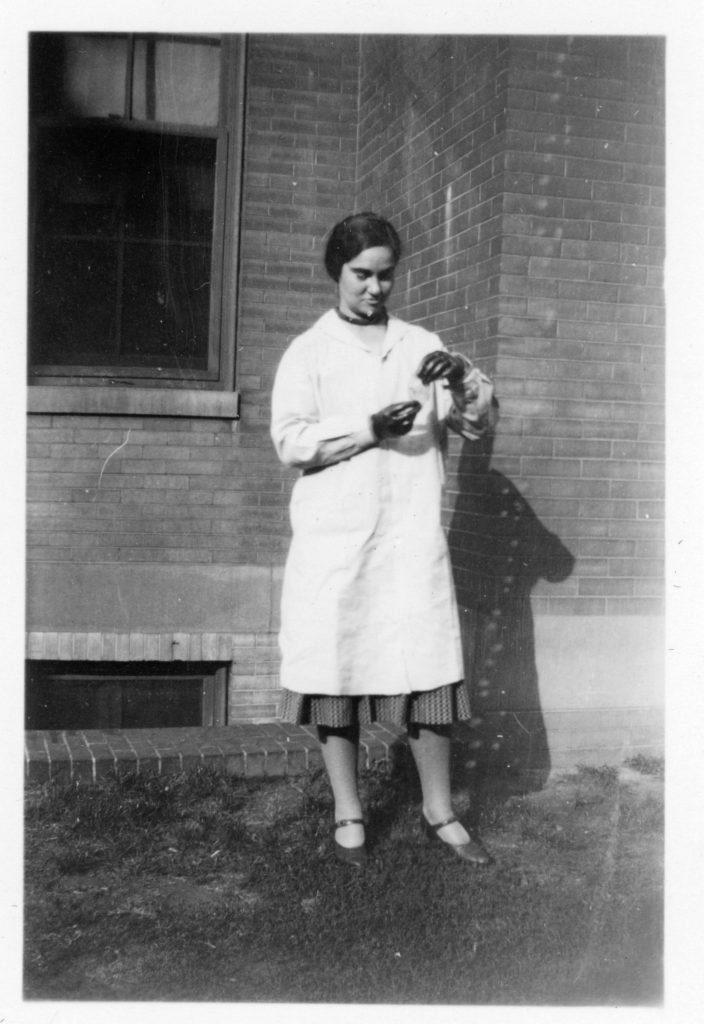
Harriet Blackstock, pictured here in 1922 during her studies at Johns Hopkins Medical School.
Harriett Blackstock’s story begins in Toronto, 1894. She studied in the UK at the Slade School of Art and volunteered as a nurse during World War I. After the war, a doctor encouraged her to try medical illustration for Canadian journals, prompting studies at Johns Hopkins with Brödel.
In 1922, McGill’s newly formed Department of Art as Applied to Medicine hired Blackstock. Early accounts of this department highlight the rising importance of medical illustration in Montreal’s hospitals, a 20th-century medical hub. Blackstock created vital teaching tools, from surgical step-by-steps to wax models.
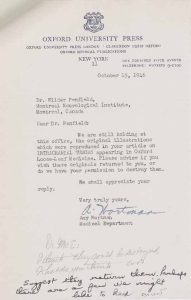
A letter to Dr. Penfield verifying Blackstock’s original illustrations.
A 1929 Maclean’s article offers a rare, detailed view of Blackstock at work—in both the Royal Victoria Hospital surgical theatre and her studio in McGill’s Medical Building. The author marvels at her extraordinary observational memory and notes how this demanding field both reflected and resisted gender expectations:
“It is a sphere where women were accepted almost, if not quite, at the beginning, and one in which they do as well, if not better work than do men.”
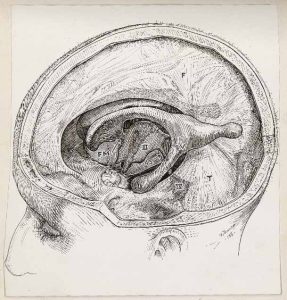
A neurological illustration by Harriett Blackstock, exemplifying her detailed work.
Married to McGill professor Lesslie Thomson in the early 1930s, Blackstock continued her career even well into her pregnancy with her first child, despite gendered societal expectations of this era. She worked alongside Wilder Penfield at the Montreal Neurological Institute into the mid 1930s.
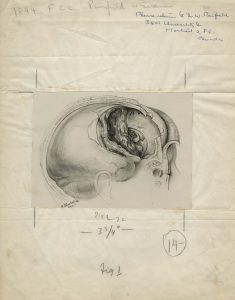
An illustration signed by Blackstock in 1930 that appeared in Penfield’s publication. The caption describes the image as “the unprompted conception of the artist who was present at the operation.”
There, her meticulous illustrations brought Penfield’s pioneering neurosurgical work to life. She mastered brain illustration through many hours observing Penfield at work, and was entrusted to observe and document surgeries accurately. She illustrated Penfield’s discoveries for publication—a period she considered to be a highlight of her career.

Line drawing done in pen by Blackstock during her time working with Penfield at the Montreal Neurological Hospital.