

The Baltimore Connection: Training for a New Kind of Career
Medical illustration was a profession that required both scientific knowledge and artistic skill—two things many educated women in Montreal already had. It was precise, technical, and collaborative. And, critically, it wasn’t yet owned by men in white coats.
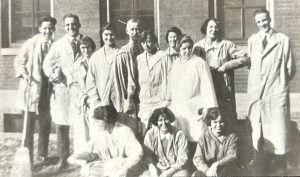
Class of 1922, Art as Applied to Medicine, Johns Hopkins University School of Medicine
At the center of this growing field was Max Brödel, a Leipzig-trained artist who moved to the United States in the 1890s. He worked at Johns Hopkins University in Baltimore, where he helped transform medical illustration from a craft into a profession.
Brödel believed that good illustration wasn’t just about drawing well—it was about understanding the science. His work combined careful anatomical study with fine art techniques, and it set a new gold standard for medical visuals.
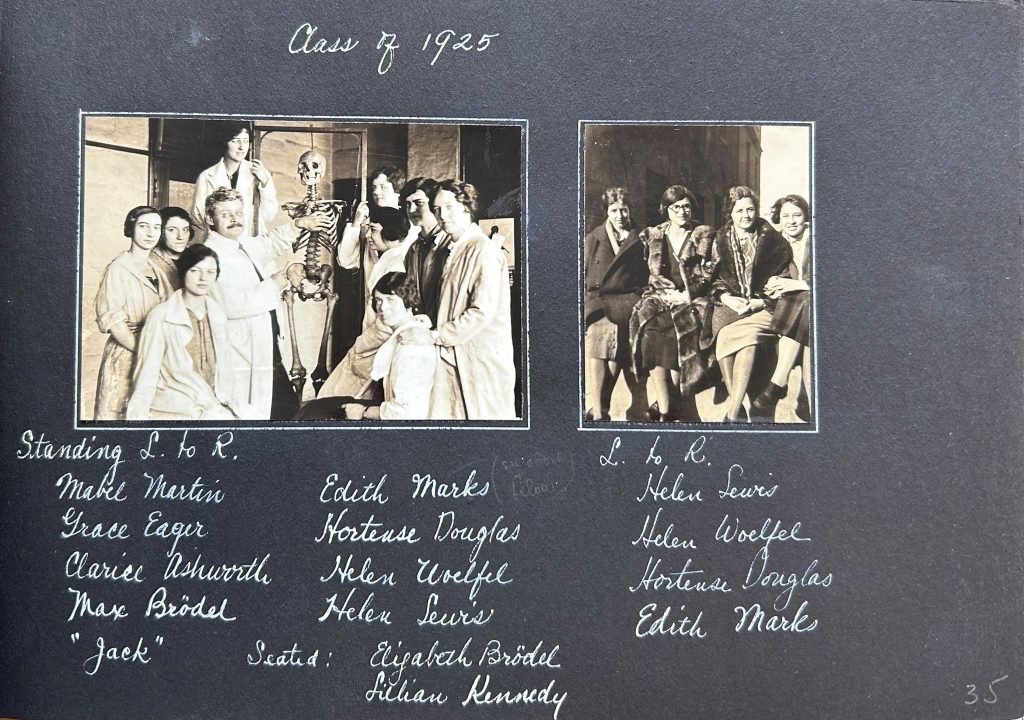
Class of 1925, Art as Applied to Medicine, Johns Hopkins University School of Medicine
In 1911, he founded the Department of Art as Applied to Medicine, the first formal training program for medical illustrators in the world. It attracted students from across North America—including many young women from Montreal.
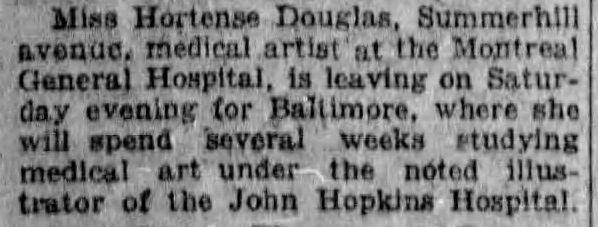
Notice in the society column of The Montreal Star, 21 January 1925
At a time when opportunities in medicine were limited for women, Brödel’s program offered something different: a path into medical work that didn’t require a medical degree.
The women who studied under him brought their training back to Montreal, where McGill’s teaching hospitals were growing quickly. Pathology departments needed illustrations for textbooks, lectures, and journals. The demand was high—and these women were ready.
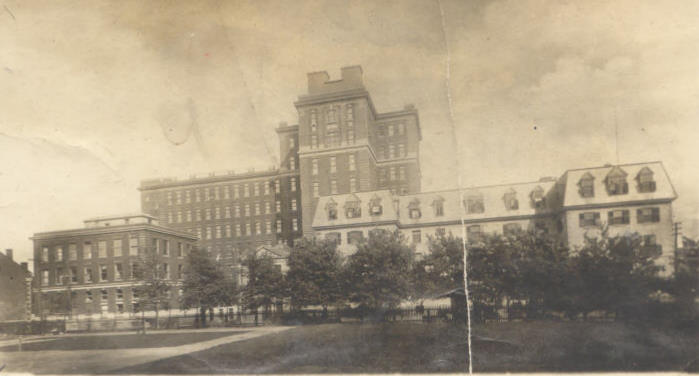
Montreal General Hospital and pathology building, c.1914
What they learned in Baltimore became the foundation for a quiet revolution in Canada’s medical community: women entering hospitals not as patients or nurses, but as professionals with expertise of their own.
They helped define how medicine was seen, understood and remembered.