

Making Medicine Visible: An Enduring Legacy
Medical illustration at the McGill University Health Centre represents far more than an auxiliary art to medicine—it is a visual language that has shaped understanding, diagnosis, and care for over a century.
The women who drew, painted, and diagrammed within these institutions were not merely recorders of scientific knowledge; they were interpreters, educators, and innovators who gave form to what could not be seen.
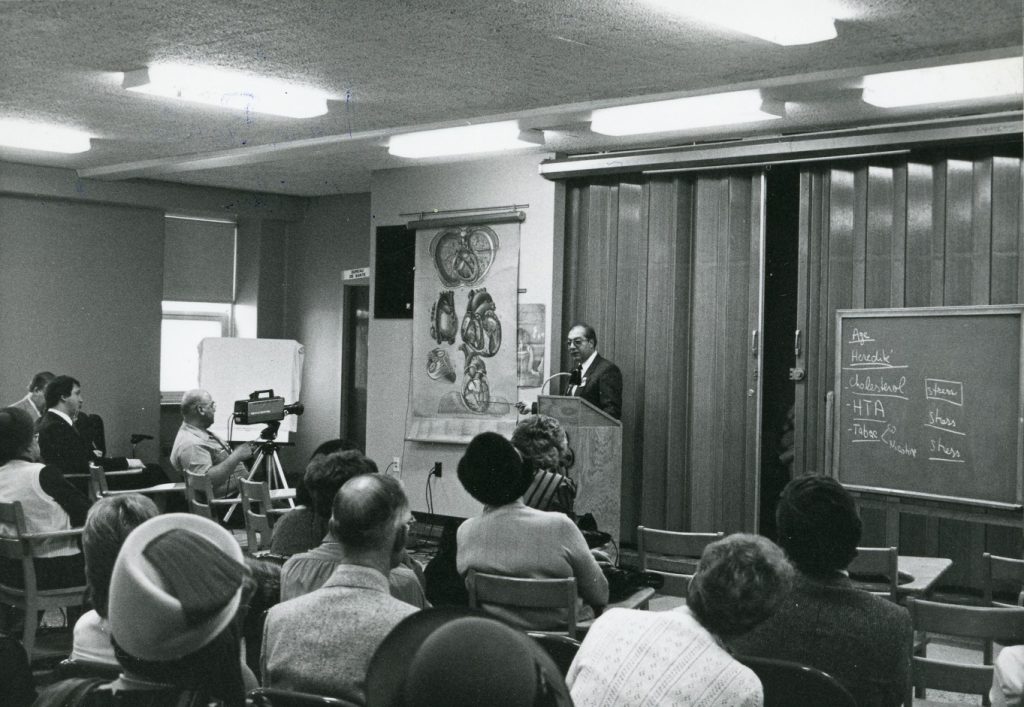
Cardiology presentation using Pauline Larivière’s medical illustrations, Lachine Hospital.
Their work bridged the gap between observation and comprehension, revealing the human body with clarity and compassion. In doing so, they expanded both the practice of medicine and the professional horizons available to women in the early and mid-20th century.
Many navigated a delicate balance between artistry and anonymity, their names too often omitted from the texts their work illuminated. Yet their illustrations endure—in textbooks, archives, and institutional memory—as evidence of their precision, creativity, and resilience.
By revisiting their stories, this exhibition reframes medical illustration not as a peripheral craft but as a central component of medical advancement and communication.
It acknowledges the collaborative ecosystem of hospitals, classrooms, and studios where scientific ideas took visual shape. It also restores due credit to the women who, through their steady hands and sharp eyes, claimed space within a profession that was still learning to see them.
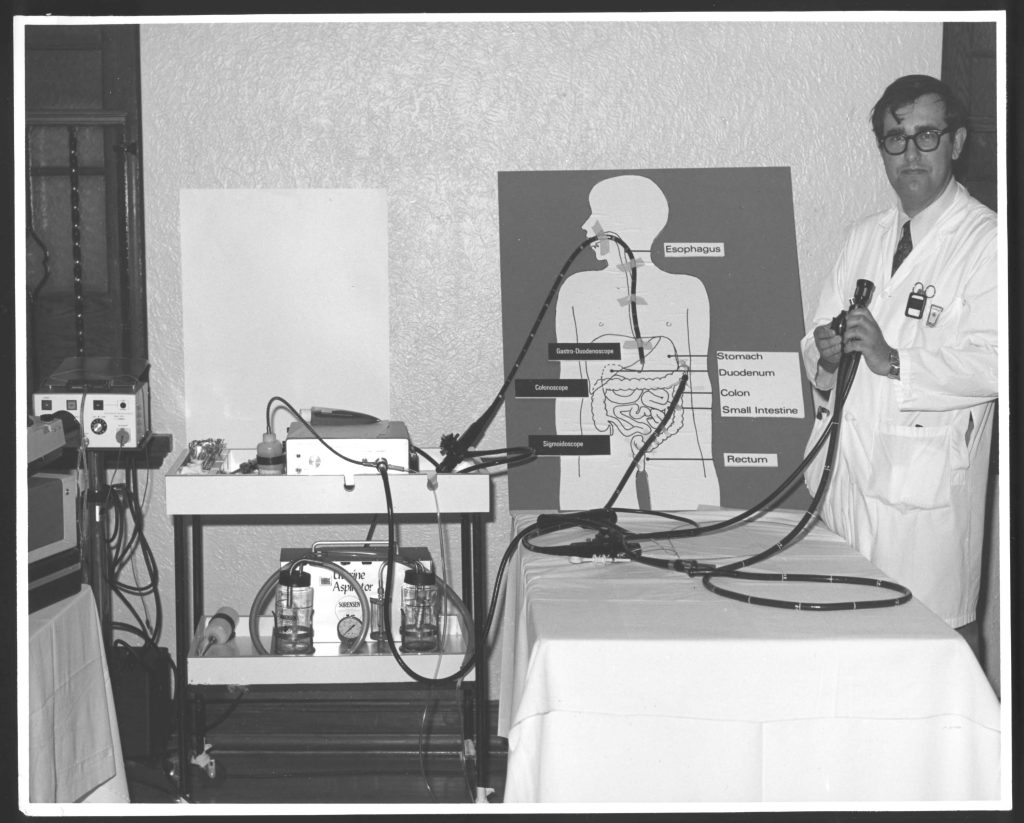
Doctor with teaching display using medical illustrations, Royal Victoria Hospital.
Today, as digital imaging and new visualization technologies continue to evolve, the legacy of these illustrators remains vital. Their commitment to clarity, accuracy, and empathy continues to inform how medicine is taught and practiced.
Recognizing their contributions allows us to see not only the history of medical illustration, but also its enduring relevance—reminding us that the act of drawing the body is, ultimately, an act of understanding it.