

Privilege and Purpose
The women who helped shape medical illustration in Montreal came from a very specific world—upper-class families, private schools, and social circles where art and science often met. They had access to things most women didn’t: education, stability, and powerful connections. But even with all that, career paths for women remained limited.
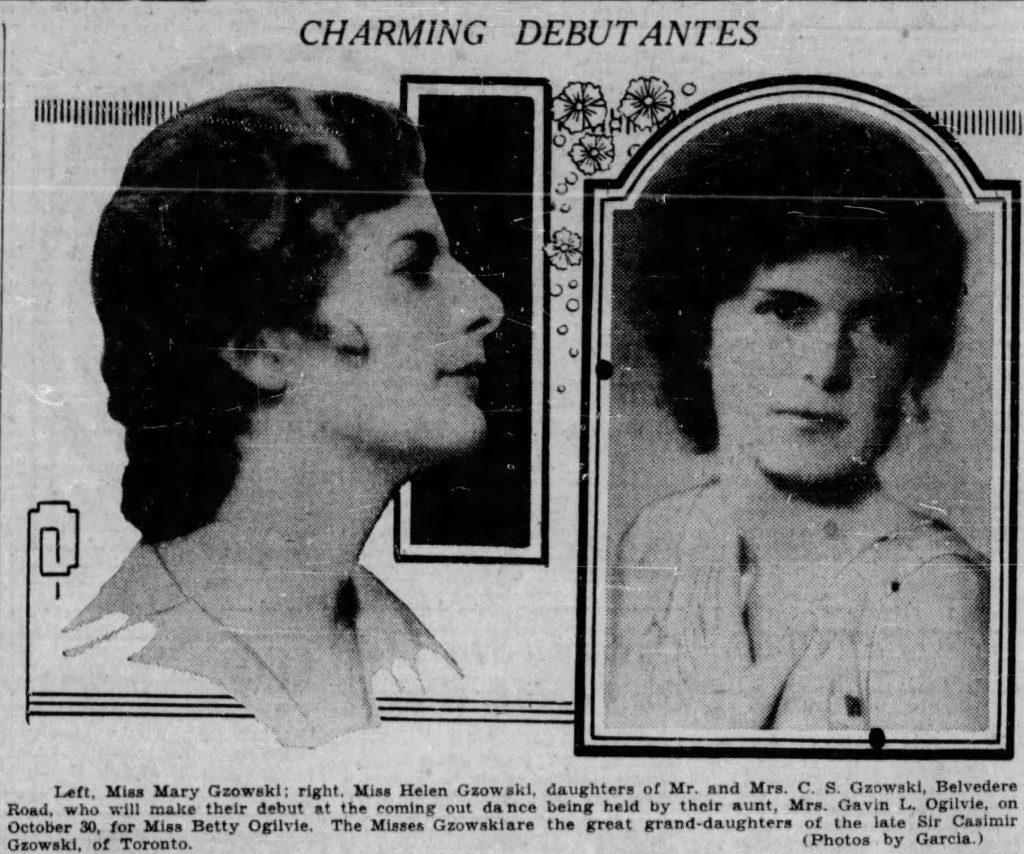
Mary Gzowski and her sister Helen in their debutante year, The Montreal Star, 26 September 1931.
Most professional roles in medicine were closed to them, especially after marriage. But medical illustration offered a narrow—and socially acceptable—way in. They couldn’t be doctors like their fathers and brothers, but they could work alongside them.
Many studied at elite schools like Miss Edgar’s and Miss Cramp’s or The Study. Others trained at private schools in England or at the École des beaux-arts in Montreal. These schools didn’t just teach technique—they connected students to major Canadian art movements like the Group of Seven and the Beaver Hall Hill Group. Artists like Adam Sherriff Scott were among their teachers and mentors.
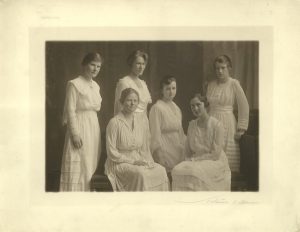
Graduating class of Miss Edgar’s and Miss Cramp’s School, 1918. Hortense Douglas, seated at centre.
As Helen MacArthur (1920-2006) put it, “I have always wanted to be close to the field of medicine.” Her father was a biology teacher; her brothers were in science. Illustration was her way of joining them.
Family ties helped. Harriet Blackstock (1894-1990) became a medical illustrator after a doctor friend of the family asked her to draw for his articles. These informal offers helped open doors—though they were rarely open for long. Most women left their careers once they married.
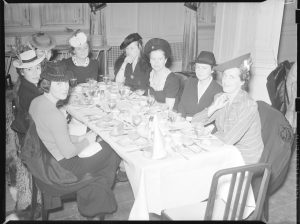
Junior League members gathering at the Ritz-Carlton, Montreal, 1940.
Many gained practical experience through the Junior League of Montreal. Their hospital programs offered young women a way to contribute—and learn. By 1924, 125 Junior League volunteers were working in Montreal hospitals. Some, like Mary Gzowski (1910-1993), even got their first illustration jobs there. “The clinics are, perhaps, the most interesting phase of the work,” noted one report. “This work is often found difficult at first but once a girl becomes accustomed to the medical terms it proves most interesting”.
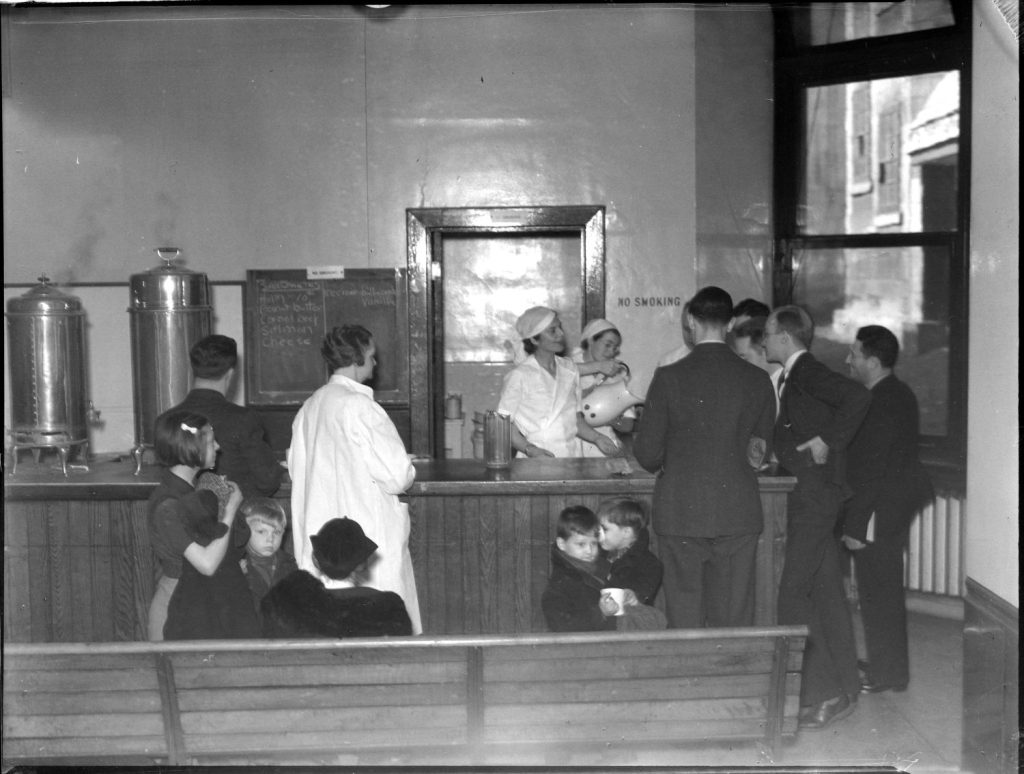
Junior League volunteers at the Montreal General Hospital cafeteria, 1938. Mary Gzowski, centre.
War also shaped these women. Some volunteered in field hospitals, others cared for wounded soldiers. Their world taught them to serve, observe—and draw. Medical illustration gave them the tools to turn privilege into purpose.