

Clothing and Queer Identity
Across time and cultures, clothing has been a way for queer people to signify identity, community, and resistance, and continues to be a powerful outlet for self-expression.
In many cultures around the world, gender and sexuality were never just one or the other. Long before colonization, communities across Turtle Island, like the Anishinaabe, recognized Two-Spirit (niizh manidoowag in Anishinaabemowin) people, individuals who exist outside of the Western world’s binary of gender, sexuality, or spiritual identity. In Samoa, fa’afafine express femininity in daily life and dress while fa’afatama express masculinity, and Hijra communities in South Asia have worn bright saris as part of their cultural visibility for generations. Despite colonial rule and missionary influence suppressing many of these traditions, they continue to survive, evolve, and thrive in their own ways.
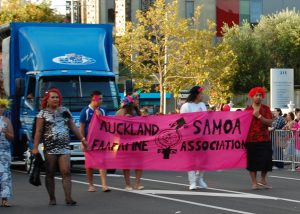 Auckland Samoa Fa’afafine Association at Auckland’s pride parade in 2016. Select the image to learn more. |  Hijra in Bangladesh in 2010. Select the image to learn more. |

Mr Capital Pride Leather 2008 walking at New York City’s 2009 Pride parade with a red hanky. Select the image to learn more.
In Western contexts, queer communities have often used fashion to push back against strict gender norms and express themselves. In 18th century London, clubs called ‘mollies’ were spaces where assigned-male-at-birth people could wear feminine clothing and create community. In 19th century Paris, some women wore suits to claim space in male-dominated worlds. Towards the end of the 19th century, green carnations pinned to the lapel became a quiet way for men to signal their homosexuality. Last century saw queer style emerge as code, rebellion, and protest— from handkerchief signifiers, to proud drag, to t-shirts calling out the harmful policies and governments’ failures to act during the AIDS crisis. Clothing choices weren’t just about fashion; they were about connection, identity, and pride.
Today, 2SLGBTQIA+ people worldwide continue to use clothing to express who they are, whether that’s blending traditional garments with contemporary elements, rejecting gendered expectations, or simply dressing in what feels right. From Pride parades to quiet daily moments, clothing is a reminder that queerness exists in every culture, in every era, and in every community.