

Harriet Tubman, Spirituals, and the Sounds of Resistance
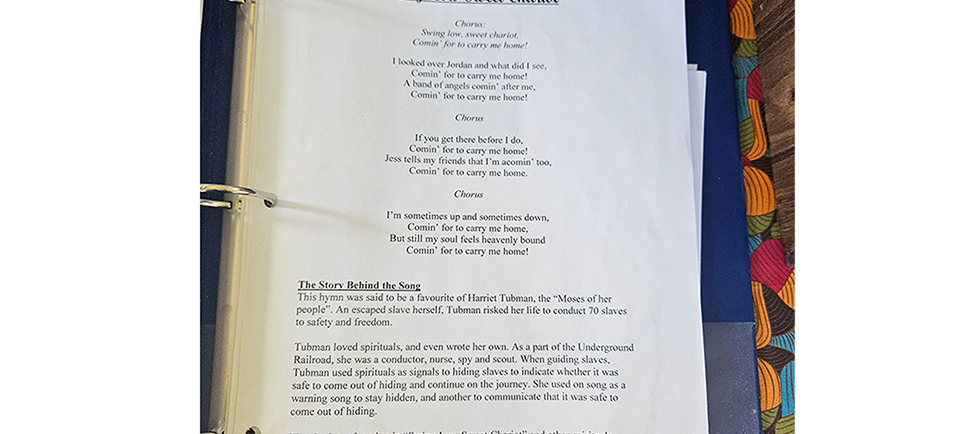
Figure 1. A page from the book of Songs of the Enslaved playing at the Josiah Henson Museum of African Canadian History. Photo by Blessing Ogunyemi, taken at Dresden, Ontario, October 2024.
For countless freedom seekers and Ms. Tubman, spirituality was more than a source of strength; it was the lifeline of their survival. In the darkness of enslavement, faith was not only practiced in whispered prayers but entwined into the very fabric of resistance. Music became a vessel of guidance, a coded language passed from voice to voice, leading the way to freedom. Spirituals such as Ain’t Gonna Let Nobody Turn Me ‘Round and Wade in the Water carried hidden instructions, an escape route laid in melody. “Swing low, sweet chariot, coming for to carry me home” was more than a hymn; it was a yearning, a call for deliverance, a melody of hope echoing through the darkness, dreaming of a place beyond bondage. At times, it served as a covert signal that rescue was near.
Whether expressing a dream of salvation or a whispered warning of an approaching guide, these songs wove an escape route into melody, guiding the way to freedom. They held the weight of strategy and solace, mapping safe havens while steadying trembling hearts. Each note became a beacon in the night, a promise that deliverance was near. To sing was to proclaim faith in something greater than chains. It was to affirm, in unison, that they were not forgotten. In moments of fear, voices rose, not in surrender, but in defiance. Music bound the weary together, reinforcing the unshaken belief that freedom was not just a distant dream but an inevitable dawn.
For Ms. Tubman, these were more than songs. They were scripture carried in breath, prayers set to rhythm, and signals passed in plain sight. She did not merely lead people to freedom; she sang them toward it, her voice lifting above the night, a sound of hope that could not be silenced.
In her final moments, though worn by time, Ms. Tubman’s voice carried the same certainty that had guided her through forests and rivers, past the hounds and the hunters, through darkness and dawn. “I go to prepare a place for you,” she murmured, echoing Christ’s promise as though she was still leading others toward greater freedom, even in death.
Her story is not only one of courage but of divine calling. Ms. Tubman was more than a liberator; she was a prophet, a vessel of faith, and a woman who knew, beyond all doubt, that the God who had carried her through the valley would never forsake her people.
Songs like Ain’t Gonna Let Nobody Turn Me ‘Round carried resilience and hope.
Listen to this audio clip recorded while playing at the Pioneer Church of the Josiah Henson Museum of African-Canadian History on the Museum grounds.