

Religion, Resistance, and Liberation: Harriet Tubman and the Abolitionist Network
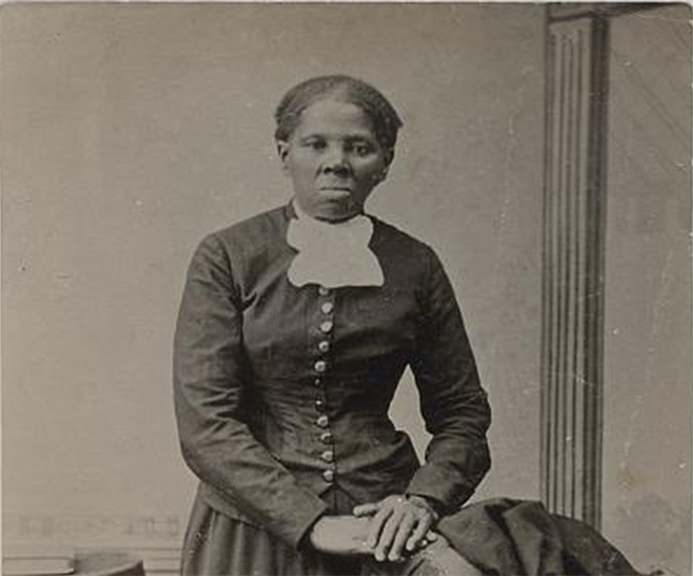
Figure 1. Portrait of Harriet Tubman by Lindsley, Harvey B., 1842-1921. Photo from Emily Howland Photograph Album LOT 15020, Library of Congress Prints and Photographs Division, Washington, D. C. 20540 USA, October 2024.
One of the most striking aspects of the enslavement era is the Church’s paradoxical role in both promoting and abolishing the institution. While Christianity was often wielded as a tool of oppression, it also became a force for liberation. Many abolitionists and anti-slavery advocates, driven by moral and religious convictions, played a crucial role in the fight to dismantle slavery many of whom were integral to Harriet Tubman’s remarkable work in emancipating enslaved people.
Beyond unparalleled courage, Ms. Tubman’s incredible journey and work testify to the power of collaboration in the pursuit of justice and collective liberation. For her, freedom was never a solitary pursuit but a shared mission. Her unwavering commitment to emancipation was made possible through a vast network of supporters spanning the Black community, religious institutions, and allies who, regardless of background, recognized the absurdity and moral depravity of slavery.
As a Conductor of the Underground Railroad, Ms. Tubman built an extraordinarily vast network of connections. She worked closely with several prominent Abolitionists across diverse religious and secular backgrounds, including many Quakers, who played critical roles in the struggle to abolish slavery and served in various capacities, such as Station Masters, Informants, Agents, and the like, to actualize the mission of the Underground Railroad.
Her extensive network included William Lloyd Garrison, who she credited for giving her the name Moses; Rev. Samuel Green, a possible relative; John Brown, whom she eventually met in person in 1858 in St. Catharines; Frederick Douglass—an abolitionist, author, and formerly enslaved person, Lucretia Mott, William Still, Thomas Garrett, Gerrit Smith, Frances Harper, Wendell Phillips, Levi Coffin, Jermain Longuen, and many others, all of whom she met and interacted with at different times of her journey. While we have not found any documented evidence that Ms. Tubman and Mary Ann Shadd Cary, an abolitionist, teacher, journalist, lawyer, and activist, met or worked together, it is reasonable to assume that their proximity—Cary living in Chatham and Ms. Tubman in St. Catharines—and their overlapping roles in the abolitionist movement, though distinct, could have led to them crossing paths.
Together and independently, this diverse coalition of abolitionists and freedom supporters uniquely contributed to the freedom cause financially and with invaluable (material) resources towards the survival of freedom seekers ensuring their survival and dignity as they settle into their new lives.
While Ms. Tubman forged strong relationships with numerous abolitionists and freedom advocates during her tireless efforts to liberate enslaved people, no known photographs capture her alongside other abolitionists in a single frame. This absence reflects the challenges of documenting figures involved in clandestine work and resistance, like the secretive operations of the Underground Railroad.
Prof. Lorne Foster, York Research Chair in Black Canadian Studies & Human Rights, discusses the role of religion/the Church during slavery.