

Guardians of Freedom: Honouring Legacy and Community in Dresden
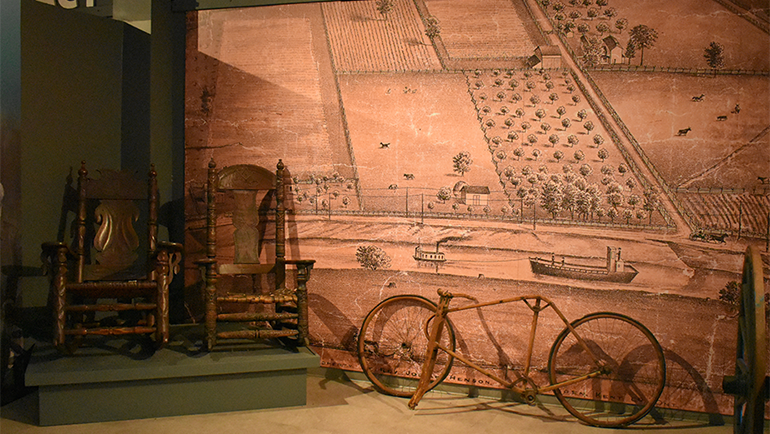
Figure 1. The Land Map of the Dawn Settlement. Photo by Blessing Ogunyemi, taken at the Josiah Henson Museum of African Canadian History, Dresden, Ontario, October 2024.
Standing today as both a testament and a tribute, Dresden is a place where warmth lingers in the air, where history hums softly beneath your feet, and where the embrace of safety is felt before a single word is spoken. From the moment you arrive, its quiet serenity wraps around you like a protective mantle, a refuge shaped by resilience and hope. This land, vast and still, carries the weight of stories that define freedom itself—stories of those who risked everything to reclaim their humanity. Among them was Josiah Henson, a visionary and leader who, after escaping the brutal chains of enslavement with his wife and four children, found his way to Fort Erie, Canada, on October 28, 1830. Betrayed by a master who had no intention of granting his freedom, Henson took destiny into his own hands and, in doing so, laid the foundations for Dresden to become a sanctuary—a beacon for those who sought not just survival but a life of dignity and possibility.
Often associated with the character “Uncle Tom,”—a character from Harriet Beecher Stowe’s Uncle Tom’s Cabin inspired by Henson’s life, Henson, a minister, author, abolitionist, and Conductor of the Underground Railroad, was credited for rescuing more than 118 freedom seekers. He also bought 200 acres of land with the support of other abolitionists and founded the Dawn Settlement in 1841, a self-sufficient community for formerly enslaved people.
While Stowe’s Uncle Tom’s Cabin played a pivotal role in shaping public discourse on slavery, the character of Uncle Tom, depicted initially as noble and self-sacrificing, was later co-opted into a symbol of subservience, distorting both the novel’s intent and the real-life legacy of Josiah Henson. To correct this long-standing misrepresentation, the Ontario Heritage Trust officially renamed the site where Henson lived after escaping slavery. What was once known as the Uncle Tom’s Cabin Historic Site was re-designated as the Josiah Henson Museum of African Canadian History in 2022, ensuring that his true story and profound impact are appropriately recognized and celebrated.
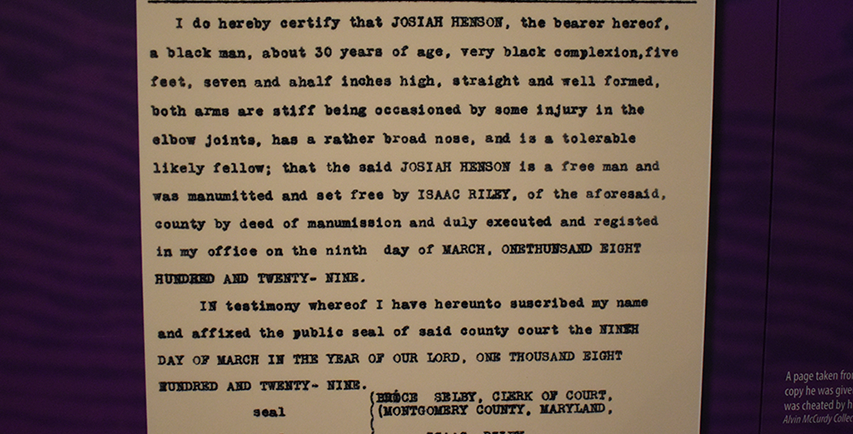
Figure 2. A Picture of Josiah Henson’s Manumission Document. Photo by Blessing Ogunyemi, taken at the Josiah Henson Museum of African Canadian History, Dresden, Ontario, October 2024.
Although Henson passed away on May 5, 1883, his remarkable legacy continues to resonate powerfully through the compelling work of the Josiah Henson Museum of African Canadian History and his descendants. This institution does more than preserve his personal story; it documents the collective history of freedom seekers who fled enslavement and pursued new lives in Canada. Through immersive exhibitions, evocative images, and carefully preserved antiques, the museum offers a vibrant tapestry of their journeys, highlighting their struggles, triumphs, and moments of joy.
While Dresden’s Black community is smaller due to some members returning to the United States in 1865 to live freely after the Emancipation Proclamation of 1863 and other generations of younger descendants seeking opportunities elsewhere because of modern challenges, it remains a close-knit community.