

Amherstburg: A Haven of Freedom and Struggle
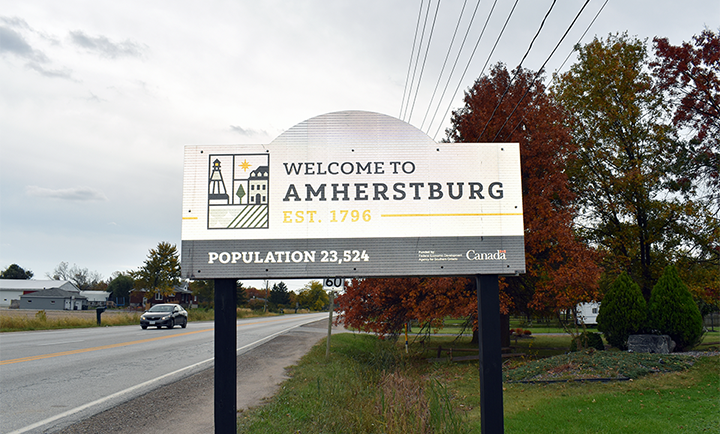
Figure 1. Welcome to Amherstburg Signage. Photo by Alex Allasra, taken at Amherstburg, Ontario, October 2024.
Situated at the mouth of the Detroit River, near Lake Erie, and across from Detroit, Michigan, is Amherstburg, Ontario, a significant town and crucial site of Black freedom. Standing as a silent witness to the turbulent tides of history, Amherstburg was a crucial waypoint for freedom seekers from the United States via the Underground Railroad and the site of Fort Malden—a military stronghold which played a pivotal role in shaping the region’s history.
As the British abolished enslavement in the early 19th century, Amherstburg evolved into a sanctuary, drawing waves of self-emancipated individuals who crossed treacherous waters and dense wilderness in pursuit of dignity and security. Today, Fort Malden is a preserved heritage site that connects to this layered history.
By the 1830s, Amherstburg had emerged as a crucial hub for freedom seekers. The town’s proximity to the U.S. border, its community of free Black Canadians, and the presence of abolitionist organizations made it a beacon of hope. Following the passage of the Fugitive Slave Act of 1850, up to 30 African Americans arrived daily via steamboat and the Detroit River. By 1860, Amherstburg’s Black population had grown to 800, nearly half of the town’s 2,000 residents.
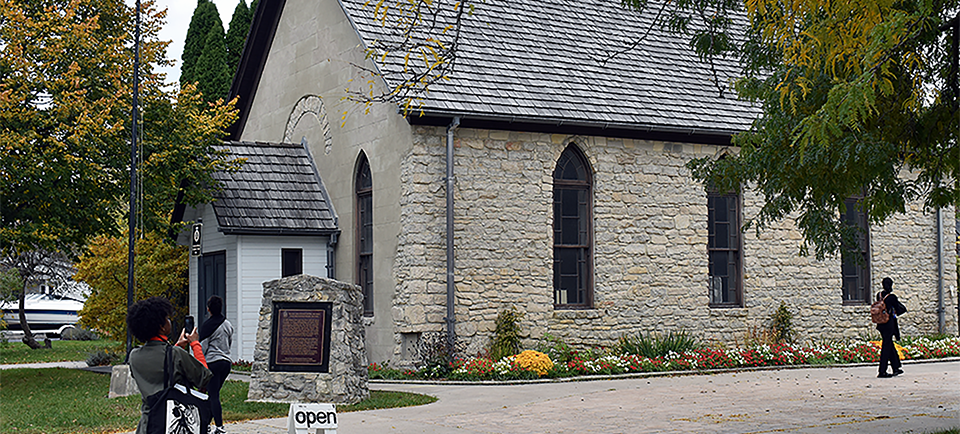
Figure 2. Emilie Andrée Roumer Jabouin, Gabriela Sealy, and Blessing Ogunyemi walking into the Amherstburg Freedom Museum. Photo by Alex Allasra, taken at Amherstburg, Ontario, October 2024.
Like many Black Settlements, the church played a multipurpose role in helping escaped enslaved people ease into their freedom. It was a place of worship; a site of education, a way station, and a place to foster community. Such was the role of the Nazrey African Methodist Episcopal (AME) Church. Built in 1848 by Black settlers, the church was actively involved in the Underground Railroad as a crucial site for abolitionist activities and strategizing. Now, the AME Church is part of the Amherstburg Freedom Museum and was recognized as a National Historic Site of Canada in 1999.
Black Canadian History Scholar Dr. Afua Cooper reflects on the dual role of Canada as both a Refuge and a Site of Black Anti-Racism for Freedom Seekers and Black Settlers.