

Safe Houses: Sanctuaries of Freedom
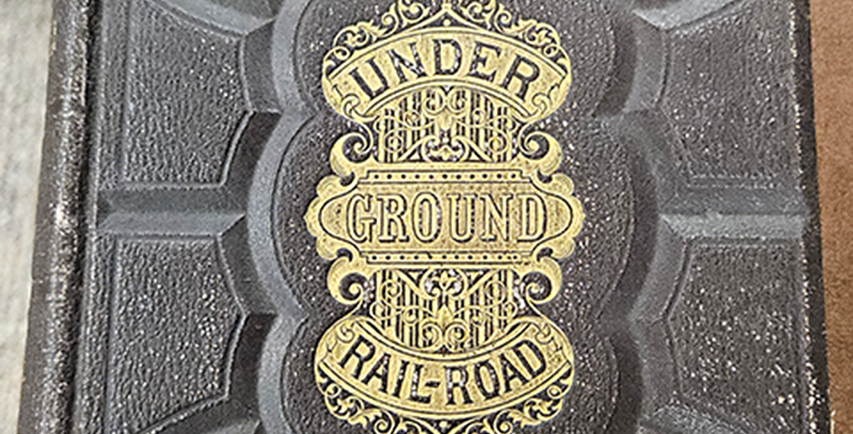
Figure 1. A Picture of William Still’s 1872 book containing the records of fugitive slaves. Photo by Gabriela Sealy, taken at Brock University Archives and Special Collections, E 450 S85 1879, St. Catharines, Ontario, October 2024.
As a covert network, the Underground Railroad is a decentralized system that depends on many crucial components, like Safe Houses for success. Often at significant risk to their owners, sites, which included Churches, local landmarks, barns, private homes of abolitionists and Underground Railroad members, and buildings connected to abolitionist activities, became safe houses. These safe houses ensure freedom seekers’ safety and smooth transition from one journey to the next. In providing shelter, food, clothing, and emotional support for the comfort of freedom seekers, the safe houses serve as respite spaces, offering hope and refuge to enslaved African Americans seeking liberation.
Like other conductors, Harriet Tubman used various safe houses while transporting freedom seekers on her many trips. Much of the Underground Railroad’s operations remain shrouded in secrecy—an intentional safeguard for those involved, leading to minimal documentation and the identity of most safe houses remains unknown.
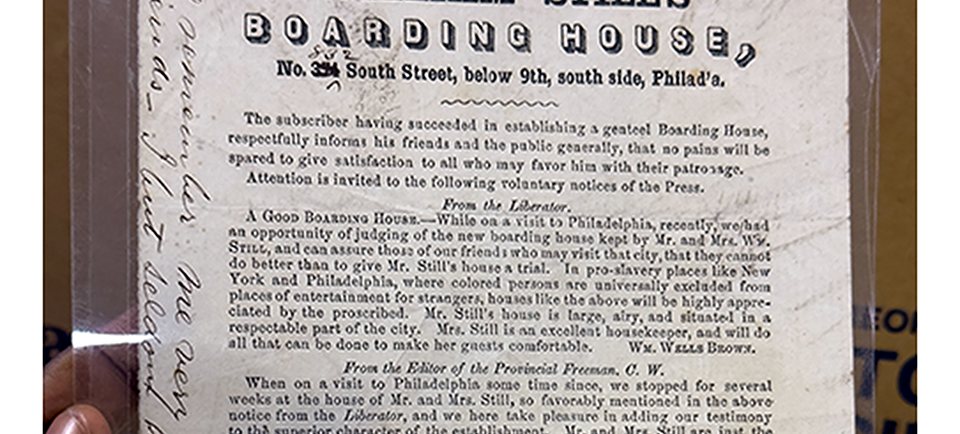
Figure 2. William Still’s Handbill/Boarding House Advertisement Ca. 1870. Photo from Rick Bell Family Fonds, RG 63, Brock University Archives and Special Collections, taken by Blessing Ogunyemi, St. Catharines, Ontario, October 2024.
Nonetheless, one of the famous homes that served as a major safe house, aside from the Levi Coffin House, was William Still’s house in Philadelphia—a conductor of the Underground Railroad credited for helping 800 enslaved people escape. He sheltered freedom seekers and cared for them in preparation for the next stage of their journey and interviewed them and documented their stories in the hope that it would help reunite families. Others like Joseph C. Bustill and Quaker abolitionists like Thomas Garrett and John Hunn’s homes were safe houses for the Underground Railroad—experiencing legal consequences for their contributions.
Although Harriet Tubman used many houses and buildings that are unidentified as safe houses in St. Catharines, Canada, the British Methodist Episcopal (BME) Church, now Salem Chapel British Methodist Episcopal Church, served as a significant safe house for freedom seekers. It was at the center of abolitionist movements and activities where Harriet Tubman worshipped, held meetings, and strategized how to help enslaved people escape bondage.
Other notable Canadian safe houses included the Nazrey African Methodist Episcopal Church, which is part of the Amherstburg Freedom Museum, and Sandwich First Baptist Church in Windsor. The John Freeman Walls Historic Site in Lakeshore and the home of James Wesley Hill in Trafalgar Township, now Oakville, also played essential roles in offering shelter and support to those escaping enslavement.
These safe houses were more than physical structures; they were critical nodes in a resistance network, symbols of defiance and community resilience. While minimal documentation might have contributed to the lack of sufficient information about the identity of historic homes used as safe houses, the gentrification and redevelopment in St. Catharines and other parts of Canada have played a significant role in erasing what little evidence remains. Despite this, the legacy of these sanctuaries endures in the stories of those who found freedom within their walls.