

The Ideals and Reality of Canada
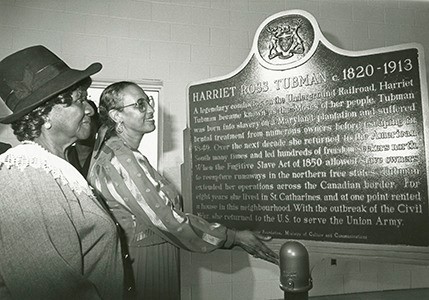
Recorded interview with Professor Lorne Foster, completed by Blessing Ogunyemi for the Harriet Tubman Institute, York University.
TRANSCRIPT:
Professor Lorne Foster: I am familiar with the fact that slaves used to talk up Canada all day long in the fields when they’re doing their work. Canada meant, it became synonymous with freedom for Black slaves. And they would talk all day long about how they would go to Canada. They’re going to Canada. And Canada became their North Star. But it was also the same time, a thorn, that’s a light way to put it, a thorn in the side of those dreams of Black slaves as well, particularly once they found their way to Canada.
There’s an anecdote or story about Josiah Hansen, Uncle Tom, as he’s more popularly known, Uncle Tom’s Cabin exists in Dresden, right outside of Chatham, which is the hub of one of the points of contact for the Underground Railroad. And the story goes that when Josiah Henson made his way to Canada, he said he’d come to Canada to find freedom, and he found that Canada doesn’t exist. Right.
In other words, freedom didn’t exist. And from there, he had to face the stiff reality of how he would live in a population that despised him. And he actually did very well in terms of his industry. He created a area or he created a colony, if you will, in Dresden that actually was occupied by at least 200 former slaves at one point. They created their own schools. They grew their own crops. They tried to be self-sufficient. So Canada has been contradictory in terms of the way that it’s perceived, the ideals of Canada, and the reality of Canada.
There has been a dis-junction between those two that still exists today, I mean, to a large extent. And we’re trying to bridge that gap. I think it’s the honorable, or the, what would you say, how would I put this? The saving grace of Canada is that we still live with the thought we can bridge that gap between Canada’s ideals of what it is and the reality of what Canada is. So from our perspective, Black perspective, we’re struggling with that through human rights, through the attempts to create movements that would allow us to have a better social integration or equal social integration and social equity throughout our public institutions and public sector lifestyles or public sector institutions. And we still struggle with that issue, I think that Canada presents a conundrum for slaves and for us today in terms of race relations with Canada and in terms of our belonging to this country, the sense of belonging that we all wanted, even the slaves were looking for that sense of belonging, that freedom, and being part of a community where they could reach the fullness of their capacities and we still have that, hold out that hope that we today, we moderns, are going to be able to move that needle closer to that goal, that ideal.