

The Many Last Stops: Canada and the Underground Railroad
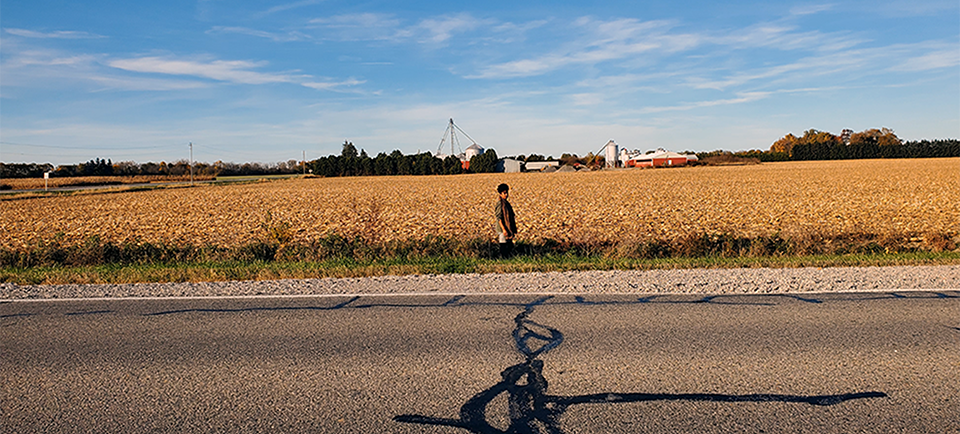
Figure 1. Emilie Andrée Roumer Jabouin in the fields. Photo by Gabriela Sealy, taken at Chatham-Kent, Ontario, October 2024.
In addition to its significance to Black history, the Underground Railroad is undoubtedly one of North America’s most compelling narratives of resistance and tenacity. Its Canadian legacy invites more profound reflection on the nature of freedom, belonging, and the meaning of “last/final stops/terminus.”
These supposed final destinations, scattered across major Canadian cities, were more than geographic destinations; they were symbolic sites of transformation, shaped by politics, survival, and the unyielding pursuit of dignity. But they also raise critical questions: Why so many last stops? Whose last stops, were they? What defined these places? And, perhaps most intriguingly, why are there no first stops?
Though “last stop” suggests finality, it is almost nothing literal or absolute. The Underground Railroad was not a railway in the conventional sense but a vast network of secret routes, safe houses, and coded messages. Built not on iron tracks but on the courage of those who risked everything, its “final stops” were not merely physical locations; they were psychological turning points, moments where escape gave way to refuge.
While there is no doubt that these last stops might have been defined by the influx of freedom seekers who settled there, places like St. Catharines, Buxton, and Amherstburg became key hubs for Black communities. These stops were as many individual experiences as they were collective ones. Hence, these last stops were not just destinations but dynamic spaces where personal journeys intertwined with the broader struggle for freedom and belonging.
The abundance of last stops across Canada also reflects the decentralized nature of the Underground Railroad. There was no singular path to liberation, only a web of possibilities. These last stops belong to the men, women, and children who turned desperation into defiance and the communities that welcomed them.
For many, these last stops were not always places of joy but sites of possibility, where chains were left behind, even as new struggles emerged. The absence of “first stops” on the Underground Railroad underscores the grim reality of slavery: there was no safe place to begin. The enslaved lived under constant surveillance and threat; their escape was not marked by an official point of departure but rather by an internal reckoning, a decision, a leap of faith taken in the dead of night, driven by an unrelenting hope for something better despite the risks of recapture, violence, or death. The lack of a precise first stop reflects the lack of freedom in the enslaved South. There were no havens, no resting places.
In this light, every place that became home to those who sought freedom can be considered a last stop, whether history or documentation has named it so or not. Each one testifies to survival, endurance, and the unyielding pursuit of dignity, reminding us that freedom was never merely given but continuously forged, reshaping the very fabric of Canada.
Dr. Rosemary Sadlier speaks about what it feels like for her to be a Descendant of the Underground Railroad.