

Harriet Tubman’s North Star: The Journey to Canada and the Fight for Freedom

Figure 1. St. Catharines Public Transit. Photo by Gabriela Sealy, taken at Brock University, St. Catharines, October 2024.
The passage of the 1850 Fugitive Slave Act, a law that granted enslavers the power to capture and return escaped individuals even from free states, marked a pivotal turning point in Harriet Tubman’s mission and the beginning of her Canadian history. This legislation not only intensified the dangers faced by freedom seekers but also prompted Ms. Tubman to look beyond the borders of the United States. The answer was Canada—a land that had abolished enslavement and where Black refugees could build lives unthreatened by capture and re-enslavement.
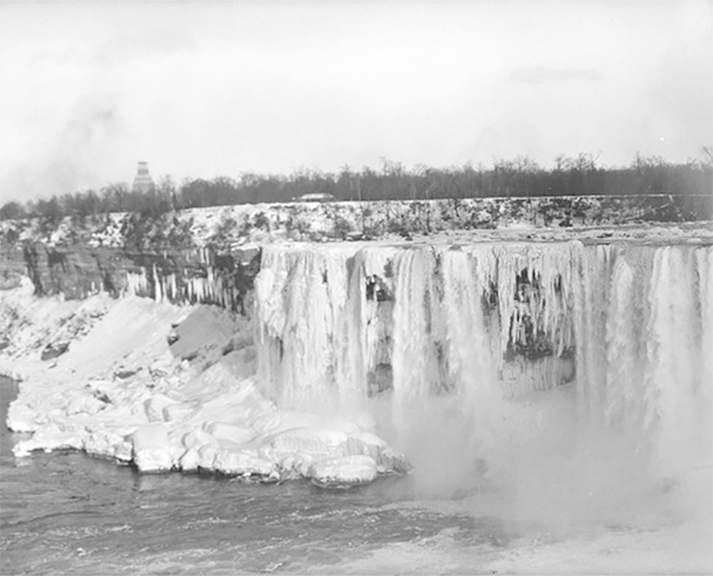
Figure 2. Niagara Falls in Winter, 4 February 1931. Photo from St. Catharines Standard/Niagara Falls Review Photographs 1930–1934, Brock University Archives and Special Collections, October 2024.
In December 1851, Ms. Tubman made her first trip to Canada, guiding a group of 11 freedom seekers on an arduous journey to St. Catharines, Ontario. With its strong abolitionist networks and growing Black community, the town became a sanctuary and an operational base for Ms. Tubman’s continued rescue missions. Although Canada had officially outlawed enslavement with the Slavery Abolition Act of 1834, the seeds of freedom had been planted decades earlier. The 1793 Act Against Slavery by General John Graves Simcoe restricted the expansion of enslavement in Upper Canada (now Ontario), setting the region apart as a bastion of hope for those fleeing bondage. By the time Ms. Tubman arrived, St. Catharines was already home to Black Loyalists, formerly enslaved individuals, and abolitionist allies, forming a resilient community that welcomed her with open arms.

Figure 3. Niagara Falls in the Fall. Photo by Alex Allasra, taken at Niagara Falls, Ontario, October 2024.