

From rudimentary installations to state-of-the-art technology
Sugaring-off season.
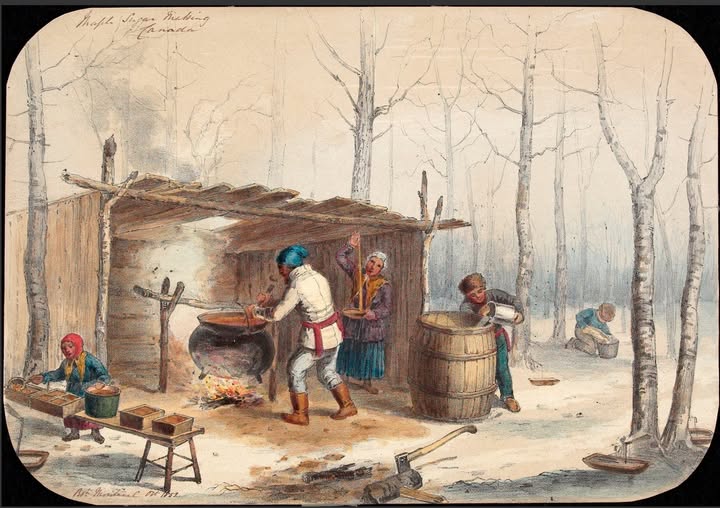
Maple sap harvesting, which has often been handed down from generation to generation, is an emblematic practice in Quebec’s history. Facilities were rudimentary in the early days of maple syrup production. Inspired by the First Nations, the settlers who tapped maple trees built a kind of circular tent every year with an opening in the middle of the roof to let smoke escape. The cauldrons were placed above the fire in these shelters and were thus exposed to the air.

Making maple sugar.
It was not until the end of the 19th century that facilities were improved and became permanent. The cabin was enlarged to accommodate the new, larger equipment. It was divided into three parts: a central area, where the kettles and sugar stove were installed; a section that served as a wood shed; and another more comfortable area that was used for cooking, eating, resting and socializing. Near the cabin, there was a small stable for an ox or a horse with room for fodder. As well, there was a small structure that served as a latrine; it was called a “bécosse” in honour of the English expression “back house” from which it was derived.

Destroismaisons family get-together.
Today’s sugar shacks are even bigger and more comfortable than they used to be. Some are following the commercial path by adding a large reception room offering restaurant services, where people can enjoy a unique gastronomic experience and discover the maple syrup production process in a warm and welcoming atmosphere. However, it is still possible to enjoy a “sugar shack” menu at a wooden table dressed with a red and white checkered tablecloth, to dance to folk music accompanied by fiddlers, accordionists, and spoon and harmonica players, to see farm animals and to take a ride in a horse-drawn carriage on our annual sugar shack outing.

Sainte-Louise sugar shack scool now and in the past.