

A secular tradition
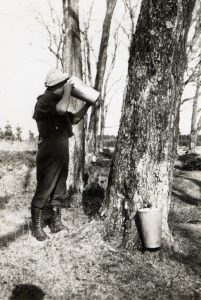
The best thirst quencher.
The first inhabitants of the Kamouraska region were quick to adopt the maple sap tapping techniques used by the First Nations. In a notarial deed dated November 15, 1708, Jeanne Sauvenier donated her property, while reserving the right to make maple sugar on it. It is likely that the vast majority of families in the region also took up the practice. What did this technique involve? It has evolved considerable over time.
Initially, with the coming of spring, First Nations people cut a notch in trees, under which they inserted a splinter of wood or a spout. The liquid dripped from this opening into a container placed on the ground, usually a birch bark bucket. The sap was then boiled in an earthenware pot, producing a small quantity of thick, black syrup.

Sugar maker at work.
Certain precautions had to be taken during tapping operations. In 1731, the Seigneuresse de Kamouraska requested that tapping no longer be done with an axe, since this could injure and kill maple trees. Offenders were fined.
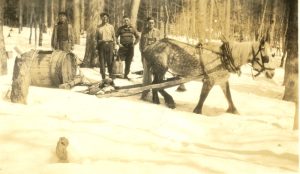
Transporting maple sap.
Everyone loved sugaring-off season, but it was also a time of hard work for the “sugar maker”. In 1868, the editor of the Gazette des campagnes described both the ups and downs of the process very well:
Sugar-making took its toll on farmers. It was extremely tiring. For three to four weeks, they were almost always on their feet. During the day, they had to collect the sap, transport water, install the sap containers, and prepare firewood, while at night, they had to stay up most of the time to boil the sap. What is more, they did not have all the comforts of home; their bed was not very soft and the cold that crept in from all sides through the disjointed rooms of their rustic dwelling made them suffer more often than not.