

Riding the Rails
On-to-Ottawa Trek
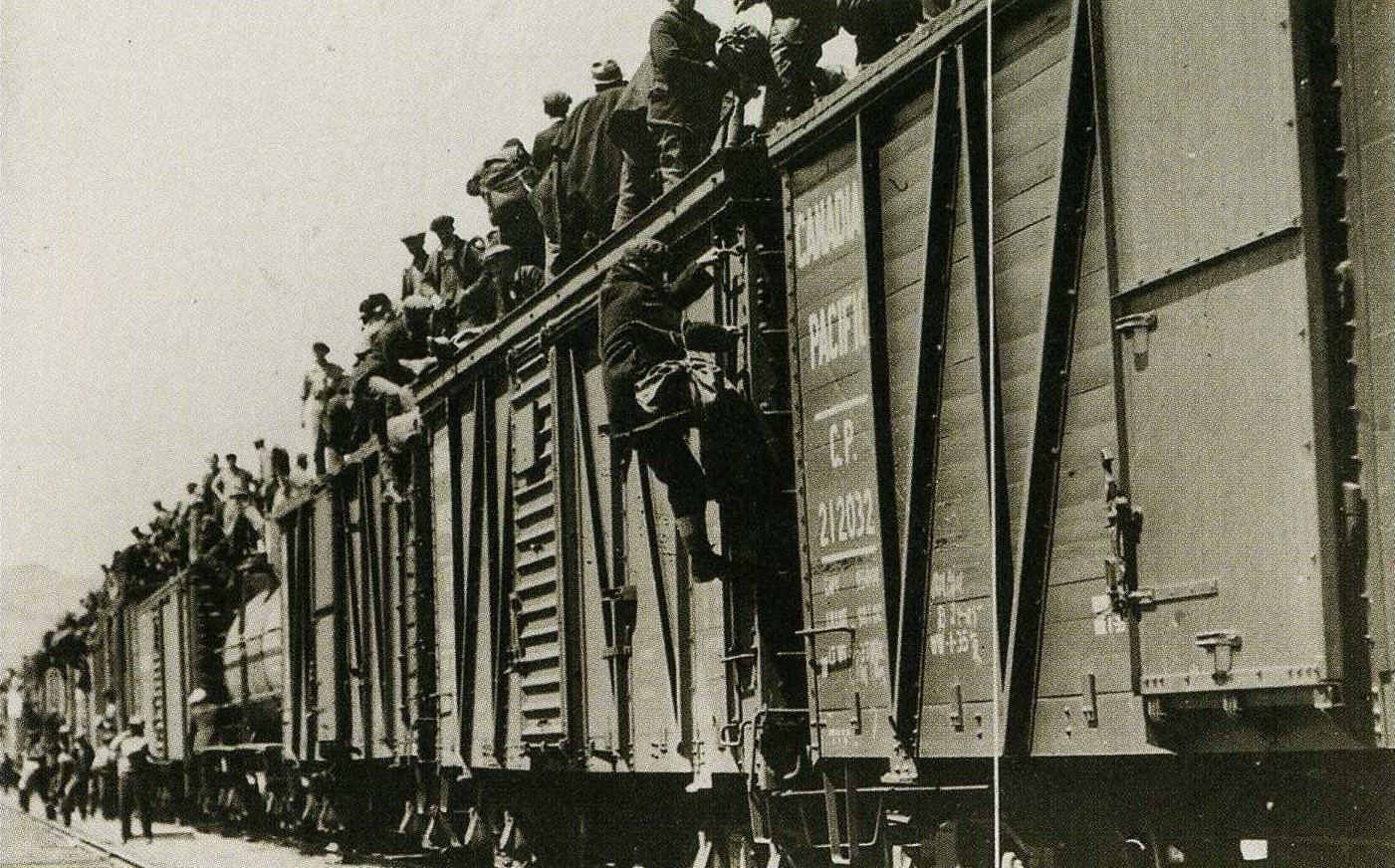
The On to Ottawa Trek, in Kamloops, June 1935.
Going out into the streets has always been one of the main tactics that activists have used to publicize their cause. Demonstrations and marches are visible, often loud, and an opportunity to engage with people on the street.
While such actions can and do take place almost anywhere, there are times when activists see it as particularly important to make their presence felt in the places where decisions are actually made. In Canada, that often means going to Ottawa, or to a provincial capital.
In the Depression of the 1930s, thousands of unemployed men took to the road (which usually meant hopping on and off freight trains) looking for work. In various locations across the country, they also demonstrated and marched to protest how they were treated. The largest of these marches took place in February 1932, when some 6,000 workers, unemployed and employed participated in a “Hunger March” that headed to Vancouver.
In 1935, with anger boiling over among unemployed men who had been sent to work camps in British Columbia, the men went on strike demanding improved working conditions as well as a better response to unemployment from the federal government. After two months of getting nowhere, the strikers decided to set forth on an “On-To-Ottawa Trek” to bring their demands to Parliament and Prime Minister R.B. Bennett. Frightened of what their arrival in Ottawa might lead to, the government resolved to stop the Trek en route, in Regina. Police attacked the Trekkers and arrested some of their leaders. The men fought back, a fight which has gone down in history as the “Regina Riot.”
The Trek ended, but its reverberations were felt. There was widespread support for the Trekkers’ demands, and in the federal election later that year, Prime Minister’s government suffered a crushing defeat, going from 135 seats to only 39.
The march “On-to-Ottawa” will remain in the annals as a pivotal moment in Canada’s labor history.