

Speaking Our Minds
So I felt I had to speak up… I have to do it. I don’t feel it’s a choice. I feel compelled. I feel it’s a moral obligation to speak out against abuse.
– Don Weitz
Don (1930-2021) was a lifelong activist, born in Cleveland but based in Toronto much of his life. The quote comes from an interview he did for Connexions’ oral history archive.
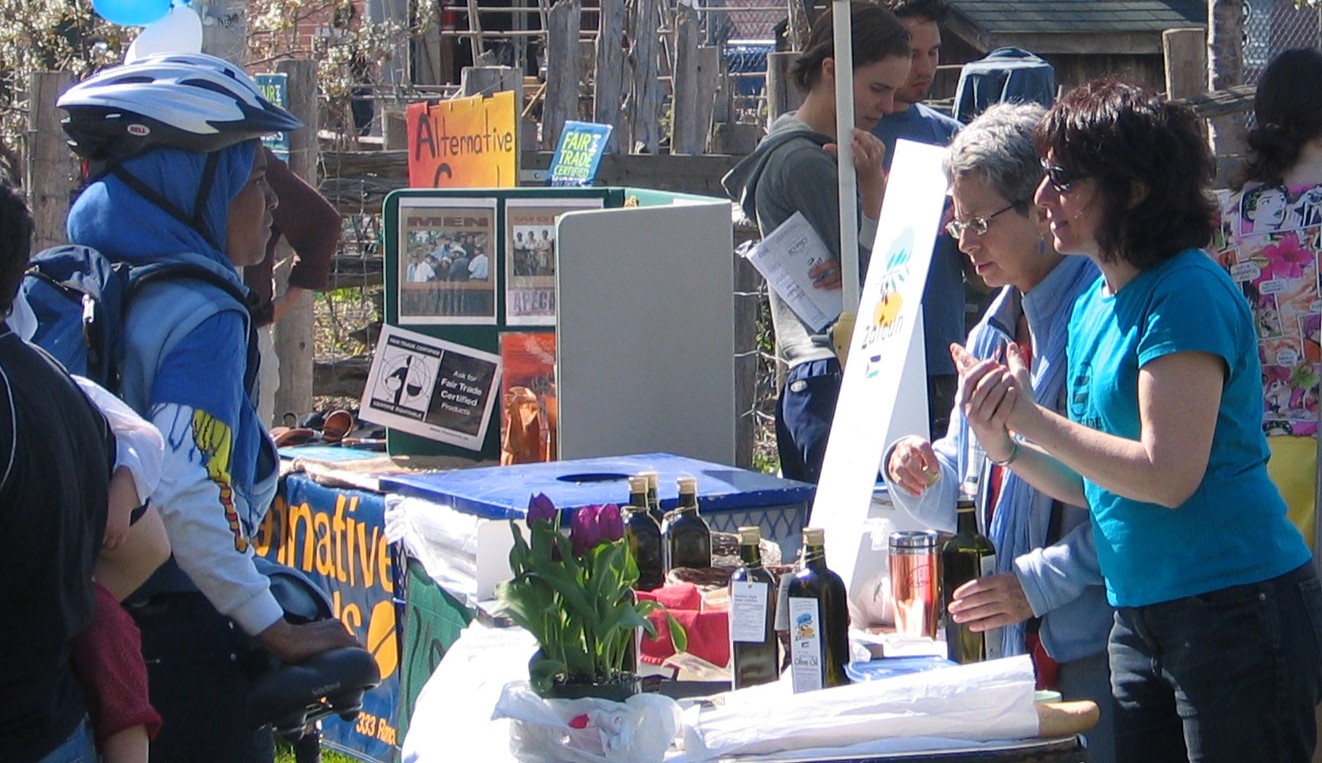
Selling fair trade olive oil from Palestine emerged as a form of ‘sustainable activism’ which provided Palestinian farmers with income while presenting opportunities for activists to talk to members of the public.
When people come together to work for change, one of the first questions they have to consider is how they will communicate their messages to those they are trying to reach.
The oldest approach, and still one of the most effective, is talking to people. The legendary organizer Cesar Chavez said “The only way I know how to organize is to talk to one person, and then you talk to another person, and then you talk to another.” Talking, especially when it takes the form of two-way conversation or small group discussion, is so valuable because it creates opportunities for ideas and points of view to be exchanged and new understanding to emerge. You find out if what you are saying makes sense to other people. You learn that if you speak in the jargon of your in-group instead of the language of ordinary people, you will not be understood or listened to. Experienced organizers say that the most important skill in organizing is listening.
However, talking to people individually or in small groups is time-consuming, and only possible if the people you want to reach are close by. Public speaking, speaking to an audience, and then travelling to another place to speak to another group of people, and then again travelling on to the next place to speak to yet another group, is how political organizers and candidates spread their ideas and recruited people to their cause throughout much of Canada’s history. Speakers would hold forth in halls, in big tents, or standing on the back of a wagon, truck, or tractor. Until microphones were invented, an essential skill for political speakers was the ability to project their voice to make themselves heard over the murmurings of a crowd or the interjections of hecklers.
But spoken words, no matter how they are delivered, are transient, and those who hear them can share what was said imperfectly, at best, with those who were not there to hear them.
So getting the word out successfully means using more lasting means of communications as well.
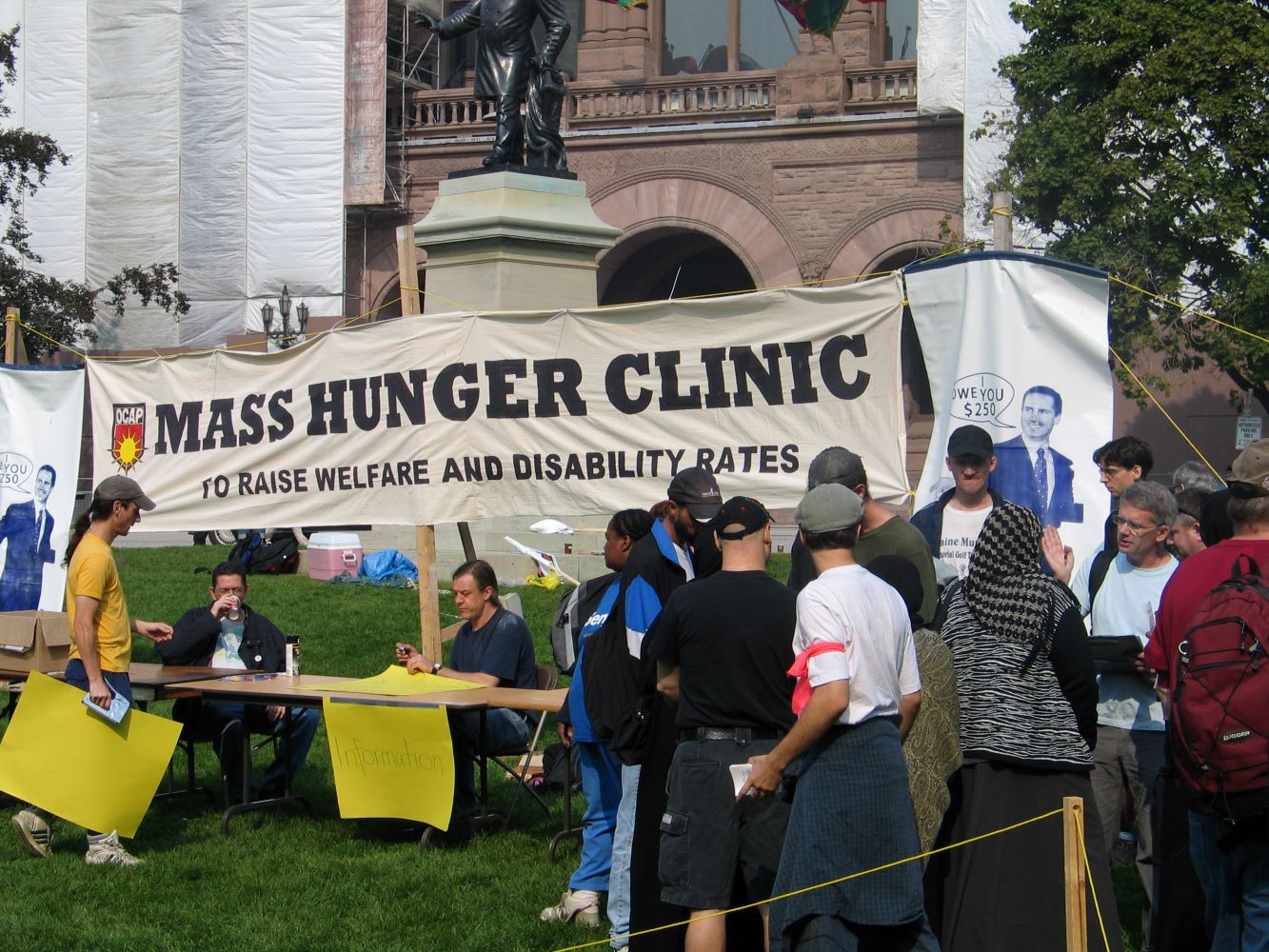
Mass Hunger Clinics were organized by the Ontario Coalition Against Poverty where people on welfare and disability payments could speak to other people in the same situation and talk about collective action.