

Posters, Signs, and Banners
Posters
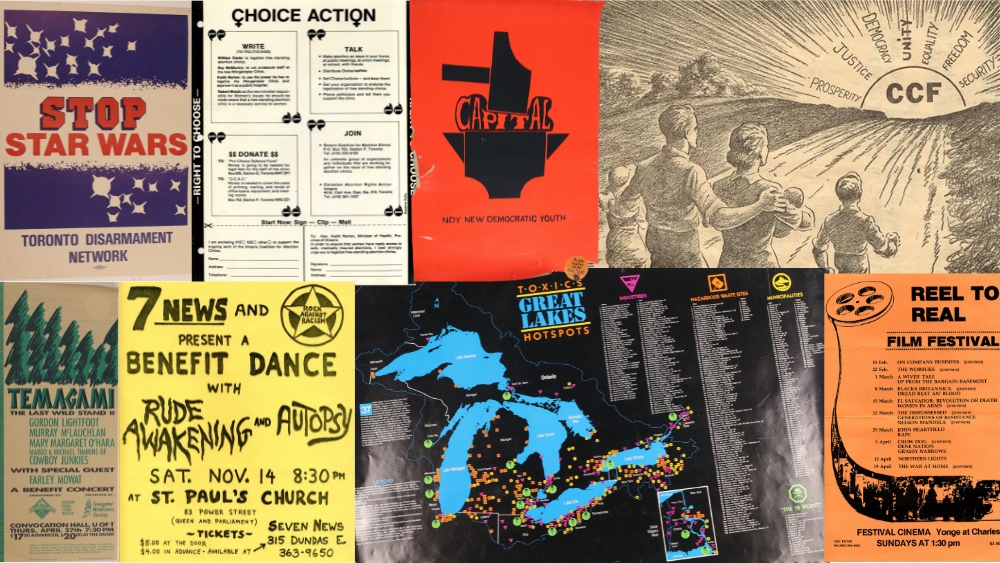
Posters aiming for maximizing impact.
When activists have messages which need to be displayed in public spaces, they most commonly think about creating posters. Posters – so called because they are created to be “posted” on a lamppost, wall, or similar locations – can vary in size from relatively small to large.
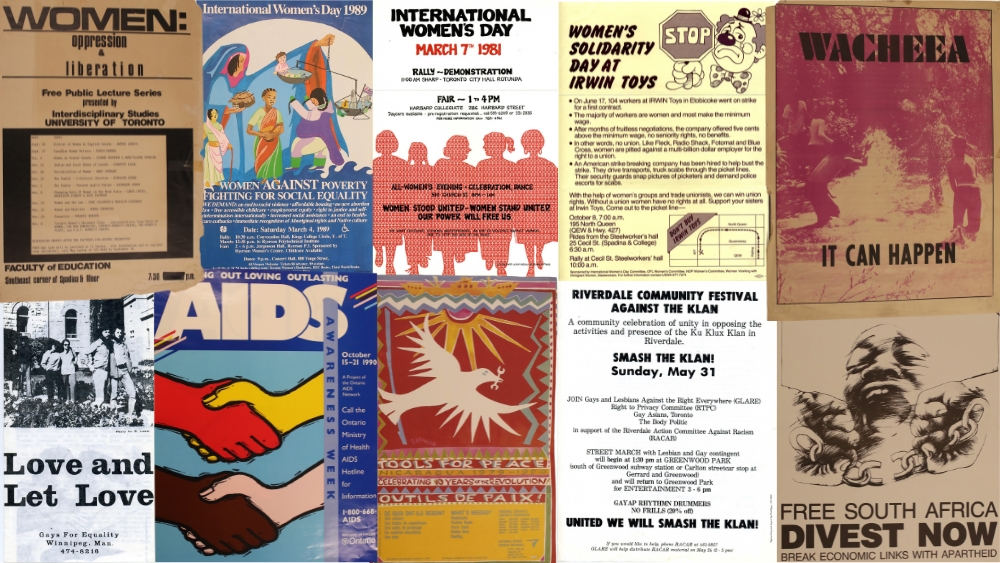
Posters getting the message out.
The small ones can be very much like ordinary leaflets. Putting up posters was – and remains – a common strategy for getting the word out about an event or an issue. Several teams of two or three people might set out on an evening to cover different parts of the city with posters. Two of the people would deal with the mechanics of putting up the poster – one to hold the poster, the other to apply a sticky glue-like mixture or clear tape – while a third person might be in charge of keeping watch to see if there were police in sight, since postering has often been considered a bylaw violation in many places across Canada.
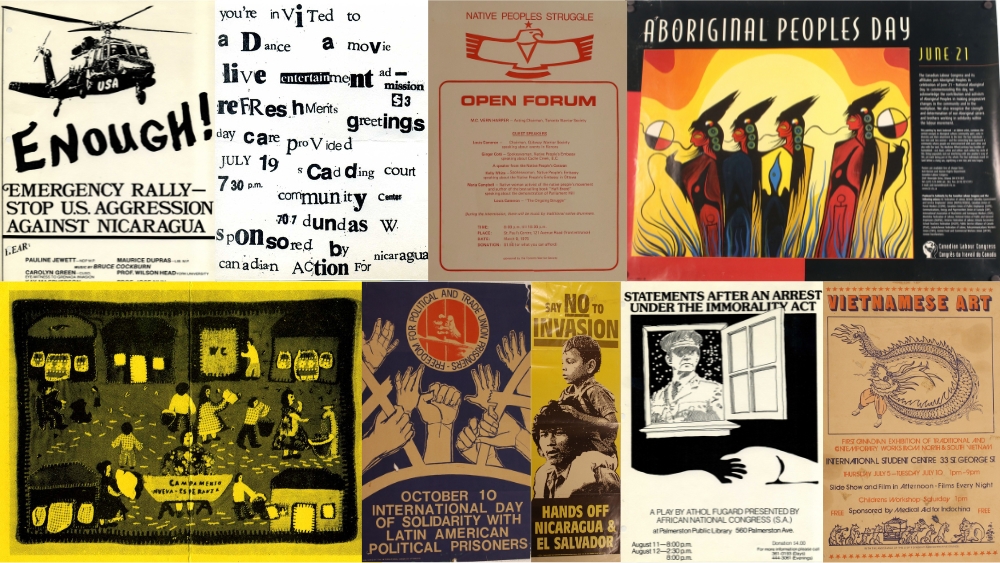
Posters showing solidarity.
Larger posters, which might be in the range of 20″x 30″ or even larger, are intended for more permanent display in indoor locations. They can incorporate a higher level of design and production because they, unlike outdoor street posters, are much less likely to be torn down quickly, so the extra work and expense is worth it.
Signs and Banners
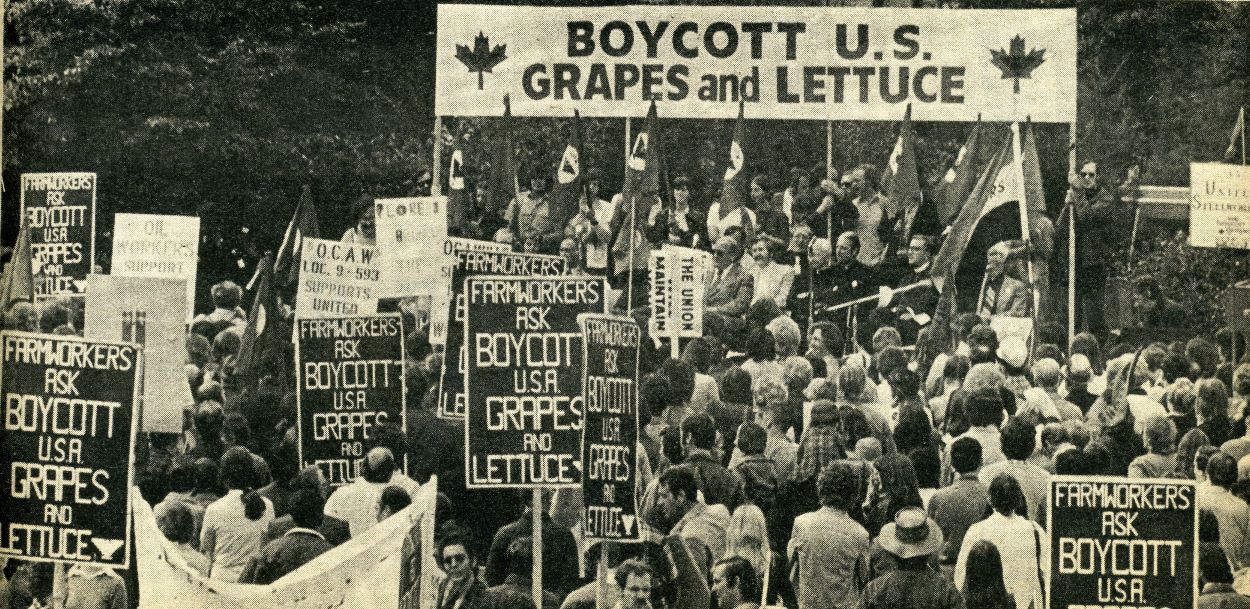
From 1965 to 1970, Canadians coast to coast boycotted American grapes and lettuce, and picketed and marched to express support for farmworkers.
Political signs are made either to be carried, most often in a demonstration or protest, or to be mounted in a prominent location, such as a balcony or a front lawn. A protest march may feature pre-printed signs provided by the organizers, but it will also typically have home-made signs made by individual participants.
In demonstrations, there will often be a few banners large enough that it takes two or more people to carry them. These banners, often bearers of powerful collective messaging, transform the crowd into a visual spectacle — a declaration which floats in front of the demonstration or above the heads of the people.
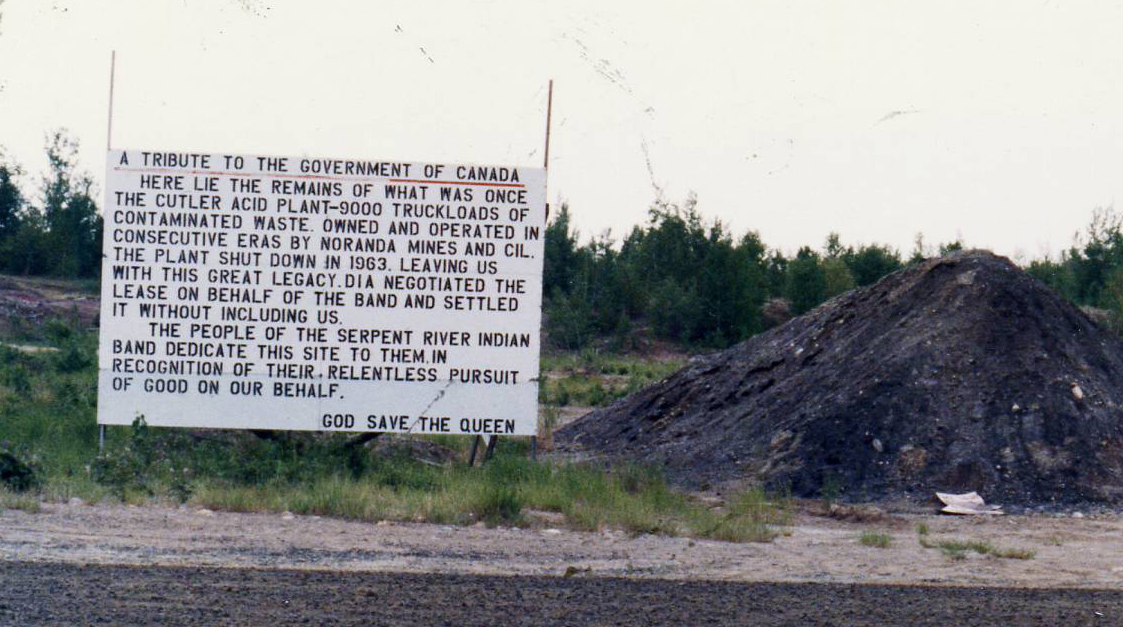
Signs can also be posted in more permanent locations at the side of the highway to reach people driving by. This sign, posted by the TransCanada Highway by the Serpent River Indian Band, packs a punch.