

Wearing Our Messages
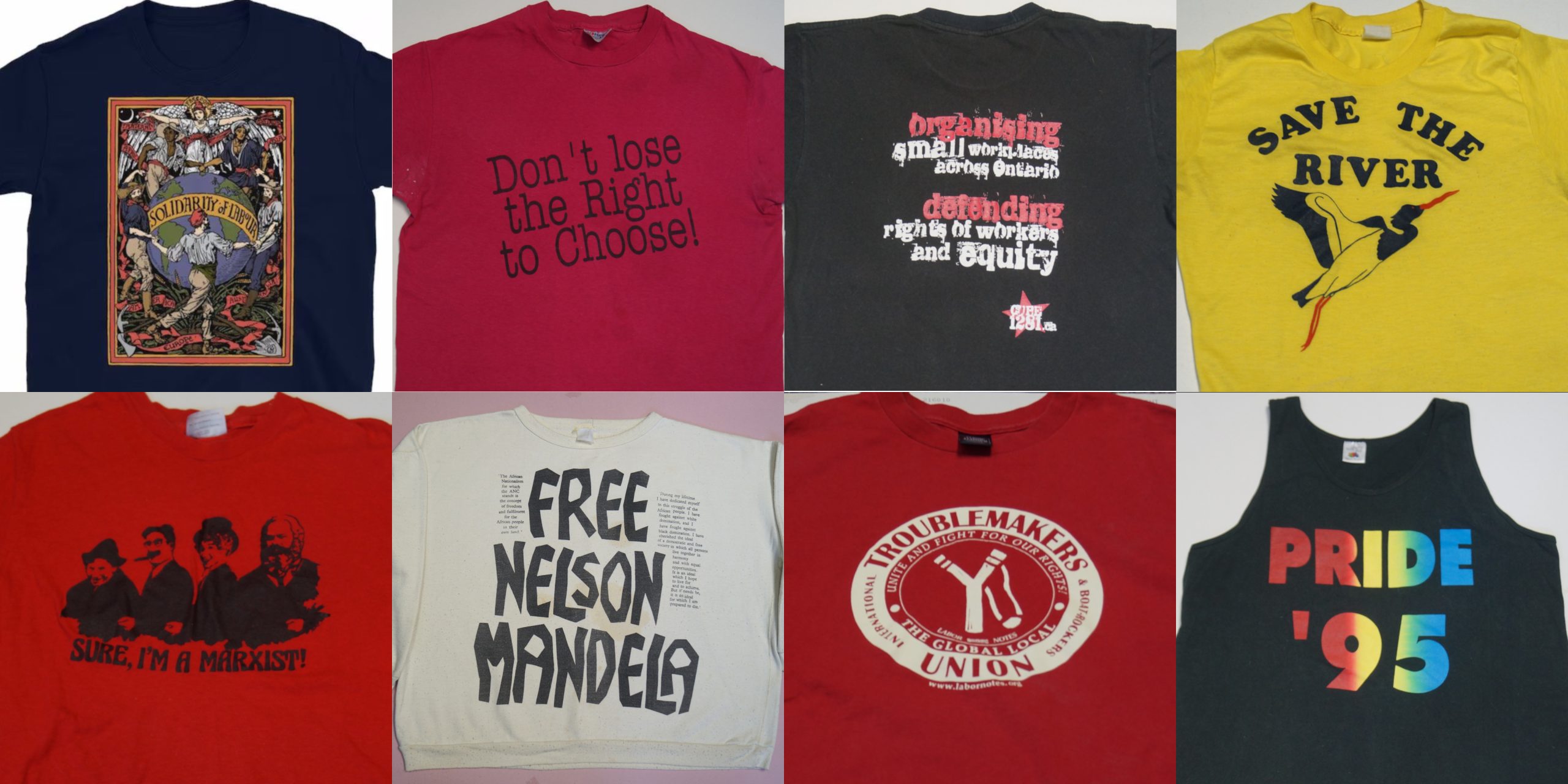
Clothing with political messaging that is upfront and direct.
Wearing political messages is a simple, visible way for people to communicate their beliefs. Often the message is stated in a few words, perhaps accompanied by an image. T-shirts, sweatshirts, hats, kerchiefs, wristbands, and buttons pinned onto clothing are commonly used.
The colour alone may be used to convey a political message, as in for example the orange shirts worn in Canada in remembrance of residential schools.
Red berets were worn by workers and peasants during the French Revolution, and spread from there to other countries as a symbol of radicalism.
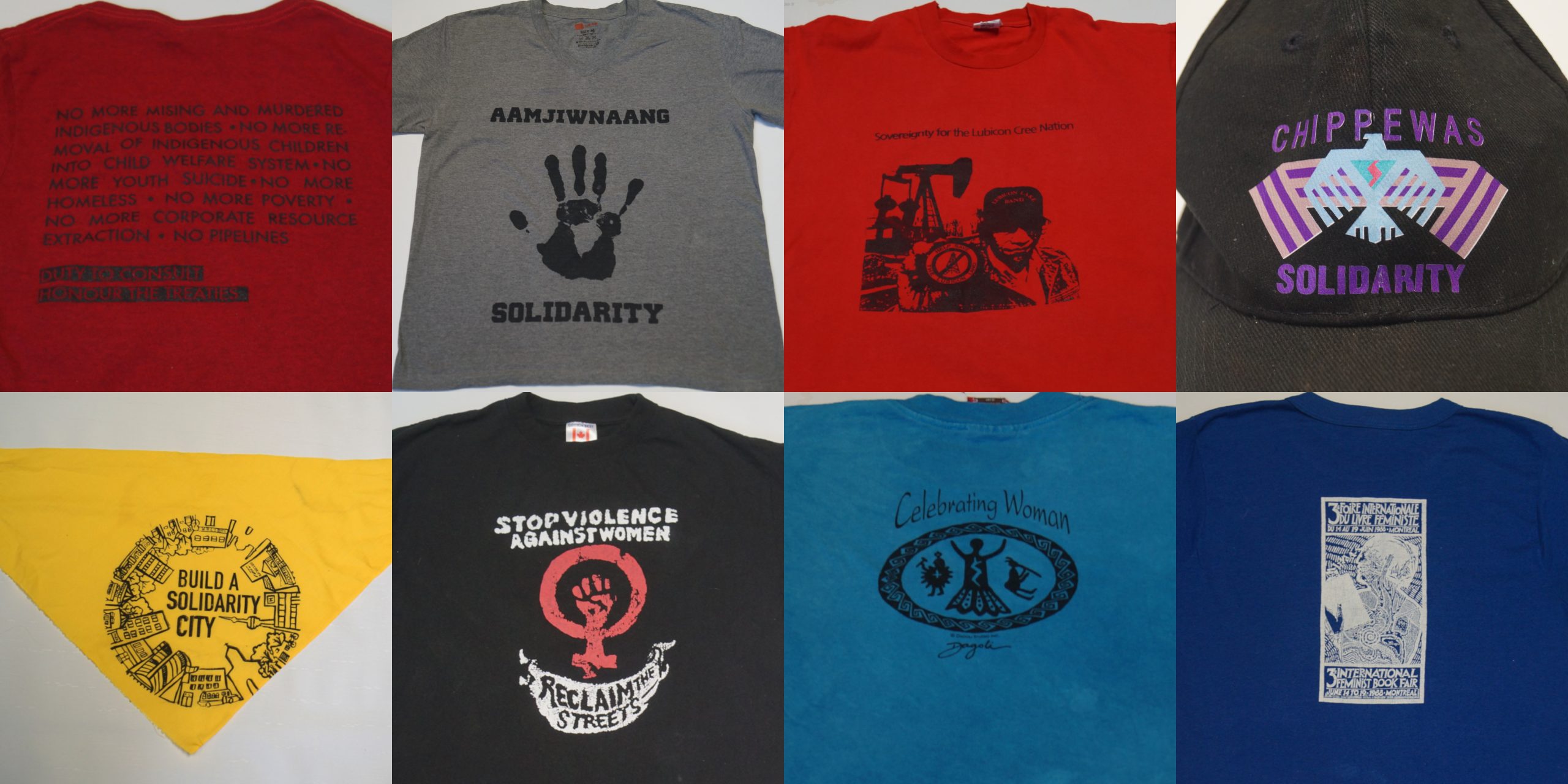
A few words and images pack a punch.
Kerchiefs, scarves, and wristbands don’t offer much space for written messages, but when their colours and patterns are recognized, they can be quite effective. Examples include orange wristbands worn in support of the people of Darfur, rainbow-coloured gay pride wristbands, yellow refugee-rights scarves, and the keffiyehs worn in support of the Palestinian people.
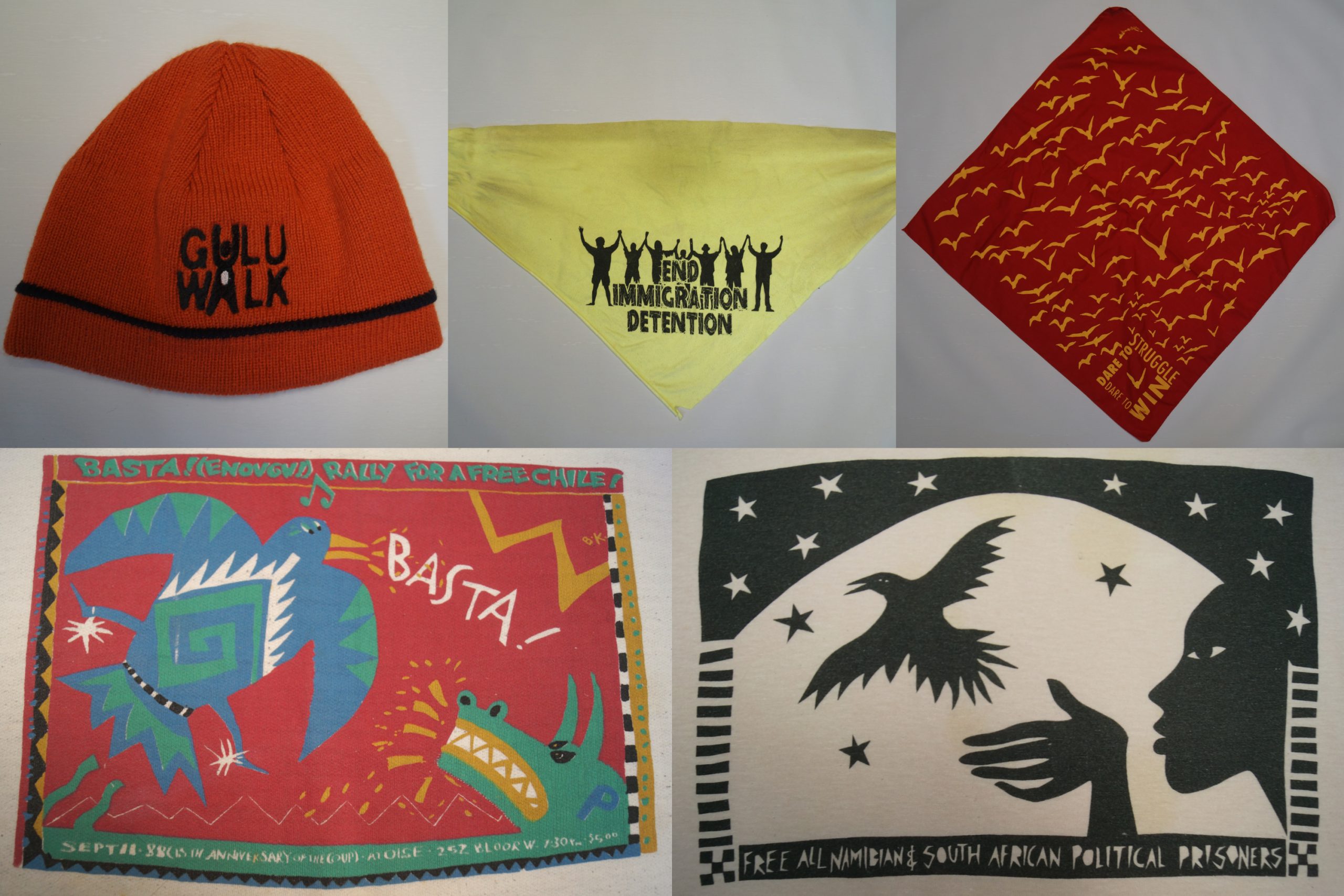
There are many ways to wear a political message.
In our car-oriented society, people sometimes proclaim their allegiances on their cars, most commonly in the form of bumper stickers.
Buttons
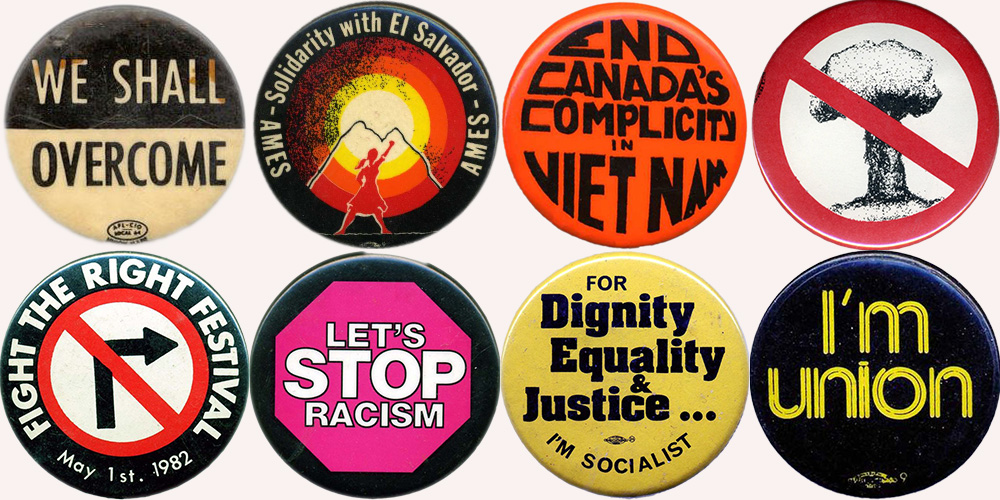
Buttons proclaiming where we stand.
Political buttons have long been popular means of expressing a message. In Canada, they have been broadly popular since the 1960s. Buttons – usually metal, with a pin on the back for attaching them to clothing or a bag — are inexpensive to produce, durable, and highly visible. They enable the wearer to express support for a cause or a political candidate. Button machines are simple easy-to-use pieces of technology which even small groups can afford to acquire so they can produce their own buttons.
The Connexions Archive holds a collection of hundreds of political buttons going back over decades.
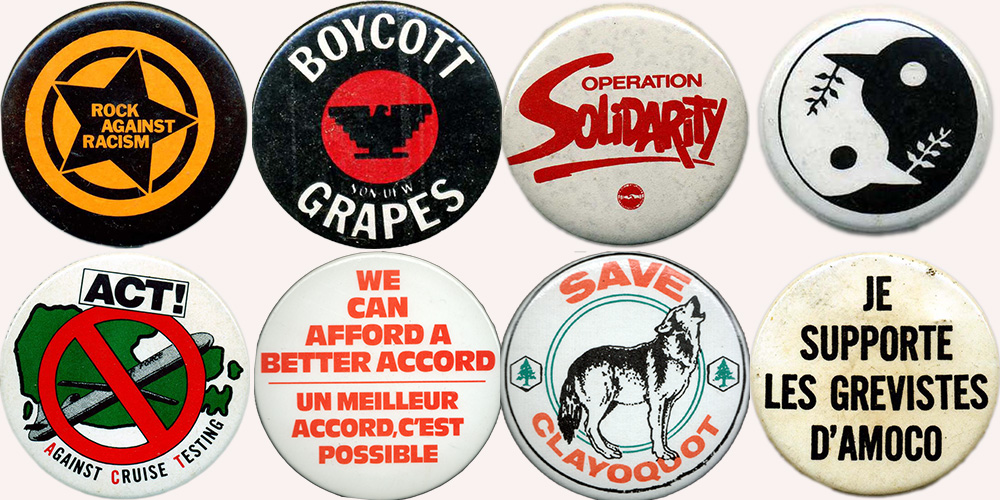
Buttons showing support for the cause.