

Pamphlets
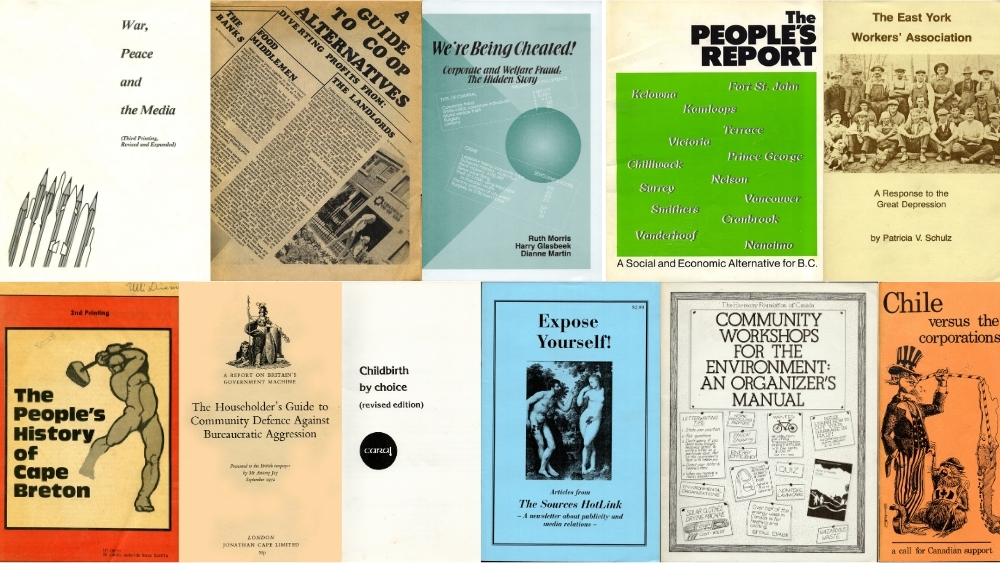
A small collection of pamphlets. Pamphlets provide information and analysis in an accessible format.
Pamphlets have played an important role in conveying political messages for centuries. A pamphlet is easier and cheaper to produce than a book, perfect for distributing political messages to a wide audience. Some of the most influential political publications of all time were pamphlets.
Thomas Paine’s pamphlet Common Sense, published in Philadelphia early 1776, argued the case for American independence and maintained that revolution is justified when people are oppressed by an unjust government. Passages from Common Sense were read aloud at public meetings, bringing its message of revolution even to people who were illiterate. In the year 1776 alone, the pamphlet went through 25 editions and sold 500,000 copies. Historians consider it critical in turning the tide in the British colonies toward revolution.
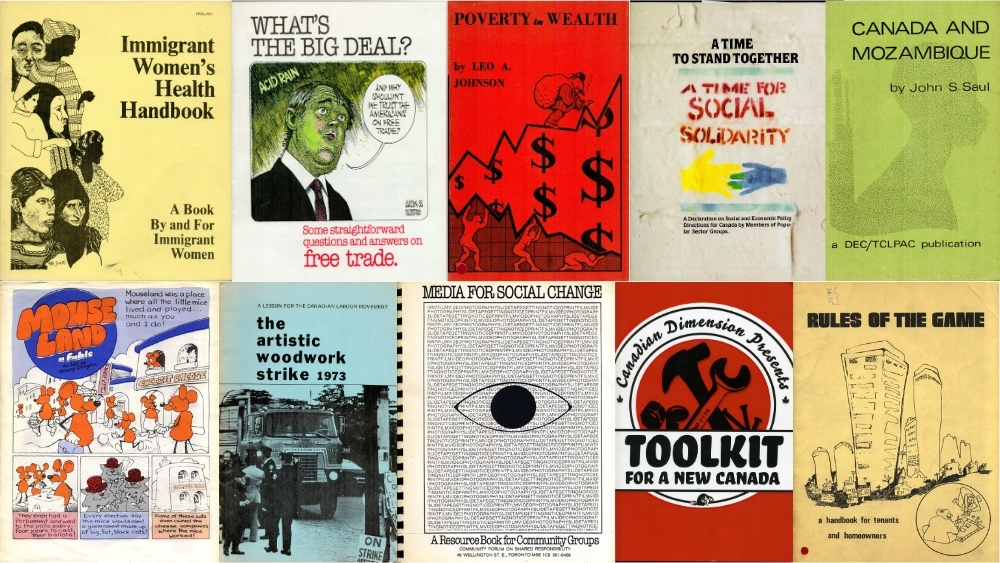
Pamphlets that tell what is happening and what we can do about it.
A 23-page pamphlet hurriedly printed in February 1848, when the whiff of revolution was in the air, went on to become perhaps the most famous and widely translated political statement of all time: The Communist Manifesto.
In Canada, pamphlets published elsewhere, like the Communist Manifesto, had a wide circulation, and, as time went on, so did pamphlets produced in Canada. The Co-operative Commonwealth Federation (predecessor to the NDP) for example, produced pamphlets outlining its programme which its canvassers distributed door-to-door. Other political groups also published pamphlets and either sold them at low cost, or gave them away.
Starting in the 1960s, small groups of activists in different cities came together to form publishing projects which produced and distributed pamphlets, and in some instances books as well. The Connexions Archive contains more than 1,000 pamphlets covering a vast range of topics and perspectives.
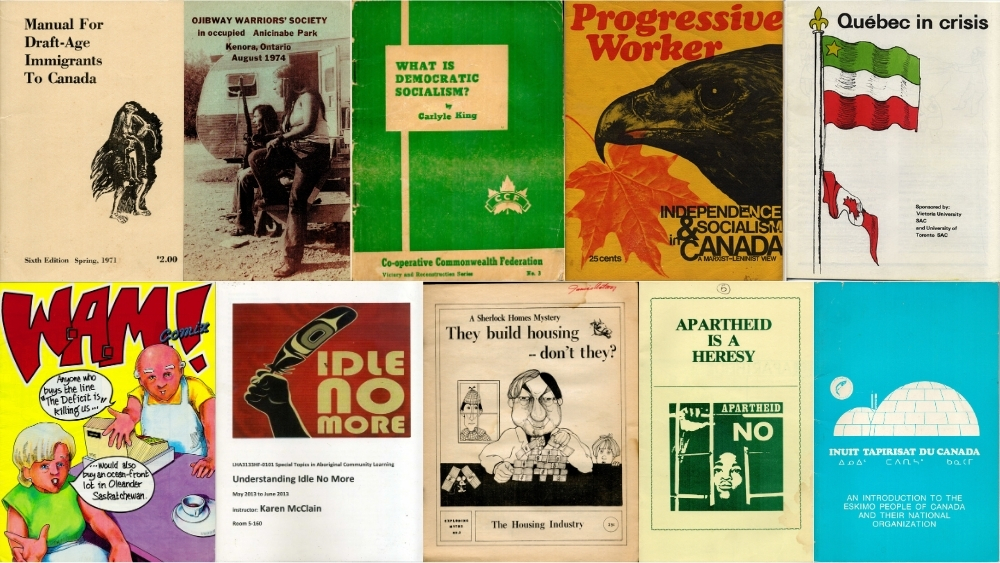
Pamphlets with practical advice and cogent analysis.