

Photography
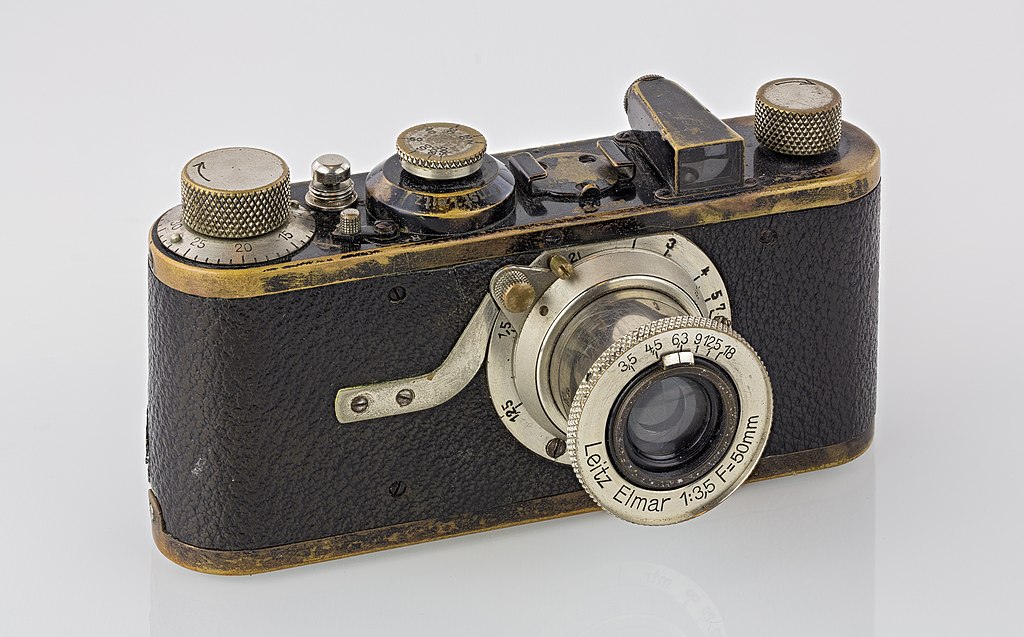
Leica Camera. Leica 35mm cameras were the cameras of choice for many photojournalists and professional photographers for much of the 20th century.
The idea of using light to directly ‘capture’ what we see rather than rely on painting has a history going back centuries. Variations of the ‘camera obscura’ (dark chamber) existed in ancient China, in the Greece of Euclid and Aristotle, and in the Arab world from the 10th century on. Artists used these devices to project images which they could then trace and elaborate on. What was missing was the ability to save, to permanently record, the image. That breakthrough came in the 1820s, when Nicéphore Niépce, Louis Daguerre, William Fox Talbot and others developed techniques for making permanent copies. The new invention came to be called ‘photography’ (literally, writing with light).
Photography soon arrived in Canada, and quickly became popular. The first photo studio opened in Halifax in 1840. By 1865, 360 professional photographers had set up shop, mostly in Montreal, Toronto, and Halifax. Because taking photographs required long exposure times, early photographers concentrated on subjects that would remain still long enough to take a photo: scenery, and portraits (for which there were paying customers).
Magazines and newspapers were another potential market if the problem of long exposures could be solved: their interest was especially in what came to be called news photography. A first step came in 1848, when a French newspaper published a photograph of barricades erected in Paris during the revolt of June 1848. But it was only in the final decades of the century that social documentary photography and photojournalism emerged and inaugurated a new trend: instead of photographs being used as illustrations to accompany text, in the new mode of photostories, the images were central.
Photojournalism and documentary photography came to play important roles in Canada in the twentieth century. What photos were taken and how they were used and interpreted, varied greatly, depending on the intent of the photographers and those who hired them.
From the turn of the twentieth century, photography played an important role in drawing public attention to social problems. Photographs of poor living conditions in downtown Toronto in the early 1900s, as well as later in the century, led to public health initiatives and social welfare reforms. The way in which such photos were used and interpreted could be controversial, with activists concerned with social problems sometimes at odds with each other. For example, photos of poor living conditions in low-income areas were used by liberal reformers to advocate for wholesale ‘slum clearance’ projects, while residents wanted improvements that would allow them to remain in their homes.
Critics such as Marjaleena Repo, in her article “Photography and the Powerless,” challenged the ways in which photographers framed poor and working-class people as problems, rather than as people who needed access to resources that would allow them to solve problems. This criticism highlights the importance of an inclusive and respectful approach, wherein the subjects of the photography are not reduced to objects of pity, but rather, recognized as the authors of their own liberation.
From the 1960s on, social movements increasingly used photography as a means of self-representation and a tool for social change. The women’s rights and gay rights movements were among those which made extensive use of photography to depict actions such as parades, protests, and conflicts with the police.
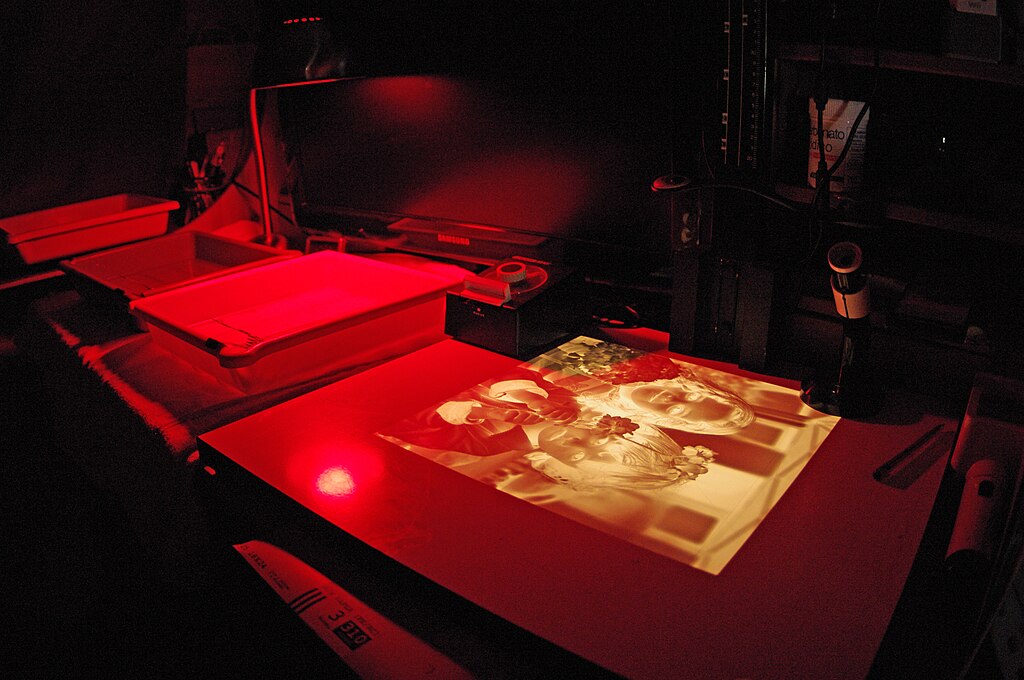
A photographic darkroom, in which prints were made from photographic negatives.