

How do we reach the public?
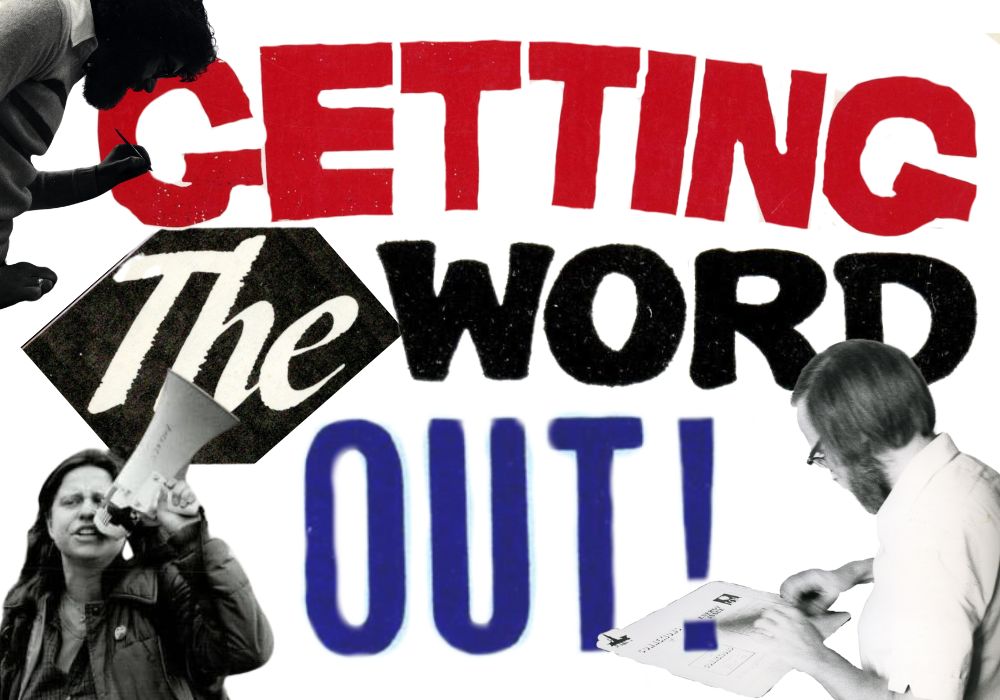
Any group of people who want to present new ideas, challenge existing ways of doing things, or advocate for change, inevitably face a crucial question: How do you reach the people you need to persuade to support or join your cause?
The spoken word, whether it takes the form of face-to-face conversation, or a discussion or meeting, or a speech delivered in a hall or at an outdoor venue, or a broadcast or recording, has always been, and remains, one of the most powerful and effective means of communicating ideas. Talking to people is most effective when it takes the form of a mutual exchange. A good organizer spends as much time listening as speaking. That is true whether the organizer is a politician or canvasser going door-to-door, or a labour organizer trying to persuade workers, one by one, to join a union, or a community activist seeking to educate residents about a threat to their environment.
The problem with face-to-face conversations is that they are time-consuming. Where the number of activists is small, and the potential constituency is large, other means are also needed to get the message out.
Recording and broadcasting technologies make it possible to reach vastly greater audiences. They lend themselves well to disseminating spoken words, and they can also do much more to communicate a message, because they can incorporate music, film and video, and a vast array of other ways of making communication more powerful and more effective. These technologies evolved rapidly through the 20th century, and each new development presented organizers with additional options for getting their messages out. Radio, film, television, records, audiotapes, CDs – all were incorporated into activists’ toolboxes when they appeared.
Print, which lends itself to an almost-infinite variety of formats – books, pamphlets, newspapers, broadsheets, maps, stickers, leaflets, posters, signs – has played a crucial role for centuries, and continues to do so.
Public gatherings – demonstrations, marches, parades, rallies — have always been a powerful means for activists to communicate their concerns to the wider public. Such events may include banners, signs, chants, speeches, music, and other means of making protests visible and audible, but the essence of what is being communicated is the presence of a sizeable group of people who are proclaiming, by their presence, that they feel strongly about an issue of public concern.
The creativity and diversity of movements for change means that no overview can cover all the different ways they communicate with their intended audiences. Innovative examples range from messages in public space, such as murals and graffiti, to small but visible items such as T-shirts, hats, wristbands, and political buttons.
Printed materials comprise the largest part of the Connexions Archive, with more than 100,000 individual items on a wide range of issues; only a tiny fraction could be included in this exhibit.
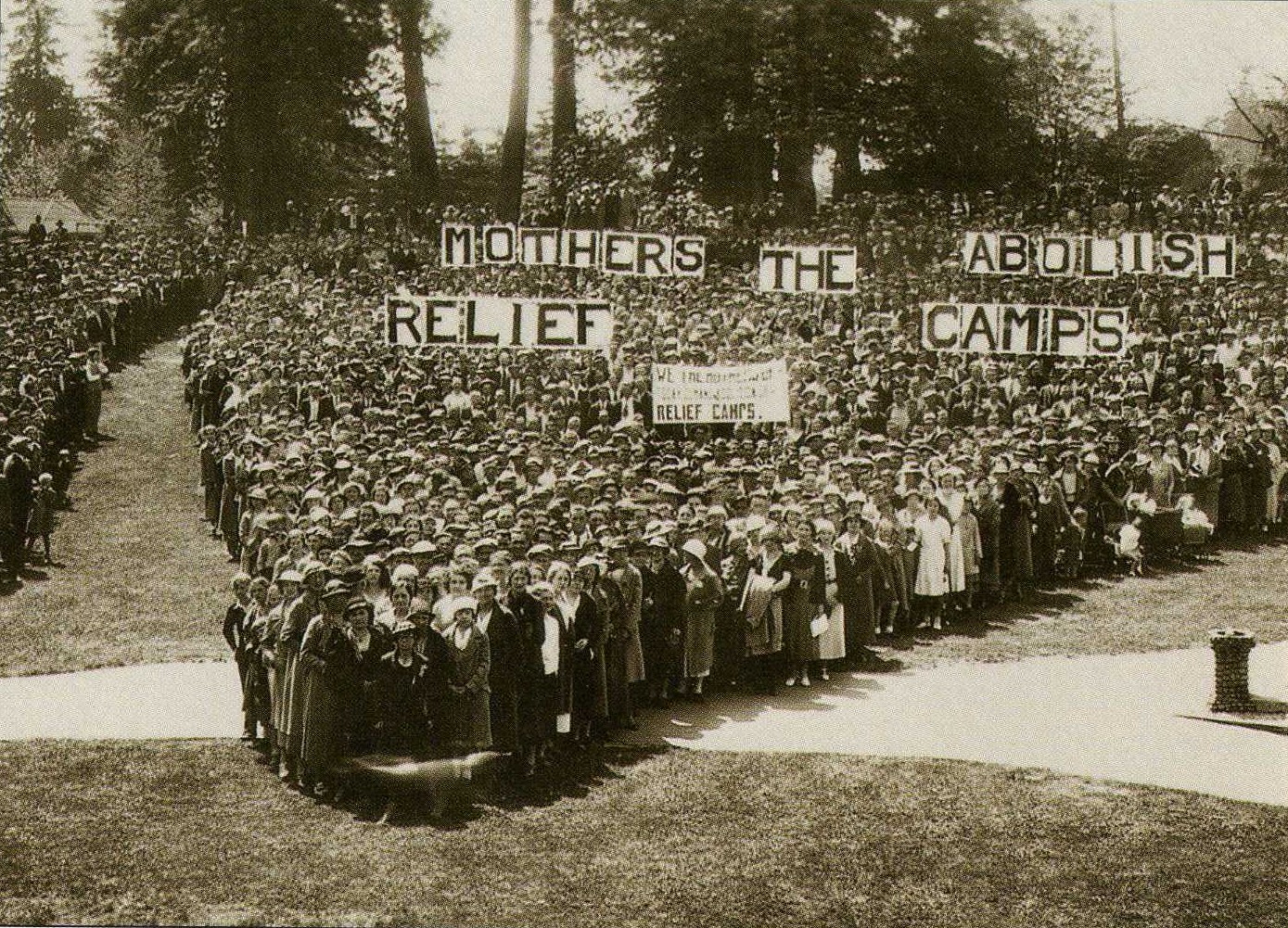
The Mother’s Day Picnic in Stanley Park, Vancouver, 1935