

Lucie Carrier: One Woman’s Career in Journalism at L’Hebdo du Saint-Maurice and L’Hebdo St-Tite/Normandie
Writing advertorials for businesses like auto repair garages, beauty clinics and butcher shops, as well as for tournaments and other events, provided a springboard to a career in journalism for someone with no training in the field. Still, each step along the way demanded attention to detail, curiosity, high-quality writing and a strong work ethic.
My knowledge and credibility grew with time, especially through working with an array of male staff reporters and freelancers—including my mentors, Paul-André Garceau and Gilles Dessureault. That is how I became Editor-in-Chief of L’Hebdo du Saint-Maurice and L’Hebdo St-Tite/Normandie.
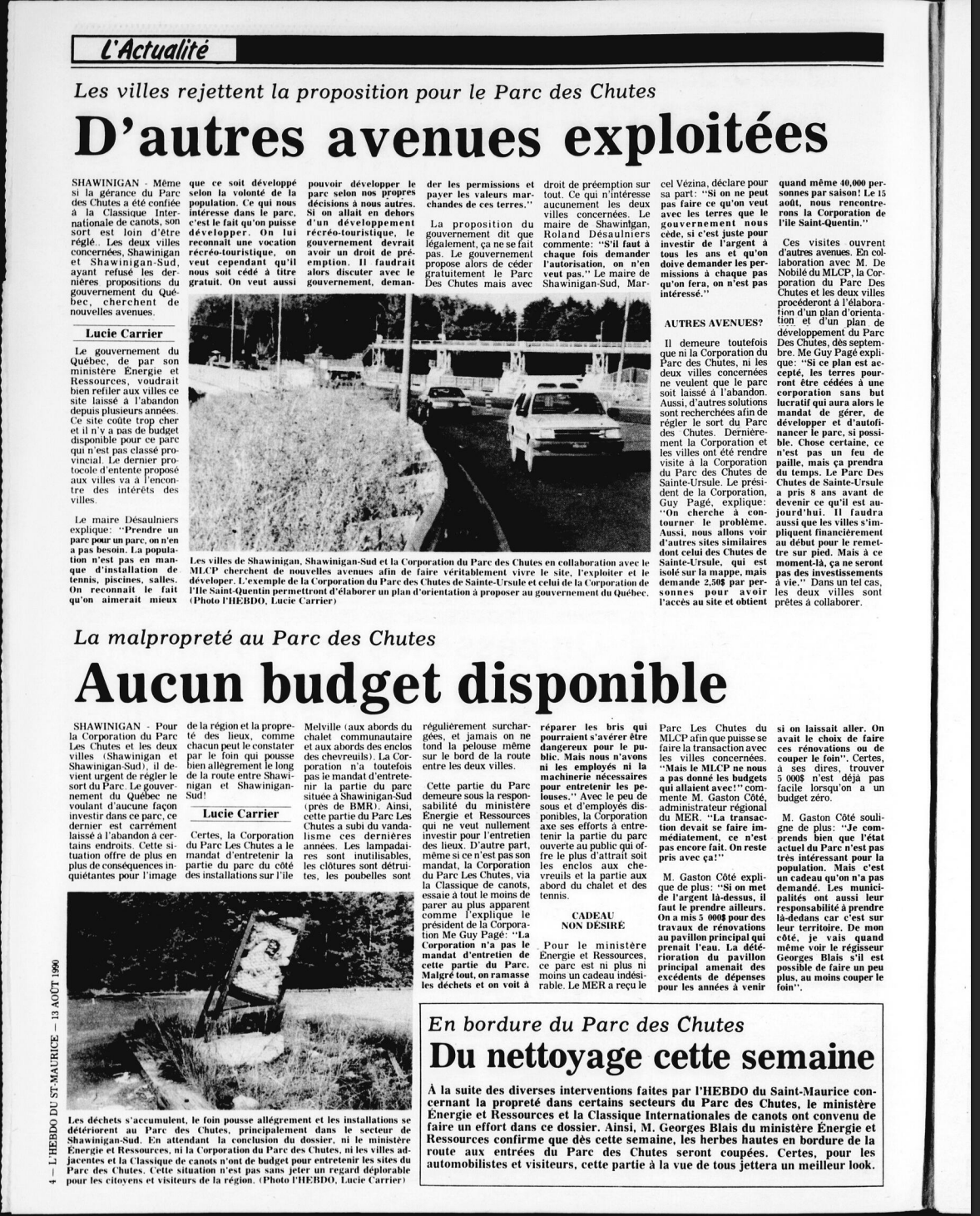
Article by Lucie Carrier (August 13, 1990)
My mission was simple enough. I had to put together two community newspapers from scratch every week, choose front-page stories from among the different news categories, all while managing a team primarily made up of men. Of course, the likes of André Perreault, Gilles Bourassa, Jack St-Onge and Gérald Boivin had little need for guidance. They were already among the best when it came to sports reporting or networking.
Others, like Luc Vaugeois, Anne Lamothe, Diane Noël, Bernard Lepage and Jean Houle, needed opportunities to pursue their interests and to let their writing talents shine.
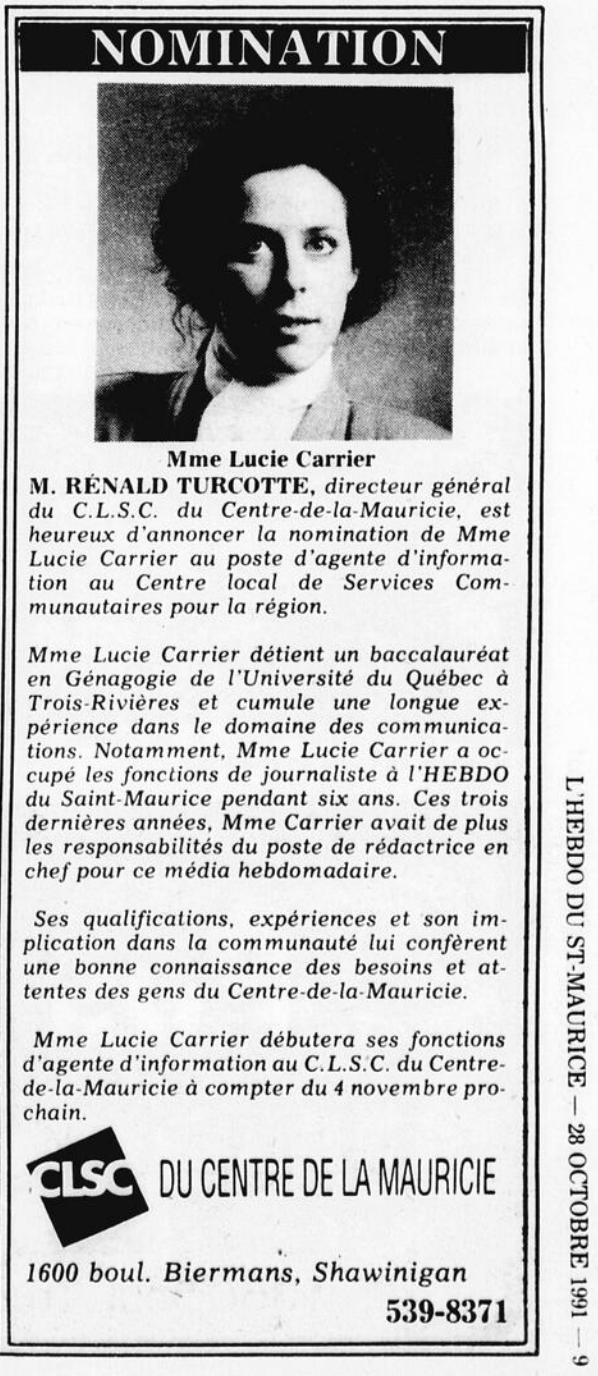
Lucie Carrier bids farewell to L’Hebdo du Saint-Maurice (October 28, 1991)
I also felt a need to meet the standard set by my predecessors, especially François St-Onge. They had all made a real impact on the region with their breaking news reports and in-depth articles. The aim was to highlight the value of the two community newspapers as trusted sources of information, alongside more prominent regional media outlets—including television and radio stations, and Le Nouvelliste.
But that wasn’t necessarily where my strengths lay. Drawing on my training in what is now known as social communication, I took a unique approach to ensuring both my newspapers adopted a tone that was better aligned with the priorities and experiences of readers, that shone a more direct light on their challenges and achievements.
Instead of big scoops, I emphasized a more down-to-earth and community-focused approach. I wrote editorials that showcased volunteering, community engagement, generosity and human values.
I often wrote about things that were very new to me. I covered the Cataractes, interviewing players at the dressing-room door. I analyzed election issues and reviewed concerts. I even took photographs to accompany my articles and reports, did the newspaper layout and corrected the proofs. Such good memories that fill me with pride!
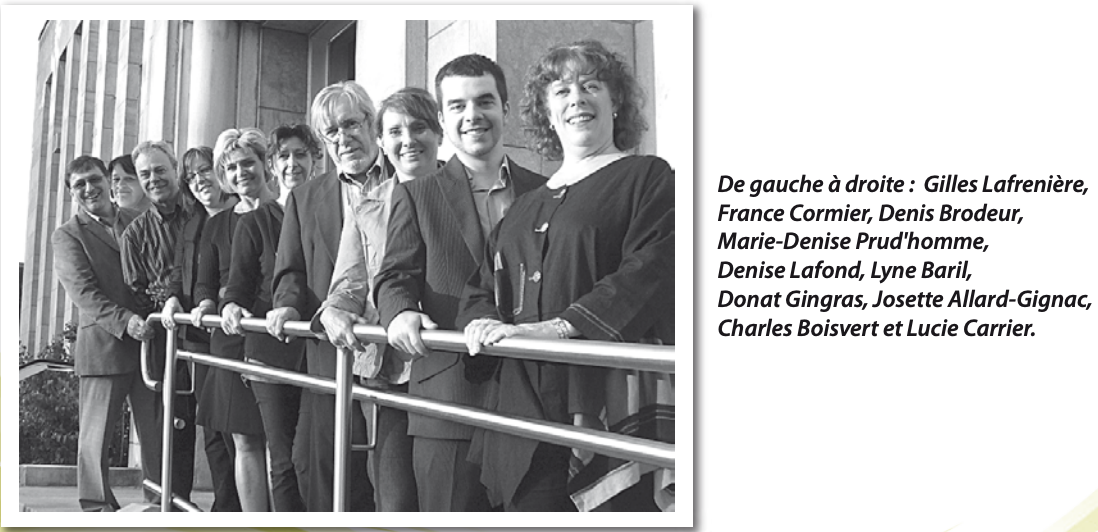
Steering committee for the City of Shawinigan’s social development policy, which focused on community pride, engagement and solidarity (2009)