

Journalism at the Turn of the 20th Century
The newsroom was always a hive of activity and often a scene of total chaos. Journalists came and went, cigarette smoke filled the room, and the sounds of typewriters and telephones mixed with those of the printing presses next door.
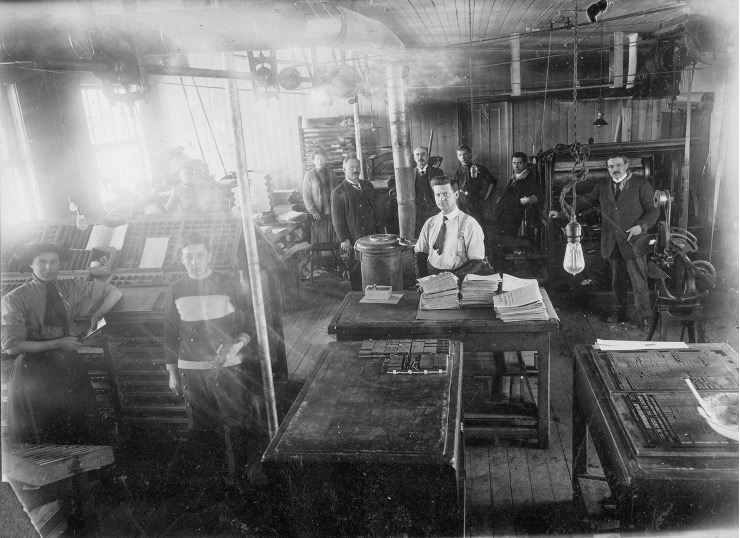
Newsroom at La Semaine
The region’s newspapers—including Le Nouvelliste, Le Bien Public and L’Écho du St-Maurice—sometimes hired women as columnists or editors for their women’s page. This section typically showcased women’s contributions to artistic and intellectual life. Women’s pages, which sometimes featured poetry, were elegantly written by journalists who favoured a lyrical tone.
Alongside professional yet passionate literary analysis, female readers could find theatre and music reviews. The content reflected strong interest in topics such as fashion, cooking, family, a woman’s place in society, household work and local news. Subscribers could also mail in letters with their concerns, and the women’s page editor would respond in her next column.
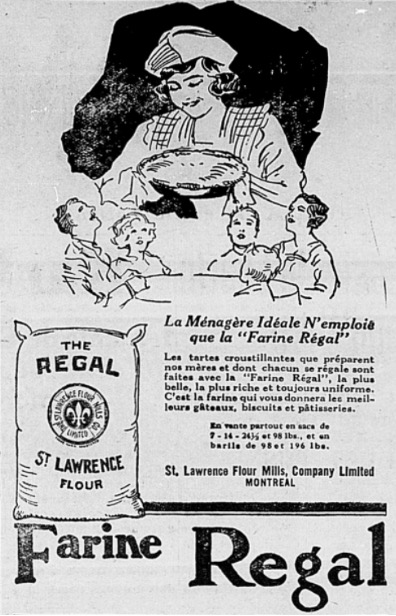
Advertisement published in L’Écho du St-Maurice (1924)
On my first day of work at Le Nouvelliste, Editor-in-Chief Hector Héroux was showing me around. I was eager to meet the women’s page editor, who wrote under the pen name Tante Yvette. You can imagine my surprise when I found myself face-to-face with this individual and discovered that Yvette was actually a man!
I found it very difficult to hide my disappointment. It was deeply unfair that a woman hadn’t been hired, given just how difficult it was for us to pursue a career in journalism. Onésime Héroux had been responsible for the women’s page since 1924. Before writing as Tante Yvette, he had used the pseudonym Mademoiselle Hectorine.
I think the fact he used such pen names reflects the importance given to having a female figure associated with this section of the newspaper. It was assumed that women would be more likely to identify with the words of one of their own. At the same time, the situation suggests that women weren’t seen as capable of writing for other women!