

The Landscape – Water to Hilltop
Metis has a range of landscapes: field and forest, peat bog and shoreline. Much of the community is perched near the outcrops that form a rocky ribbon along the coast.
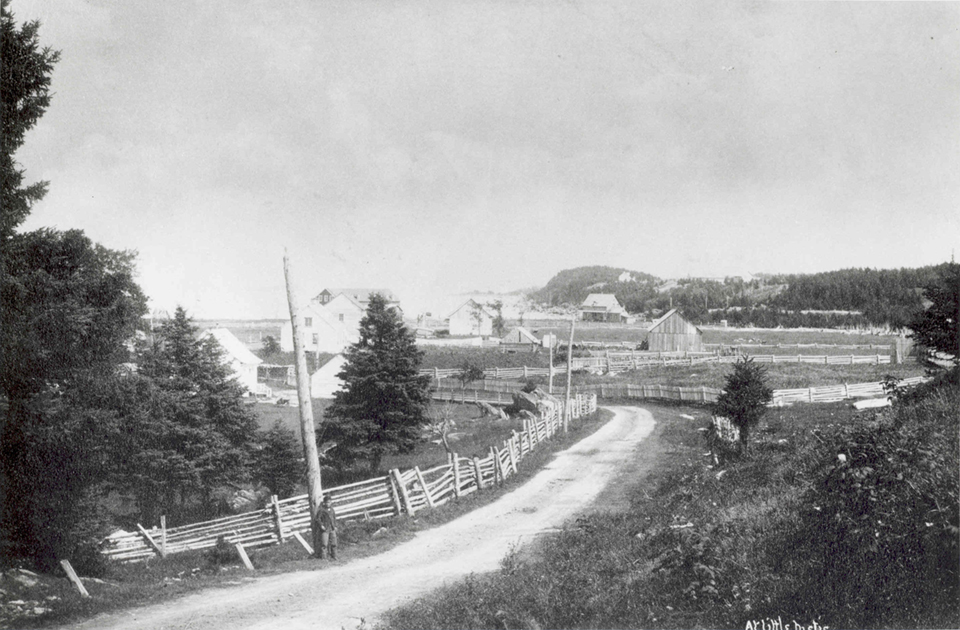
Early roads in Metis hugged the St. Lawrence. It was a picturesque landscape, but the road often had to be cleared of debris left from high winds and waves before vehicles could continue on their way.
One of the last seigniories to be settled in Quebec, Metis was also one of the smallest, 33,000 acres in all. John Macnider’s settlement was peopled from 1818 by about forty families who accepted his invitation to leave their native Scotland. They settled the long thin farms that stretched back from the St. Lawrence, provided with tools and seed for their crops by their beneficent seigneur.
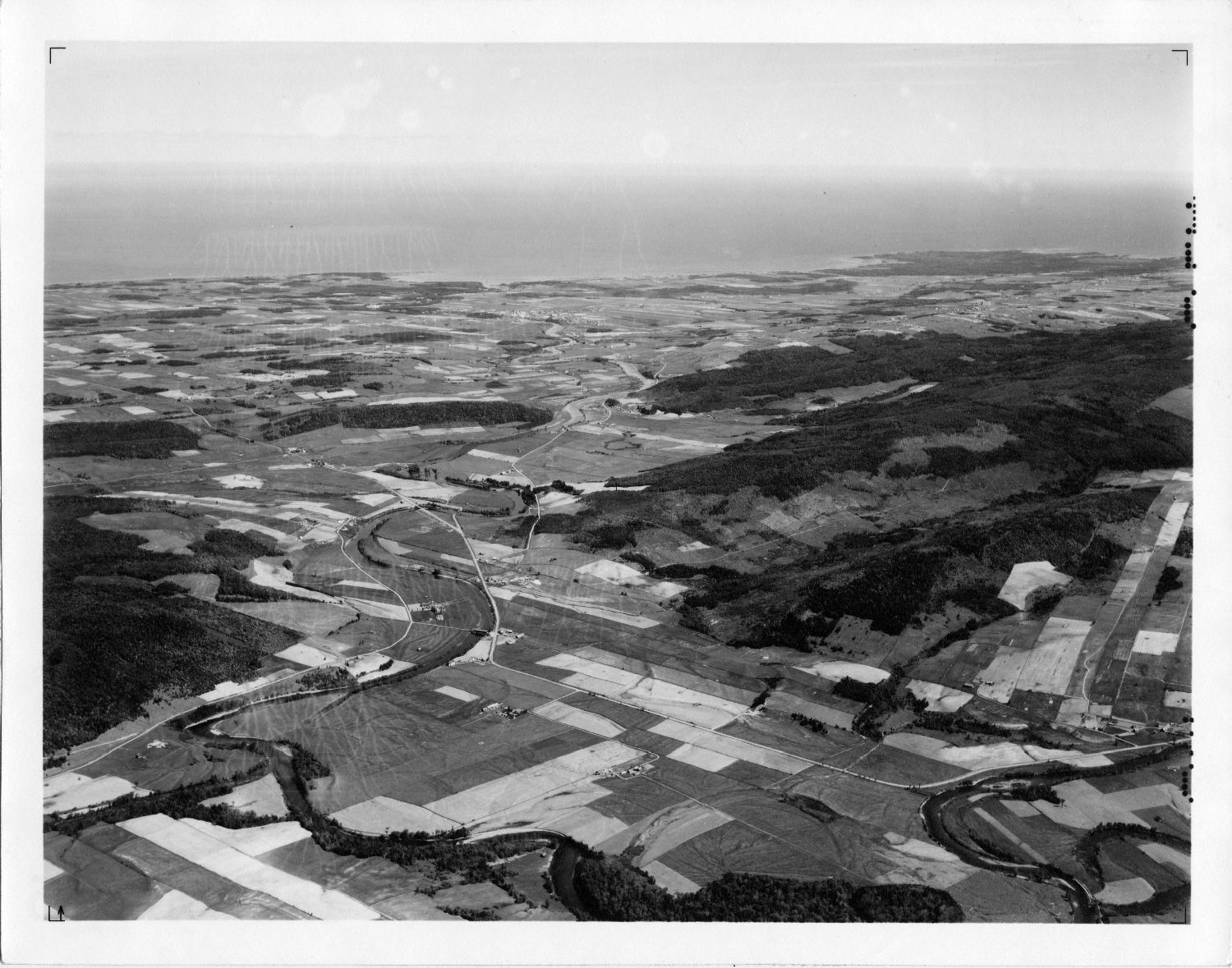
This aerial photograph from 1938 shows the winding shoreline of the St. Lawrence at Métis. The beautiful patchwork landscape is still visible today, though the mix of fields and forests has changed: much of the land that was once cultivated has since been reclaimed by nature.
In his memoir from the 1870s, John Ferguson remarked that Macnider’s settlers were talented fishermen, but not very skilled at farming or forestry.
Your forefathers were in most cases mechanics, weavers and fishermen – few understood the art of forestry. They chopped trees in the style the beaver adopts, all round the stump.
The early settlers survived by fishing and a lot of farming. If they were not good farmers when they arrived, they became so over time. ‘Metis Potatoes’ were sent by boat to market in Quebec City by the 1860s. But making ends meet was difficult. Some families left for other parts of Canada and the United States.
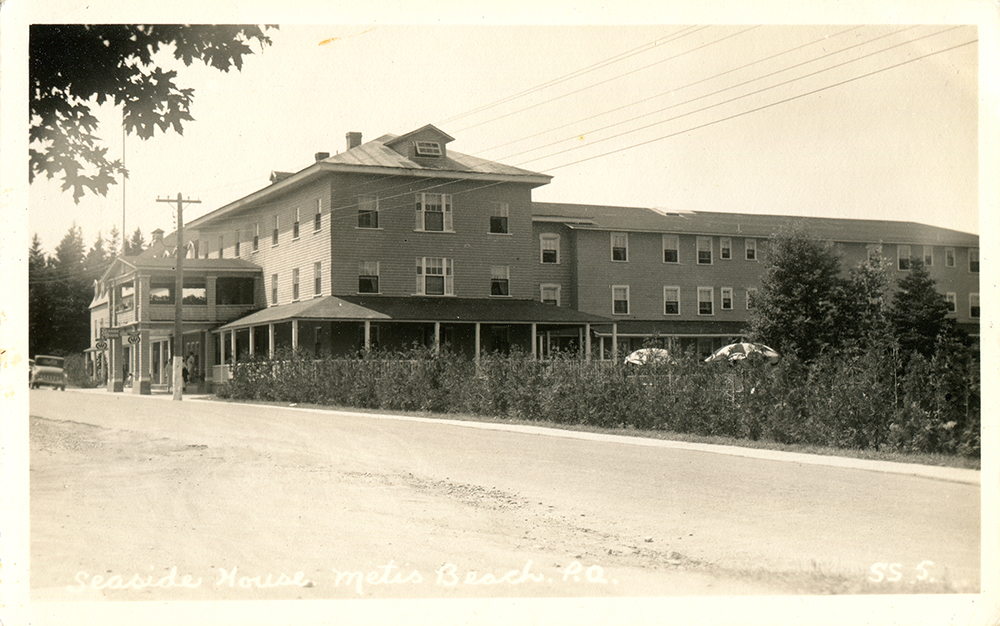
Built in 1875 and expanded in 1922, the Seaside House Hotel was the largest (and some say most luxurious) hotel in Metis Beach.
Many that remained embraced the opportunities offered by tourism. The rocky terrain near the shore that was poor for farming proved ideal as building sites for cottages. Metisians became talented builders, constructing homes, boarding houses and hotels to serve the growing clientele of summer visitors who found the cool weather and pure air an ideal spot for a health holiday.
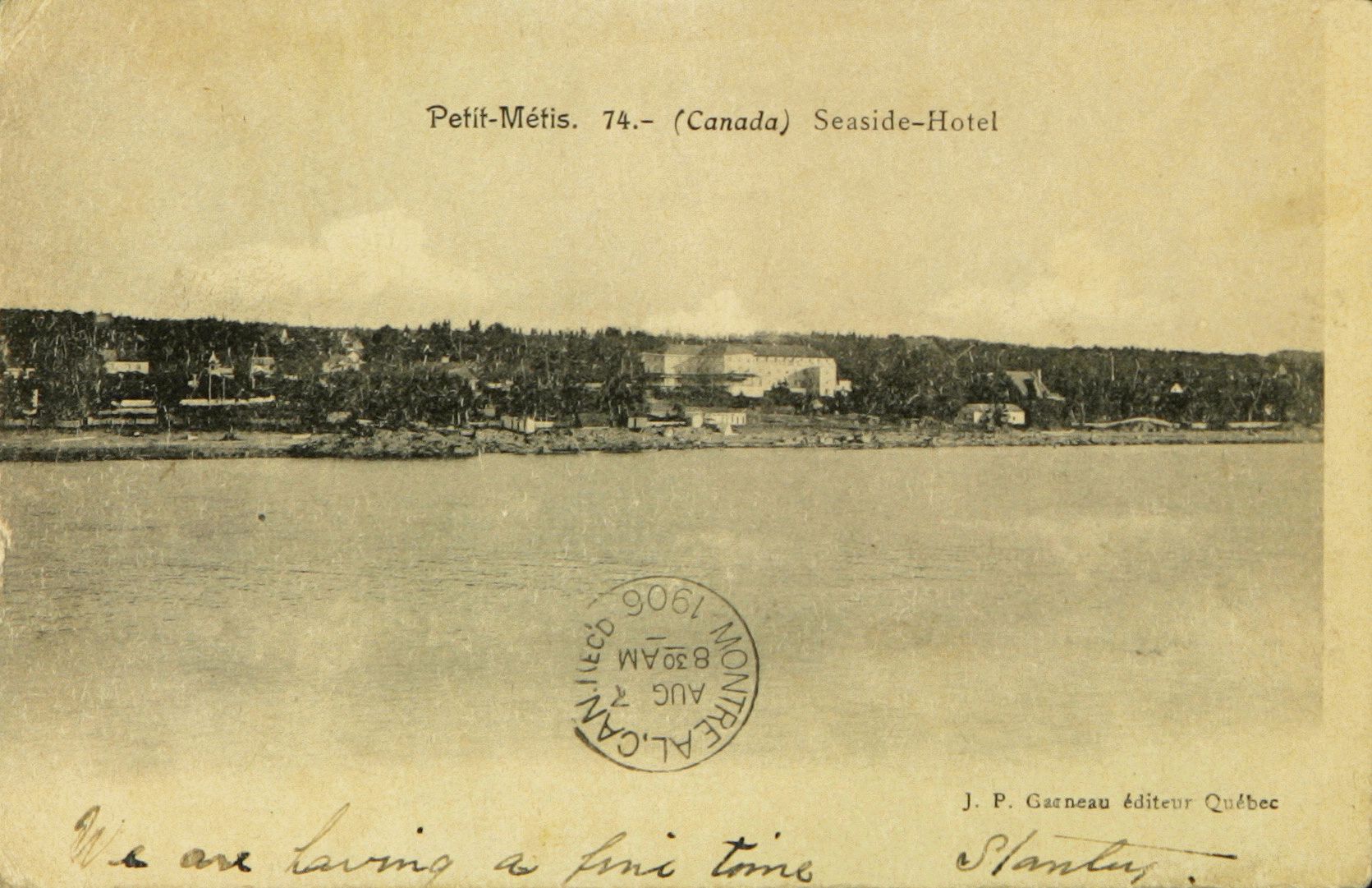
“We are having a fine time” is how one tourist described his visit to Metis in August 1906.