

Screen Printing
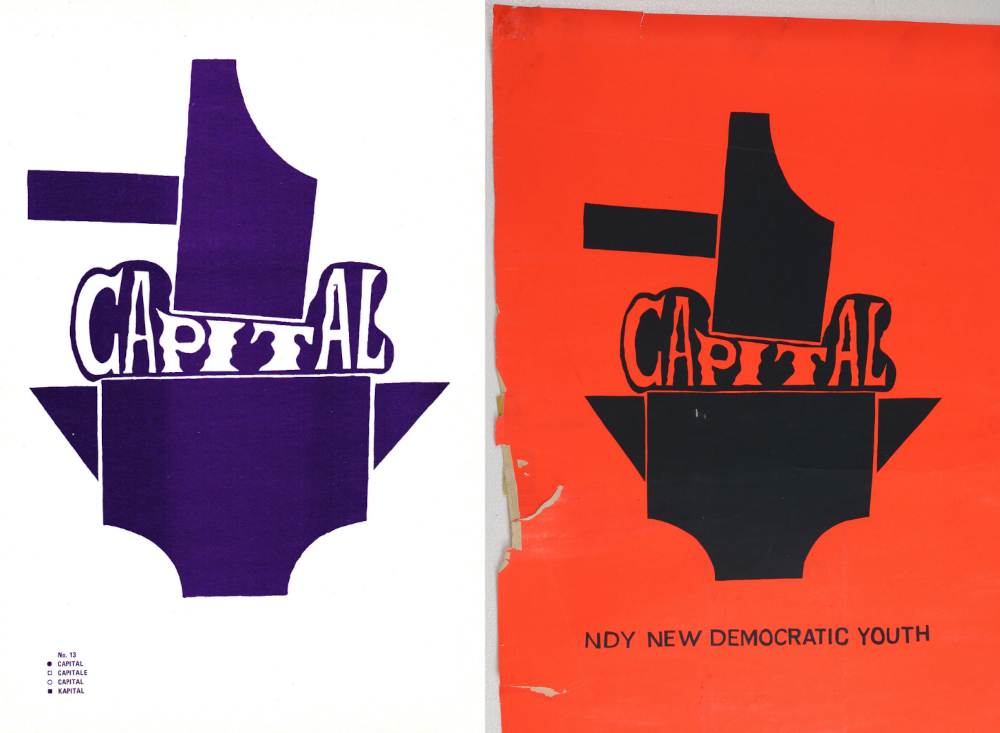
The purple poster on the left was created by radical artists in Paris in May 1968 and inspired members of the radical New Democratic Youth group to create the red version shown on the right around 1971.
Silkscreen or screen printing is a printing technique in which a mesh (traditionally made of silk, now usually a synthetic material) is used to transfer ink onto a surface, which can be cloth, paper, or almost anything that will hold ink or dye. The process starts by creating the stencil, which allows ink to reach the desired portion of the surface, while preventing it from reaching the parts which are not to be printed. Before the stencil, though, the artist has to create a design which will communicate a message, since when used by activists, silkscreen is political art, not straightforward printing of pre-existing text and images.
Screen printing was originally developed in China more than a thousand years ago. From there it spread to Japan, Korea, and other countries, eventually becoming a popular art form in Europe in the late 1700s.
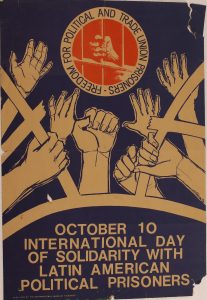
A screen printed poster.
In the 1960s, screen printing experienced an explosion of popularity among artists and among political activists, many of whom were artists themselves. One of the most important moments in the history of screen printing was the near-revolution in France in May 1968, during which collectives of radical artists produced posters, several a day, in dozens or hundreds of copies, which were then pasted on the walls of Paris. The power of those posters had a political impact that reached far beyond France. It extended, among other places, to Canada, where political artists of the late 1960s and early 1970s often developed their skills by making copies of the French posters before launching into making their own designs.
Screen printing was also a popular way of making colourful political T-shirts that could be produced independently of the large apparel companies. The result was an explosion of different slogans and designs which would never have seen the light of day in the commercial marketplace.
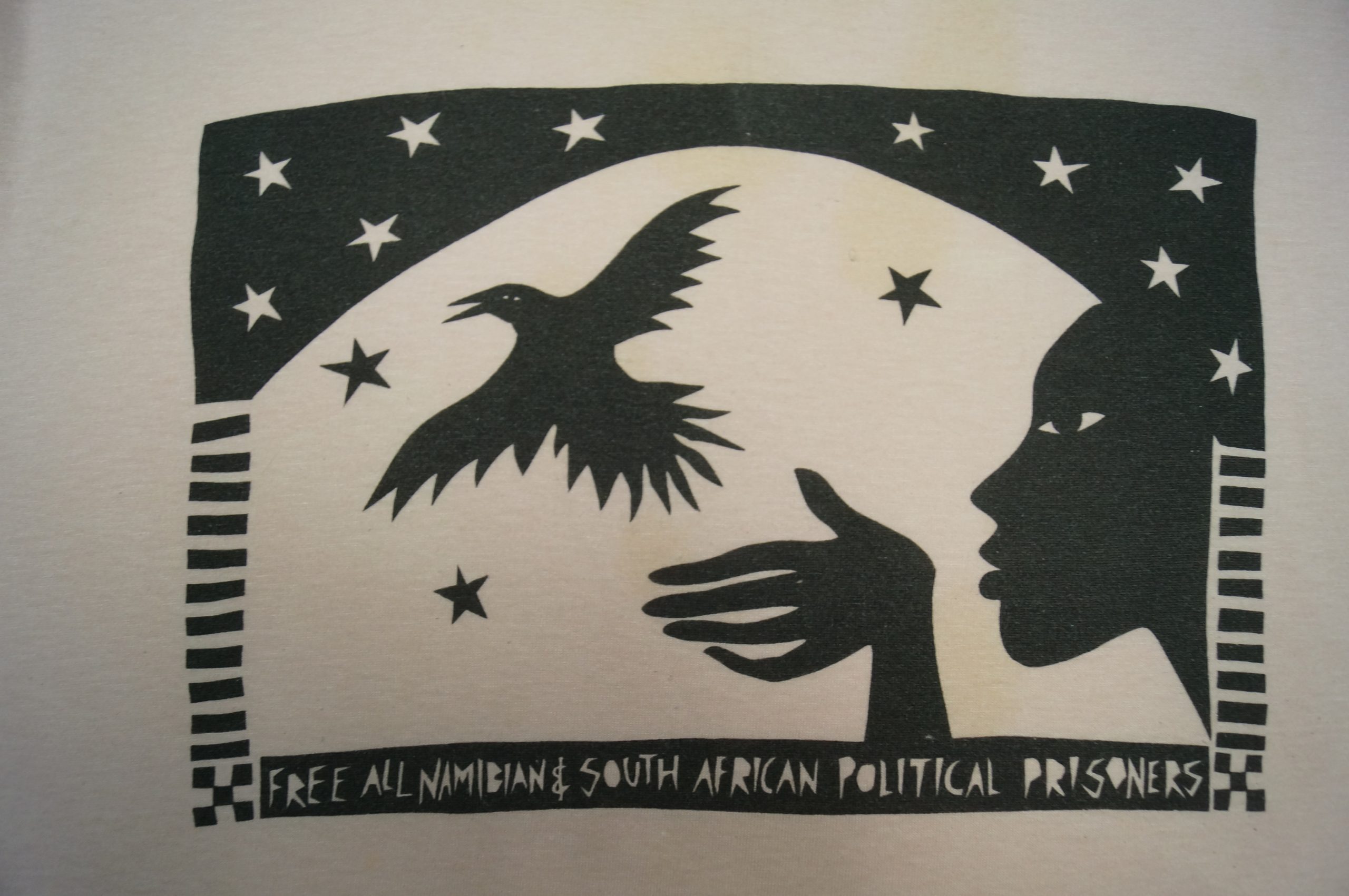
A screen printed blanket.
Screen printing remains popular as an art form as well as means of political expression. It has also been adapted to a surprising range of other uses, anything from imprinting medical devices to putting designs on skateboards.
Silkscreened posters now inhabit the twin realms of politics and art. They carry political messages, but they can be so creative that they end up in art galleries or on collectors’ walls.