

Periodicals
Newspapers, Newsletters, Magazines
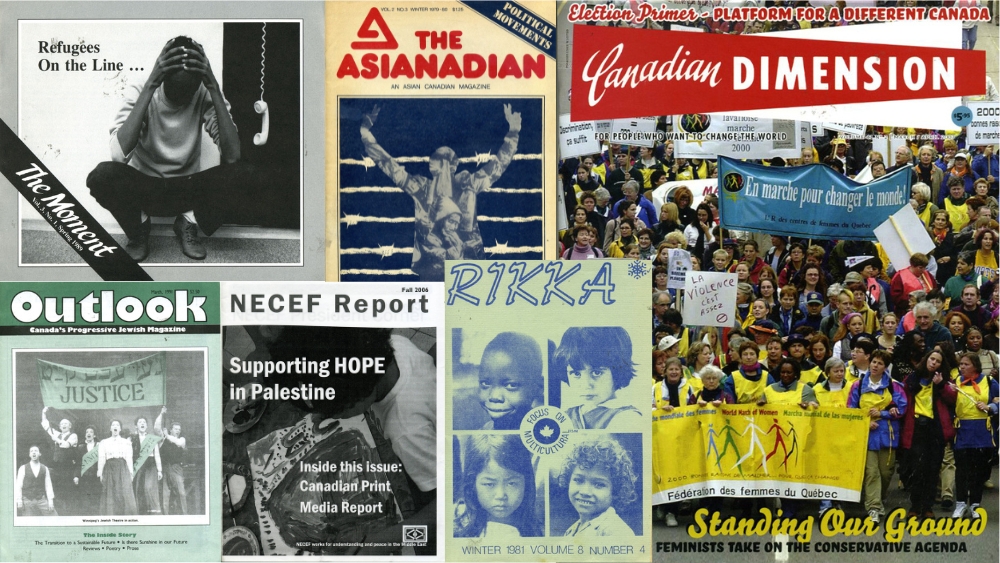
A small selection of the wide variety of magazines published in Canada.
Movements for change can only be successful if they have ways to communicate regularly and consistently with those they want to reach. Throughout the nineteenth and twentieth century, newspapers were central to activists’ strategies for getting the word out.
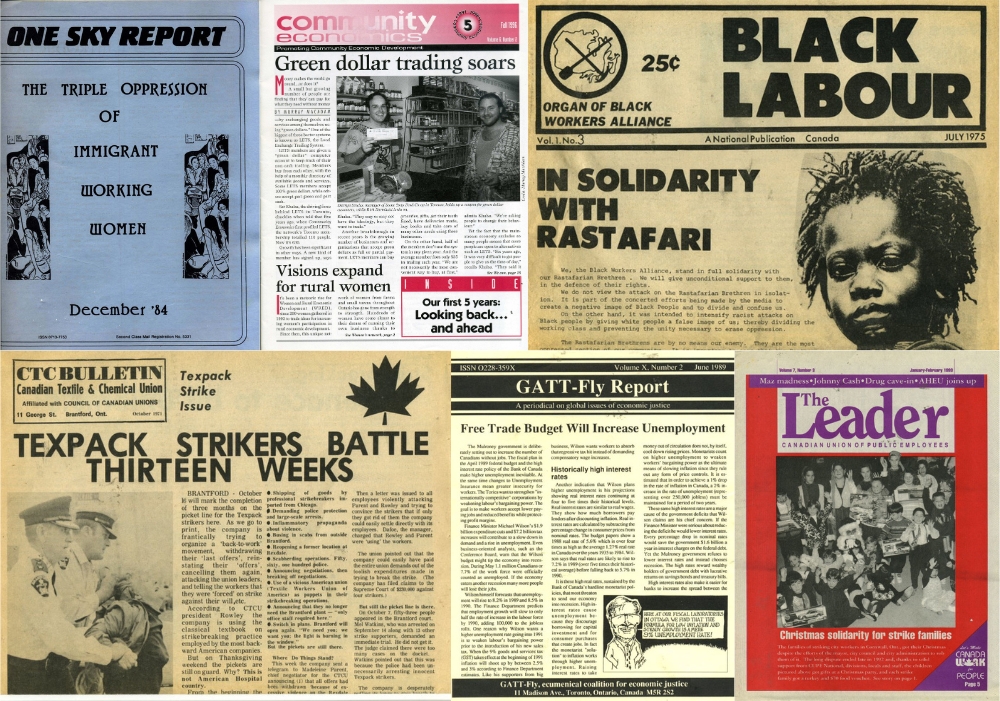
Periodicals reporting on working people and the labour movement.
Other periodicals also had a role. Magazines came out less frequently (typically once a month or every two months) but had space for longer and more analytical articles. Newsletters, cheaper to produce, with smaller circulations, were mostly aimed at members of the organization, rather than the general public.
Any political organization whose target audience was in the thousands, rather than the dozens, and which was serious about reaching its supporters, as well as new readers, would typically launch a newspaper. A newspaper was a vehicle that allowed an organization (or sometimes, one or two committed individuals) to present its view on politics and current events, week after week. Most radical and alternative newspapers aimed to publish once a week or once every two weeks, though other frequencies were also common. One of the struggles of publishing a newspaper or magazine was maintaining the planned frequency of publication. For radical and alternative groups, the workload tended to fall on a few individuals, and money was typically in short supply.
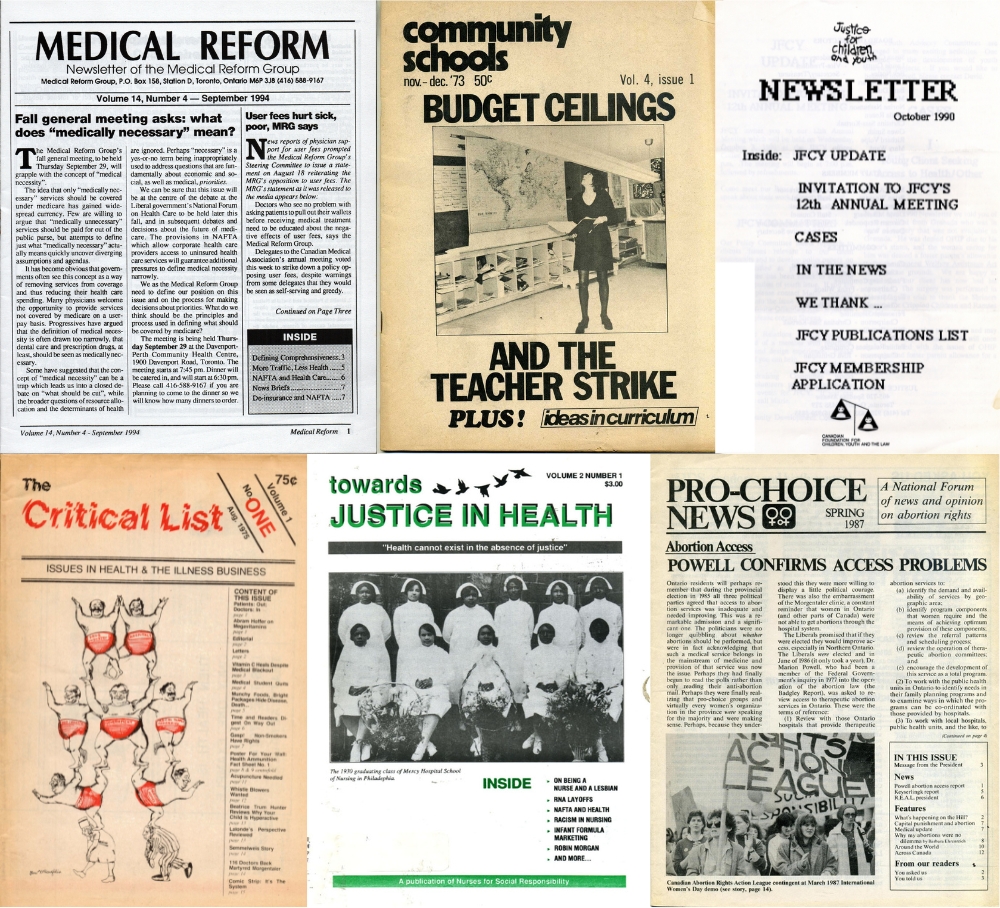
Periodicals concerned with health and education.
The challenges of publishing a newspaper did not end when an issue was ‘put to bed’ (sent to the printer). A pile of freshly printed newspapers present another challenge: distributing them to the readers. For publications that came out less frequently, like magazines, sending copies out in the mail was a feasible, indeed the best, option. But for a newspaper that came out every week or even more frequently, mailing was frustratingly slow, and other means of distribution had to be found if possible. A frequent strategy was selling newspapers (at a nominal price: the goal was to get people to become readers of the paper) at factory gates, on street corners, at events of various kinds.
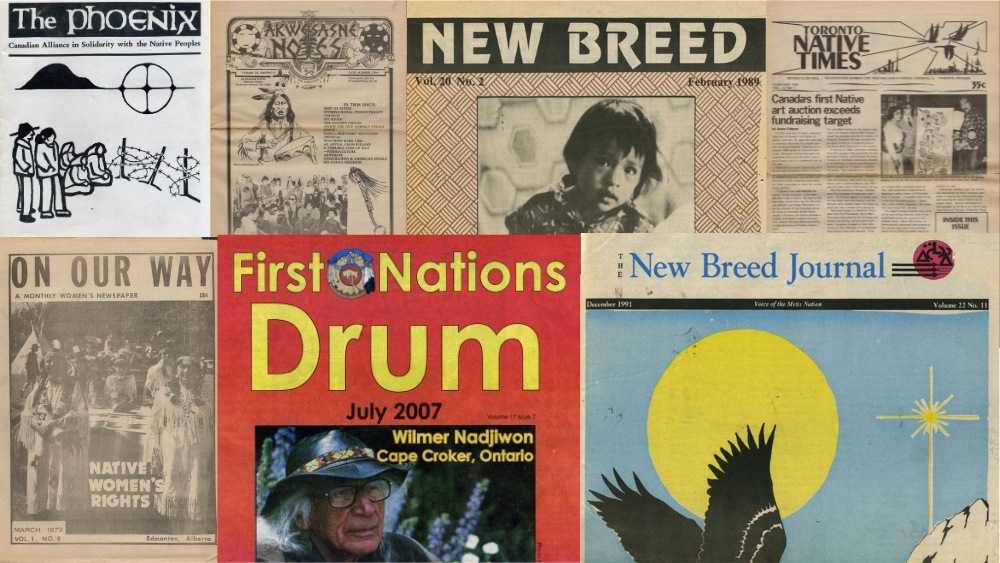
Periodicals focusing on Indigenous issues.
Community newspapers, which emerged in the 1970s, and were focused on events in a particular geographic area, were based on the model of free door-to-door distribution in a particular geographic area. Revenue to pay for publishing the paper came from advertising, sometimes supplemented by donations from supportive readers. This model allowed for wider circulation and a consistent publishing schedule. For example, Seven News, a left-leaning non-profit newspaper founded by activists in the east-of-downtown area of Toronto, maintained a bi-weekly publishing schedule for more than 15 years.