

Niche Publications
Songbooks
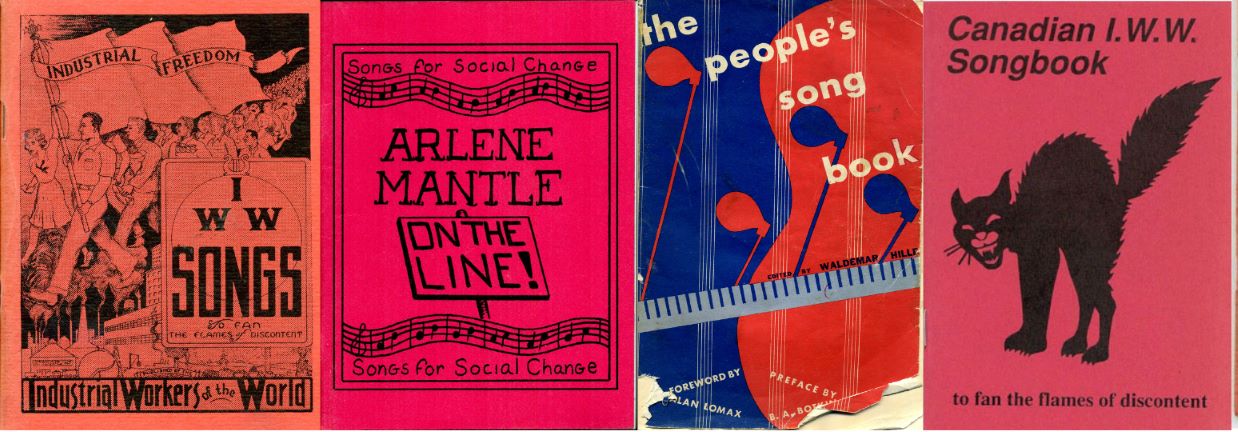
Songbooks were used as a means of sharing songs with activists.
Left and labour culture from the 19th century on embraced singing as a way of expressing solidarity and enthusiasm. Some songs were sung so often that the words and music were everyday knowledge. In many different countries, workers were more likely to know the words to socialist hymn The Internationale than would have known the words to their country’s national anthem.
There were many other songs, not quite as well known, sung on picket lines and labour marches, and for these there were small songbooks which could easily fit into a pocket. The Industrial Workers of the World produced large numbers of these songbooks. The words of these songs, often written on short notice by radical organizers like Joe Hill in the context of a particular struggle, were written to go with the tunes of popular songs that most working people would know. Many were religious songs or folk songs adapted to a new purpose.
The American civil rights movement of the 1950s and 1960s was often accompanied by the sound of activists singing. Some of the songs they sang, like ‘We Shall Overcome,’ were so well known (in Canada as well as the United States) that they didn’t need to be written down. Others, like traditional folk and labour songs, were collected into widely circulated songbooks.
Comic books
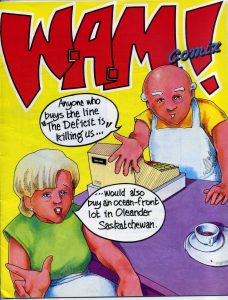
WAM! Comix, 1992
In the 1960s, with the rise of what came to be called the ‘counter-culture,’ new kinds of comic books began to appear featuring a mixture of radical politics and content centered on the counter-cultural trinity of ‘sex, drugs, and rock-and-roll.’ Some of these were based on comic strips which appeared regularly in counter-culture newspapers, which were then compiled into a book format.
Activist groups, and individual artists, began to use comic books as a means of presenting progressive ideas in an accessible format. Some of the early examples, constrained by cost considerations, appeared in black-and-white, which limited their appeal for wider audiences. Later, as colour printing became more affordable, political comic books appeared in colour.
Recipe Books
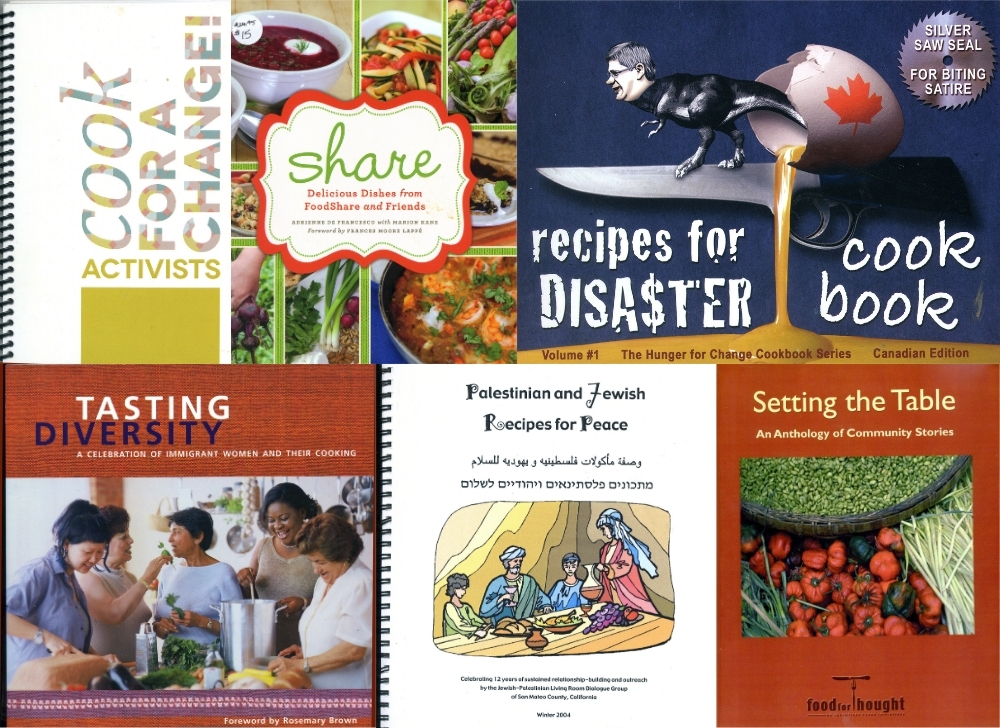
Recipe books were also important for raising funds and educating on particular topics.
Recipe books have often been compiled as fundraisers for a particular cause; proceeds from selling the cookbooks go to the cause. At the same time, these books usually contain extra text related to the issues that the group publishing the book is concerned with.
Calendars
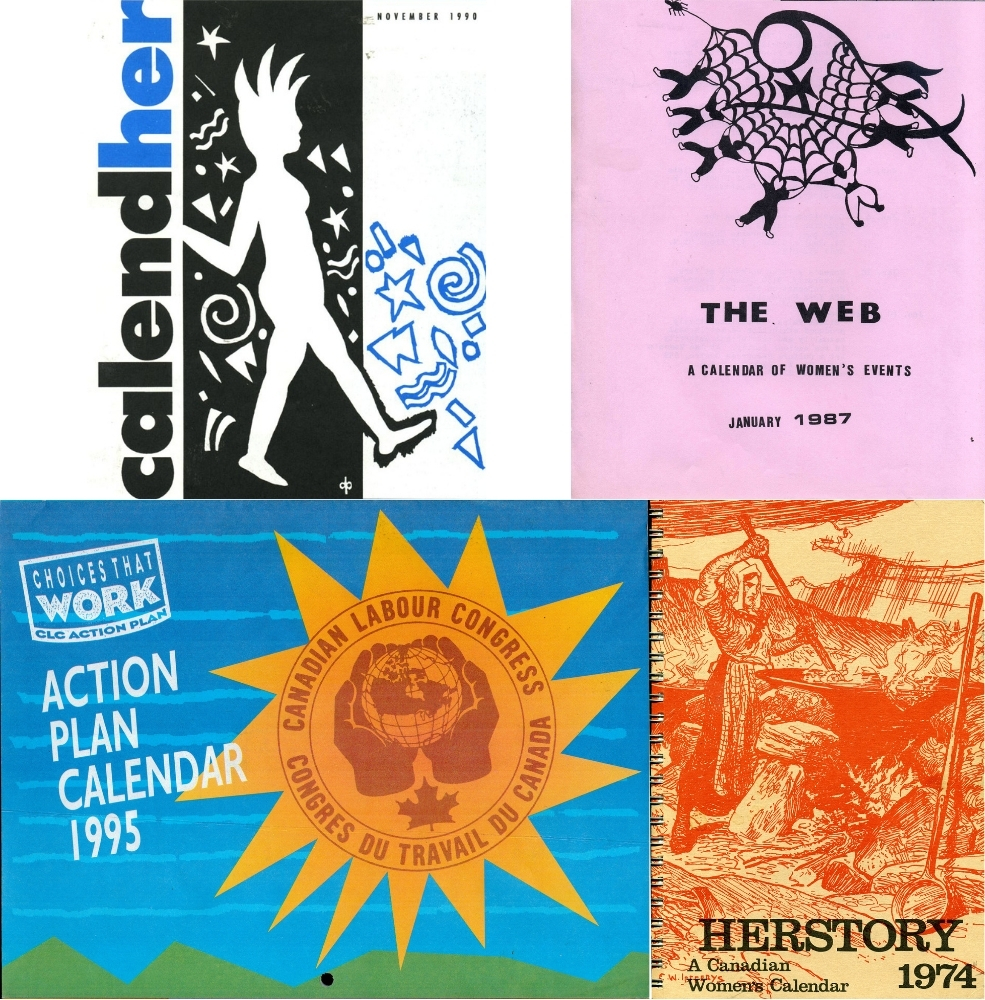
Calendars created by activist groups provide information on key dates and events.
Progressive organizations have frequently published calendars, often as a page in a newspaper, as a way of getting the word out about events they think their readers should know about. Another format, with a more lasting impact, has been the annual calendar, usually printed in the form of a wall calendar. Such calendars have been produced by unions and activist organizations and sent out to members and supporters. They allowed images and text chosen by the sponsoring organization to be visible on the walls of people who support the group: an enduring way of communicating messages.
Directories and Catalogues
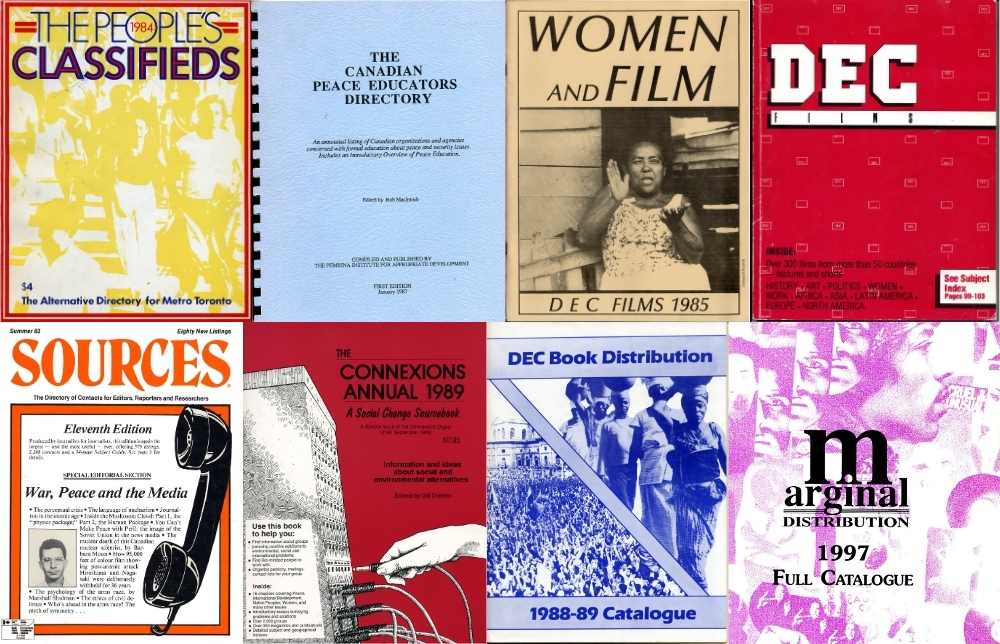
Directories and catalogues provided more information about activist groups.
As a means of providing information about activist groups, directories emerged as a perhaps unexciting but highly effective means of getting the word out. The directory format allows users to find groups they might want to join, or work with, throughout their province, or across the country. A directory provides basic information about what a group does, what it believes in, where it is active, and how to join or get in touch.
Activist groups that produce materials for sale need to reach potential purchasers. Catalogues listing their books, films or other merchandise allow them to reach distributors like bookstores or other distributors to inform them about what is new, and what is still available from before.