

Stencil Duplicators
On a cold winter day in early 1976, a Gestetner machine was at work, none-too-quietly, churning out pages in the basement of a United Church building in Toronto. The project on that day was a brand-new 28-page publication (labelled the ‘Pilot Copy’) from a newly formed organization, the Canadian Information Sharing Service. The Pilot Copy would meet with a positive response, the publication would keep coming out for the next 18 years, and the organization would soon change its name to Connexions, the name by which it is still known half a century later.
On that day, the printed pages were stacked up in 14 piles and the volunteer collective members behind this new venture started collating them to assemble individual copies of the publication. Someone stapled the corner, and the newsletters were almost ready to go. All that remained was to put a mailing label and a stamp on each copy, and put them in a mailbox. The Post Office did the rest, delivering them to individuals and organizations all across Canada.
Mimeograph machines and Gestetners like the one that plays a central role in this story were, for many years, a mainstay of activist organizations, as well as churches and community organizations of all kinds – in short, any group that couldn’t afford the cost of a commercial printer. ‘Gestetner’ is the brand name of a family of stencil-based duplicators; there were and are other brands as well, but the popularity of the Gestetner led to its name becoming the de-facto standard.
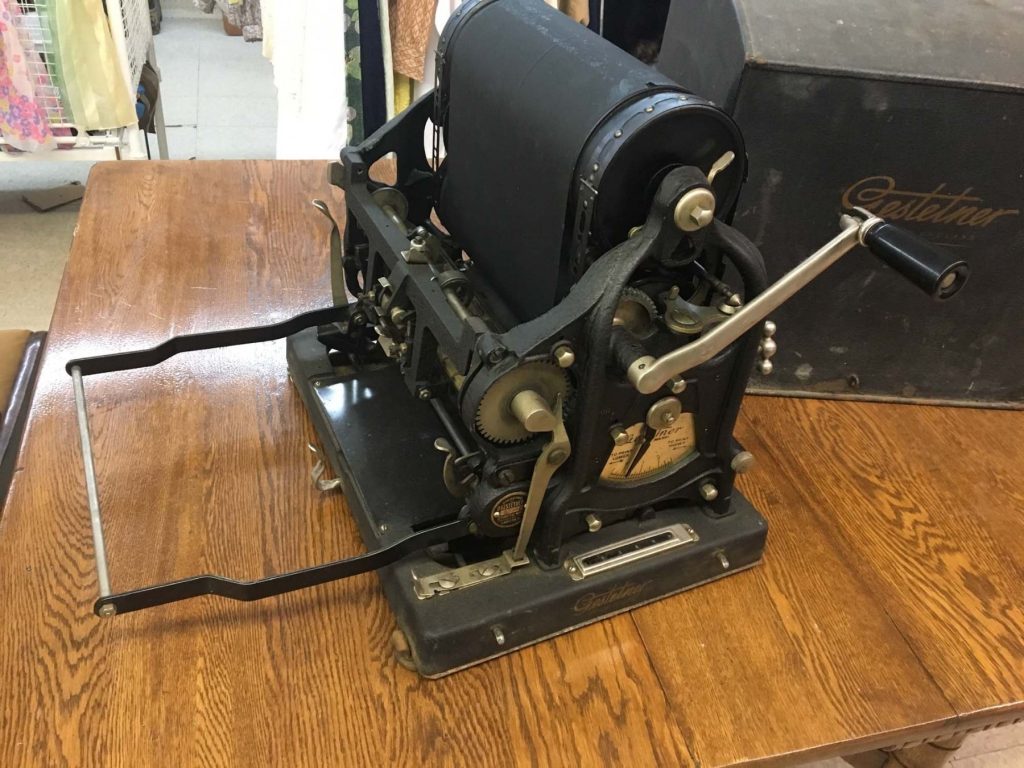
A hand-cranked Gestetner machine.
Stencil-based duplicating machines arose out of the common need to produce relatively small numbers of copies of the same document. It was possible produce publications on very short notice – an hour or two if the need was urgent. An additional advantage was that these machines were inexpensive to obtain and easy to operate, requiring no special training other than the caution needed to avoid – oops! – getting ink on your clothes. Some models were hand-cranked, capable of being used without electricity. In fact, hand-operated duplicating machines remain in use today in parts of the world where electricity is not reliably available.
Mimeograph machines enabled small organizations to self-publish their own texts for the first time. In addition to the machine, all that was needed was a typewriter to make the stencil, ink, paper and something to say. For decades, mimeograph machines could be found in virtually every school and church, as well as in the many spaces occupied by community and political groups.
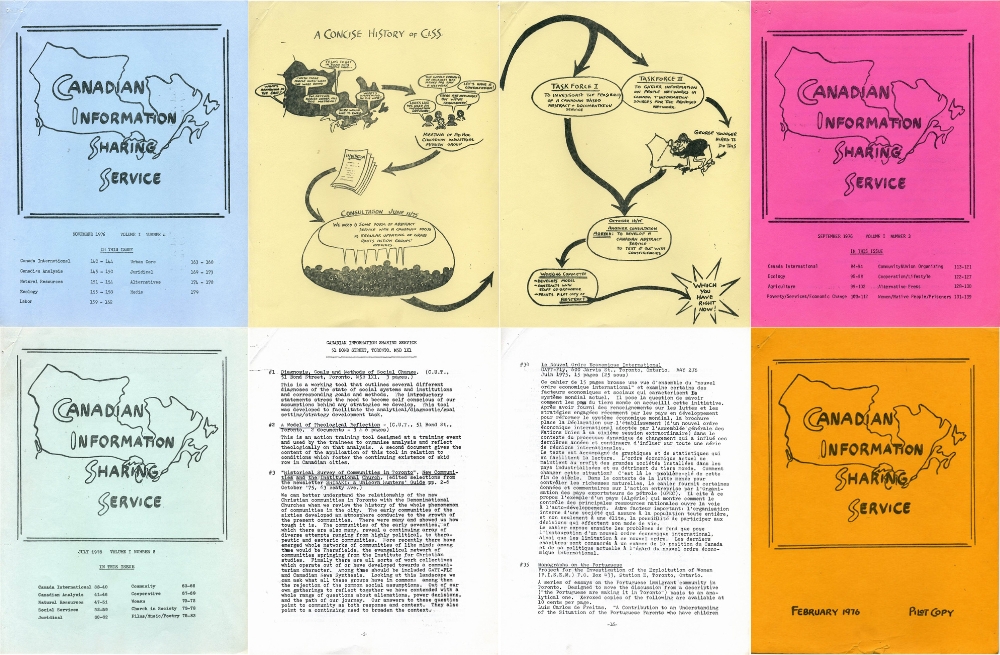
The earliest issues, from 1976, of the Canadian Information Sharing Service newsletter, later renamed Connexions, were printed on a Gestetner machine in the basement of a United Church building.