Family Stories - A Culinary and Agro-Food Heritage to Discover Family Stories - A Culinary and Agro-Food Heritage to Discover Musée québécois de l'agriculture et de l'alimentation
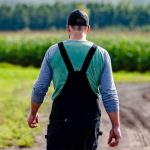
Photo taken at the Lécy farm in Mont-Carmel as part of Les visages de la run de lait exhibition, held at the Musée québécois de l’agriculture et de […]
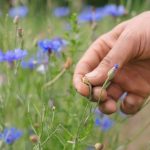
This image captures a special moment, when an expert and respectful hand delicately picks a flower bud. This gesture, repeated hundreds of times a day, is at the […]
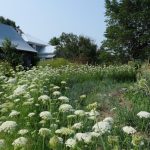
Overview of the plants cultivated at La Société des plantes.
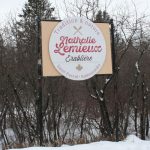
In spring, when the days grow longer and the snow starts to melt, The Érablière Nathalie Lemieux opens its doors to the public. Visitors can enjoy traditional meals […]
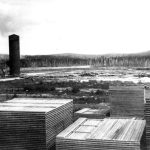
In the 20th century, wood yards located near logging camps played a crucial role in the forest industry. Timber was cut by loggers in the camps and then […]
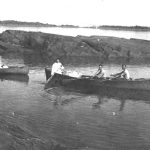
Canoes were used mainly for fishing, but also for transporting goods and people between coastal villages. They allowed fishers to easily navigate the river and access their fishing […]
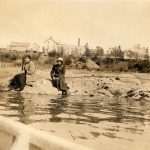
Recreational fishing was also an opportunity for socialization and relaxation. Women would fish together, sharing enjoyable moments and outdoor fun. They used simple techniques like shore fishing, angling, […]
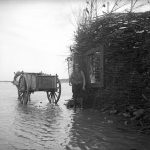
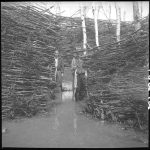
Weir fishing involved using fixed structures called weirs (fascines) made of branches woven between stakes. These structures led fish towards an enclosure where they were trapped by the […]
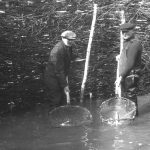
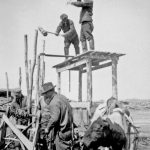
Men are planting wooden stakes in the ground at regular intervals. These stakes, which were often made of black spruce, formed the basic structure of a fish weir.
Weir fishing was used as of the beginning of the French Regime. Flavius Ouellet was the last to use weirs at Île aux Patins.
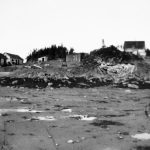
The Kamouraska Islands, including Île aux Patins, were places where people lived and worked. Local families exploited maritime resources for their subsistence and to support the local economy. […]
Weir fishing techniques were often learned within the family. Young boys would accompany their fathers and grandfathers to learn the methods for building and managing weirs. Each family […]