Mary Ann Shadd Cary – Her Journey and Influence in Southwestern Ontario
Welcome to the Mary Ann Shadd Cary Digital Museum Exhibit, an engaging digital exhibition that celebrates the remarkable life and enduring legacy of one of the nineteenth century’s most influential Black leaders.
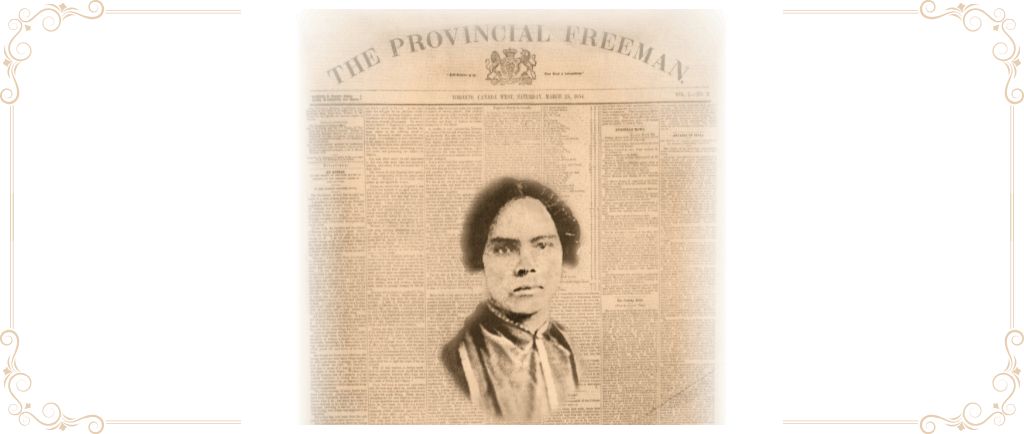
Educator, journalist, publisher, abolitionist, suffragist, and lawyer, Mary Ann Shadd Cary dedicated her life to advancing freedom, equality, and education on both sides of the Canada–United States border. After arriving in Canada West in 1851, she established integrated schools, founded The Provincial Freeman, becoming the first Black woman in North America to publish and edit a newspaper, and became a leading voice for justice and self-determination. Her work continues to inspire generations of changemakers today.
This innovative digital exhibit brings history to life through a unique blend of archival photographs, artifacts, newspapers, personal documents, interactive media, and AI-generated historical storytelling. Throughout the exhibit, visitors will encounter Mary Ann Shadd Cary through immersive AI videos that recreate pivotal moments in her life, allowing her story to unfold in many of the places where she lived, worked, taught, published, and advocated for freedom. While these videos are creative historical interpretations based on documented events, they are designed to help visitors connect more deeply with her extraordinary journey.
As you explore the exhibit, you will travel alongside Mary Ann from Delaware and Pennsylvania to Windsor, Chatham, Toronto, and Washington, D.C., discovering how each chapter of her life shaped her unwavering commitment to justice, education, and human rights. Along the way, you’ll encounter the people, places, and events that defined her remarkable career and transformed history.
Mary Ann Shadd Cary believed that knowledge, courage, and action could change the world. We invite you to explore her story, experience her journey, and discover how her voice continues to resonate more than 170 years later.
Start reading the storyhttps://www.buxtonmuseum.com/